
What is microbial challenge testing and why does it matter?
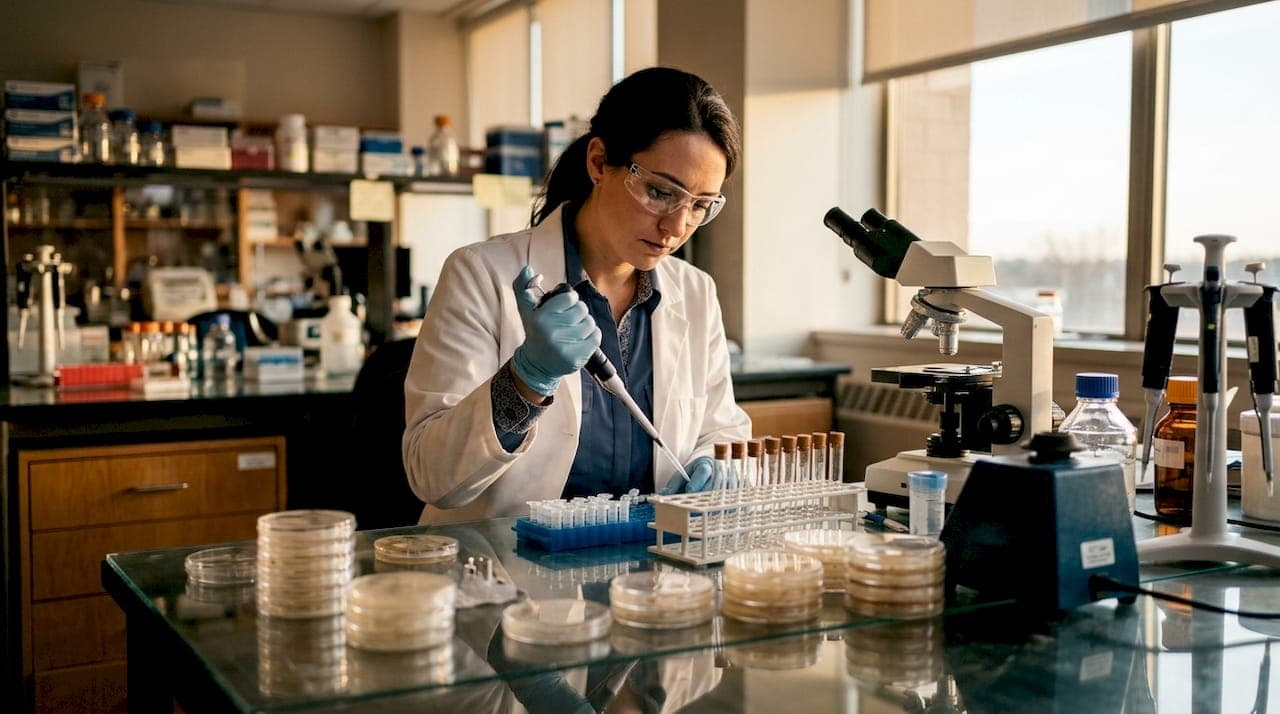
Microbial challenge testing is the deliberate inoculation of a product with specific microorganisms under controlled laboratory conditions to evaluate whether those organisms grow, survive, or die within that product matrix. It is not a pass/fail compliance checkbox. Done right, it functions as a diagnostic safety tool that tells you exactly how your formulation behaves when contamination happens, not just whether contamination is absent at a single point in time.
The core purposes of a well-designed challenge study include:
- Establishing microbial stability and predicting realistic shelf life
- Validating preservative systems and antimicrobial formulation components
- Demonstrating regulatory compliance with FDA, EPA, and EU food safety standards
- Quantifying outcomes such as log reductions or maximum allowable growth limits
- Supporting informed decisions about formulation changes, storage conditions, and labeling claims
Standards like ISO 20976-1:2019 define the international framework for how these studies should be structured, particularly for pathogens like Listeria monocytogenes in ready-to-eat foods. The EPA's Microbial Risk Assessment Guideline further establishes dose-response and exposure assessment principles that underpin how challenge data gets interpreted at the regulatory level.
Pro Tip: Define your performance criteria before you inoculate a single sample. Teams that set log reduction targets or growth limits after seeing data are rationalizing results, not interpreting them.
The main types of microbial challenge studies
Not every challenge study asks the same question. The study type you choose shapes every downstream decision, from organism selection to sampling schedule.
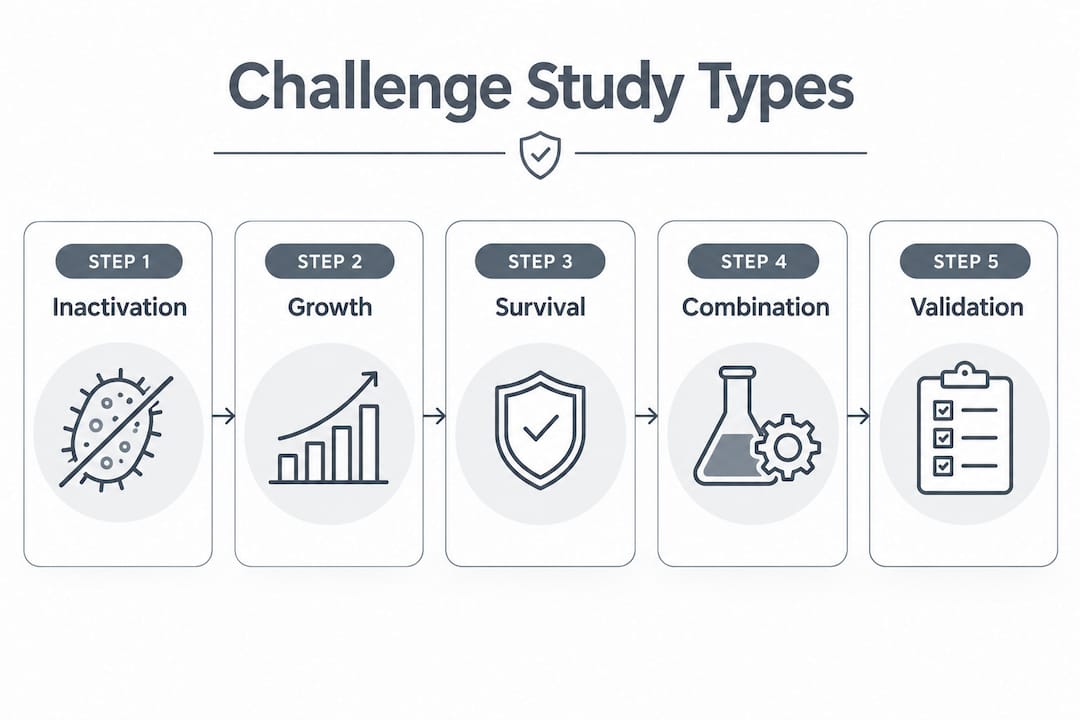
- Growth inhibition studies: Determine whether a product prevents or limits microbial growth over time. Common in preserved foods, beverages, and personal care products.
- Inactivation studies: Measure how effectively a process or formulation kills target organisms. Used to validate thermal treatments, antimicrobial cleaning agents, and disinfectants.
- Combination studies: Assess an initial die-off phase followed by monitoring for later spoilage or pathogen recovery. Relevant for products with complex preservation systems or extended shelf lives.
- Shelf-life determination studies: Simulate real distribution and consumer-use conditions to establish the point at which microbial safety or quality is no longer assured.
- In-use hold-time studies: Evaluate microbial behavior in products after opening or dilution, particularly critical for multi-dose pharmaceutical and food service applications.
The study type also determines your performance standard. An inactivation study targets a specific log reduction. A growth inhibition study defines a maximum allowable increase. Getting this wrong at the design stage means your data answers a question nobody asked.
How do you design a microbial challenge study that actually works?
No universal protocol exists for challenge testing. Every product matrix, every storage scenario, and every regulatory context demands a custom approach. Treating challenge testing like a routine analytical measurement is one of the most common and costly mistakes in product development.
Key design factors to address before testing begins:
- Product formulation characteristics: pH, water activity (aw), preservative type and concentration, nutrient content, and competing microflora all influence microbial behavior.
- Storage conditions: Temperature, humidity, and atmosphere must reflect the realistic product lifecycle, including distribution abuse scenarios.
- Target microorganisms: Selected based on product type, expected contamination routes, and regulatory requirements.
- Inoculum preparation and level: The inoculum must be validated, prepared from appropriate culture collections, and applied at a level that simulates realistic contamination without overwhelming the product's natural barriers.
- Sampling frequency: Time points must capture the full kinetic profile, including early die-off, lag phase, and potential late-stage growth.
- Performance criteria: Defined upfront, not after data collection.
- Expert microbiologist involvement: Study design factors including formulation characteristics, storage conditions, and target organisms require specialist input to produce valid, defensible results.
Pro Tip: Avoid generic "off-the-shelf" protocols borrowed from similar products. A protocol designed for a neutral-pH beverage will produce misleading data when applied to a low-aw snack food or a preserved emulsion.

Which microorganisms should you target in a challenge study?
Organism selection is where microbial risk assessment meets product reality. You are not choosing organisms arbitrarily. You are choosing the ones most likely to contaminate your product and most capable of causing harm or spoilage if they do.
Common target organisms by category:
- Foodborne pathogens: Listeria monocytogenes, Salmonella enterica, Escherichia coli O157:H7 — selected based on product type and expected contamination risks
- Spoilage bacteria: Lactic acid bacteria, Pseudomonas spp., Bacillus spp.
- Yeasts and molds: Candida albicans, Aspergillus brasiliensis, Zygosaccharomyces bailii for high-sugar or acidic matrices
- Gram-negative bacteria: Pseudomonas aeruginosa for water-based or cosmetic formulations
- Spore-forming organisms: Clostridium spp. for anaerobic or low-acid environments
Regulatory requirements often dictate minimum organism panels. FDA guidance for ready-to-eat foods, for example, places particular emphasis on L. monocytogenes because of its ability to grow at refrigeration temperatures. Organisms should be sourced from recognized culture collections such as ATCC or NCTC to ensure traceability and reproducibility across studies.
What storage and incubation conditions should you use?
The conditions you set during incubation determine whether your challenge study reflects real-world risk or a controlled fiction. Realistic temperature ranges must mirror the product's actual lifecycle, including the abuse scenarios consumers and distributors routinely create.
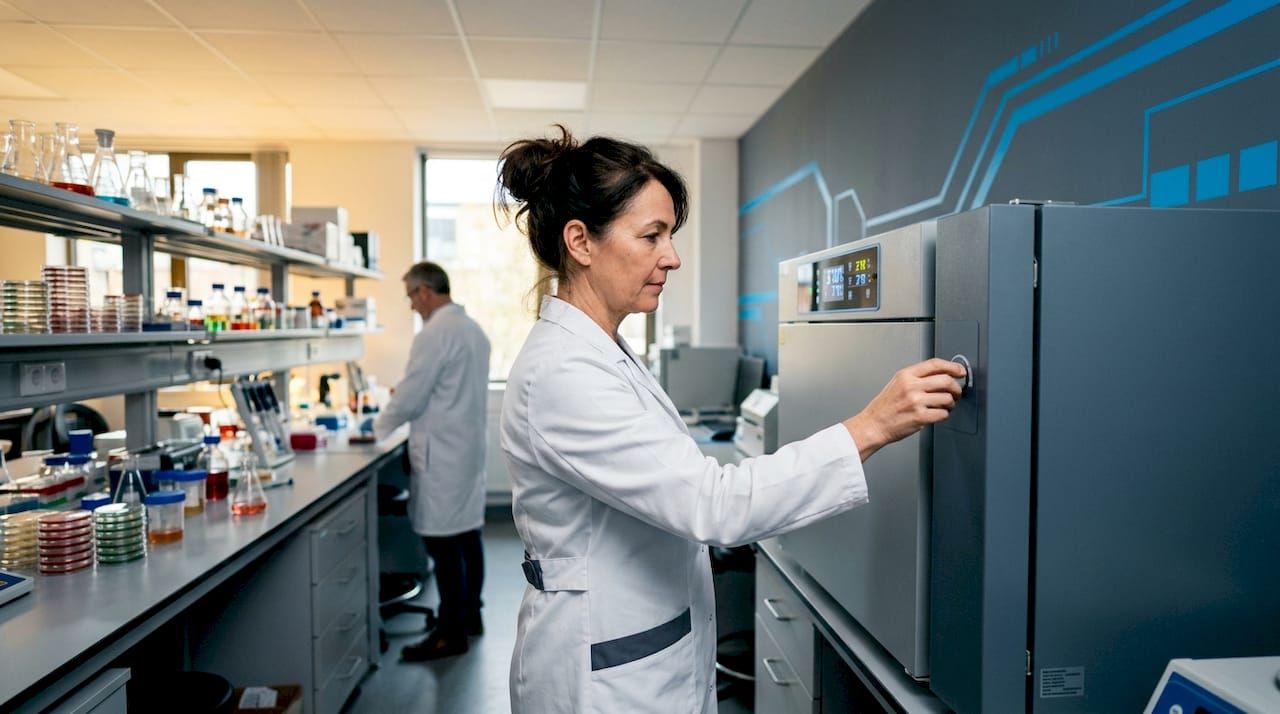
Standard incubation conditions used in food and product challenge studies:
| Condition | Temperature | Application |
|---|---|---|
| Typical refrigeration | — | Standard cold-chain storage |
| Abusive refrigeration | 7°C | Realistic consumer handling |
| Ambient | — | Room-temperature shelf-stable products |
| Abusive ambient | 30°C | Warm distribution environments |
| Thermophilic | — | Heat-processed or hot-hold products |
Duration must align with the intended shelf life or in-use period. A product with a 90-day refrigerated shelf life needs sampling points distributed across that full window, not just the first two weeks. Humidity and modified atmosphere conditions apply when packaging or product format makes them relevant, such as in vacuum-packed or gas-flushed products.
How do you evaluate and interpret challenge study results?
Data collection is only half the work. Evaluation of challenge samples requires a combination of microbiological enumeration, analytical testing, and sensory observation, all interpreted against performance criteria you defined before the study started.
Evaluation methods and interpretation steps:
- Microbiological enumeration: Standard plate counts, most probable number (MPN) methods, or quantitative PCR (qPCR) to track organism populations at each time point
- Analytical parameters: pH and water activity measurements to confirm product stability and explain microbial behavior
- Sensory and visual observations: Gas production, turbidity, color change, and off-odor detection as indicators of spoilage activity
- Performance criteria application: Predefined log reductions or growth limits are applied to determine whether the product meets its safety or stability target
- Statistical analysis: Replicate data across multiple product lots supports confidence in conclusions; variability between replicates flags formulation inconsistencies
- Documentation and reporting: Full traceability of inoculum preparation, incubation conditions, enumeration methods, and raw data is required for regulatory submission
One point that trips up many teams: developing study-specific performance parameters often takes longer than anticipated. Build that time into your project schedule before you commit to a launch date.
Common pitfalls and FAQs in microbial challenge testing
Challenge testing vs. microbial load testing. These are not interchangeable. Microbial enumeration measures the existing microbial load in a product at a single moment. Challenge testing assesses whether microorganisms can grow or be inhibited within that product over time. One is a snapshot; the other is a film.
Common pitfalls to avoid:
- Ignoring product matrix effects: A preservative that performs well in a simple aqueous solution may bind to proteins or fats in a real formulation and lose efficacy. Test the actual product, not a surrogate.
- Underdefined performance criteria: Studies without pre-set pass/fail thresholds produce data that is difficult to defend to regulators and easy to misinterpret internally.
- Insufficient sampling frequency: Missing the growth curve peak or the die-off nadir produces an incomplete kinetic picture and can lead to overconfident shelf-life claims.
- Poor inoculum validation: Challenge cultures must be confirmed for identity, purity, and viability before use. An unvalidated inoculum invalidates the entire study.
- Single-temperature testing only: Testing at one condition misses the abuse scenarios that represent real consumer risk.
- Late expert involvement: Bringing in a qualified microbiologist after the protocol is written, rather than during design, leads to studies that answer the wrong question.
Pro Tip: Involve your formulation chemist and your microbiologist in the same room during protocol design. The interaction between preservative chemistry and microbial physiology is where most study failures originate.
Advanced standards and best practices shaping challenge studies today
The field has moved well past basic compliance testing. ISO 20976-1:2019 combined with EURL Lm guidelines now represents international best practice for designing challenge studies, particularly for Listeria monocytogenes in ready-to-eat products. These standards enhance predictive accuracy and position challenge studies as genuine diagnostic tools rather than regulatory formalities.
The WHO and FAO Microbiological Risk Assessment guidance reinforces that a structured approach covering hazard identification, exposure assessment, and risk characterization produces the most transparent and actionable safety conclusions. FDA and EPA frameworks align with these principles for food and water safety contexts in the United States.
At Sarawestusa, our in-house R&D chemists work directly with formulation and microbial stability considerations from the earliest stages of product development. Whether you're scaling a pilot batch or building a full private-label line, we build microbial safety thinking into the chemistry, not as an afterthought. Explore our proven formulation work or see how our commercial cleaning manufacturing integrates microbial safety at every production stage.
Key Takeaways
Microbial challenge testing requires custom study design, predefined performance criteria, and validated inocula to produce data that is both scientifically defensible and regulatory-ready.
| Point | Details |
|---|---|
| Custom design is mandatory | No universal protocol exists; product matrix, storage, and target organisms must all shape the study. |
| Define criteria before testing | Log reduction targets or growth limits set after data collection cannot be defended to regulators. |
| ISO 20976-1:2019 sets the standard | This standard, combined with EURL Lm guidelines, represents current international best practice for challenge study design. |
| Enumeration is not challenge testing | Microbial load testing measures existing contamination; challenge testing evaluates growth or inhibition over time. |
| Expert involvement from day one | Formulation chemists and microbiologists must collaborate during protocol design, not after it is written. |