
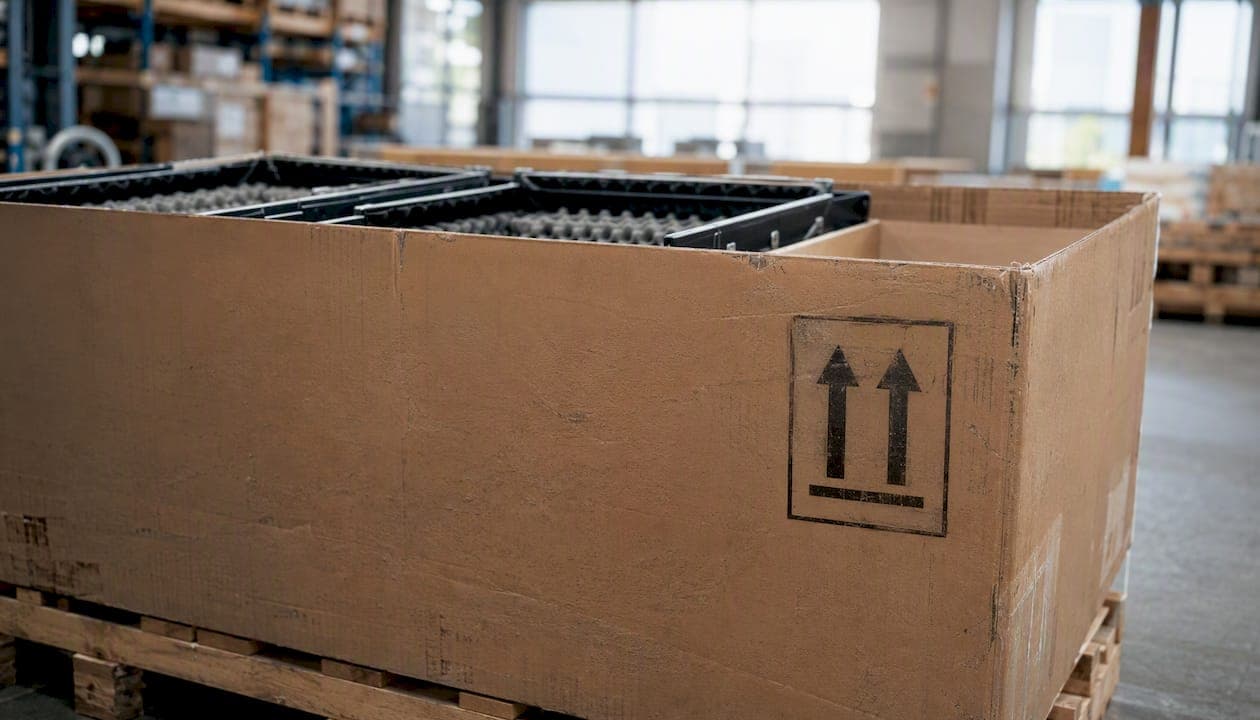
Your shipment qualifies as a limited quantity if the hazardous material is in an inner receptacle at or below the quantity limit specified in the applicable 49 CFR hazard-class table, packed in a combination package, and moving by a mode that permits the exception. The first operational step: pull the CFR table for your hazard class, measure your inner receptacle fill volume, and confirm your transport mode before you mark a single box.
Three constraints decide everything:
- Inner receptacle capacity. Liquids are typically capped at 1 L per inner receptacle for most hazard classes; solids at 500 g. Exceeding either forces full HMR compliance.
- Aggregate per-vehicle limit. Ground shipments are generally capped at 30 kg gross weight per package and specific aggregate limits per transport vehicle.
- Mode-specific eligibility. A configuration that qualifies for ground may be fully regulated for air. Never assume one mode's exception transfers to another.
Key Takeaways
Limited-quantity shipping under 49 CFR requires correct inner-receptacle sizing, mode-specific marking, and documented packaging performance — qualification is never automatic and never transfers across transport modes.
| Point | Details |
|---|---|
| Inner receptacle limits | Most common Class 3 and Class 8 liquids have inner receptacle size limits; exceeding these limits requires compliance with full HMR regulations. |
| Mode-specific eligibility | Ground qualification does not carry over to air; re-check the IATA DGR table for every air leg. |
| Marking dimensions | Use 100 mm square-on-point as the default; 50 mm is only permitted when package size makes 100 mm impracticable. |
| OSHA vs. DOT labeling | The transit mark does not satisfy OSHA HazCom; secondary containers inside a facility need separate workplace labels. |
| Sarawest USA | Sarawest USA's contract manufacturing team can validate packaging configurations and markings before production runs ship. |
Table of Contents
- What does "limited quantity" mean under U.S. hazardous-materials rules?
- How does qualification and marking change by transport mode?
- Exactly how do you mark and label a limited-quantity package?
- What inner-receptacle, aggregate, and gross-weight limits must you meet?
- What compliance mistakes cause the most rejections and fines?
- Which statutes, PHMSA interpretations, and carrier guides should you bookmark?
- Why teams keep getting limited-quantity shipping wrong
- Packaging validation before your first production run ships
- Useful sources for limited-quantity compliance
What does "limited quantity" mean under U.S. hazardous-materials rules?
The term "limited quantity" is a formal regulatory exception, not a general description of a small shipment. Under the Hazardous Materials Regulations (HMR), codified in Title 49 of the Code of Federal Regulations, specific sections establish reduced requirements for small inner receptacles of hazardous materials packed inside outer packaging. The exception covers marking, labeling, and in many cases shipping papers, but it does not eliminate the shipper's responsibility for correct classification and safe packaging.
The primary CFR sections that create and govern the exception are 49 CFR §172.315 (marking specifications), §173.27 (general requirements for air transport), and §173.154 (exceptions for Class 8 corrosive materials). Each hazard class entry in the §172.101 Hazardous Materials Table carries a "LQ" column that states the maximum inner-receptacle quantity allowed for that specific material.
Most common hazard classes qualify, including Class 3 (flammable liquids), Class 8 (corrosives), and Class 9 (miscellaneous). Class 1 explosives and Class 7 radioactive materials are excluded entirely. Certain Packing Group I materials face tighter limits or outright exclusion depending on the specific entry.
Qualification is not a property of the material alone. A 500 mL bottle of a Class 3 flammable liquid may qualify for ground transport as a limited quantity while the same bottle, in the same outer box, is fully regulated for air. The packing configuration, inner quantity, and mode all determine eligibility together.
One practical example: twelve 250 mL inner bottles of a Class 8 liquid cleaner, each sealed and cushioned inside a corrugated outer box, will typically qualify for ground limited-quantity shipping under §173.154. A single 2 L jug of the same material in the same box does not qualify, because the inner receptacle exceeds the 1 L limit for that class.
A note on OSHA labeling. The limited-quantity transit mark is a DOT transport marking. It does not satisfy OSHA HazCom requirements under 29 CFR 1910.1200. OSHA is explicit that secondary containers inside a facility require separate workplace labels and SDS access. The transit mark and the workplace label serve different regulatory systems and must not be confused. Secondary container labeling under OSHA HazCom carries its own requirements, and the narrow "immediate use" exemption applies only to containers used and emptied within a single work shift by the person who filled them.
How does qualification and marking change by transport mode?
Limited quantity status is mode-specific, and that single fact causes more cargo rejections than any other compliance gap. A shipper who qualifies a product for ground but then books it on an air freight leg without re-checking will face rejection at the transit hub.
| Feature | Ground (Highway/Rail) | Air (IATA/ICAO) | Vessel |
|---|---|---|---|
| Mark shape | Square-on-point, no "Y" | Square-on-point with "Y" symbol | Square-on-point (250 mm for cargo transport unit) |
| Inner quantity limit | Per §172.101 table entry | Typically lower; IATA DGR Table 2.7 | Per §172.101 table entry |
| Shipping papers | Often waived for qualifying LQ | Additional marks required; DGR compliance | May be required; check IMDG/49 CFR |
| Carrier acceptance | Generally accepted with correct mark | Must meet ICAO TI / IATA DGR limits | Cargo transport unit marking required |
| Private motor carrier | Highway exception available | N/A | N/A |
For air shipments, the IATA Dangerous Goods Regulations (DGR) and ICAO Technical Instructions impose tighter inner-quantity limits than ground. The "Y" symbol inside the square-on-point mark signals that the package meets air-eligible limited-quantity criteria. Many materials that qualify for ground limited-quantity shipping do not qualify for air at all, either because the IATA DGR table forbids them or because the inner quantity exceeds the air limit. Before booking any air leg, verify the material against the IATA DGR Table 2.7 and confirm the inner quantity is within the air-specific threshold.
For vessel transport, cargo transport units (CTUs) carrying limited-quantity packages must display a 250 mm square-on-point mark on two sides of the unit. Individual packages inside the CTU still carry their own marks. The IMDG Code and 49 CFR both apply to vessel movements from U.S. ports.
Ground offers the most flexibility. Many qualifying ground shipments move without shipping papers under the HM-215K exception, and private motor carriers have additional highway exceptions. That flexibility disappears the moment the shipment touches an air or vessel leg.
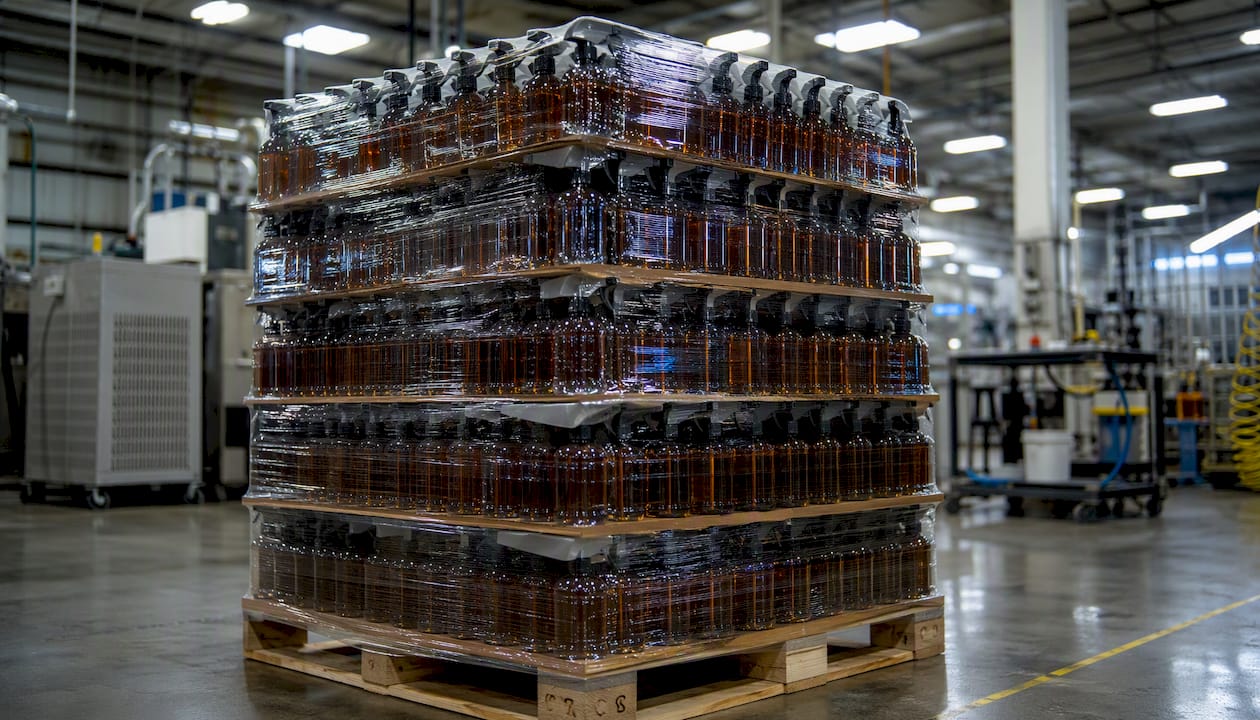
A practical scenario: a pallet of 300 mL spray bottles of a Class 8 cleaner, each bottle within the 1 L inner limit, ships daily by ground without issue. The same pallet booked on an air freight consolidation gets pulled at the freight station because the IATA DGR inner limit for that specific Class 8 entry is 500 mL, and the shipper never re-checked. The fix is a mode-check step built into the booking workflow, not a last-minute scramble at the dock.
Exactly how do you mark and label a limited-quantity package?
The core rule under 49 CFR §172.315 is a square-on-point (diamond orientation) mark with a white or contrasting background, a black border, and the interior divided into upper and lower triangles. For air shipments, a "Y" symbol appears inside the mark. No hazard label, proper shipping name, or UN number is required on the outer package when the limited-quantity exception applies, which is one of the main operational benefits.
Dimension rules:
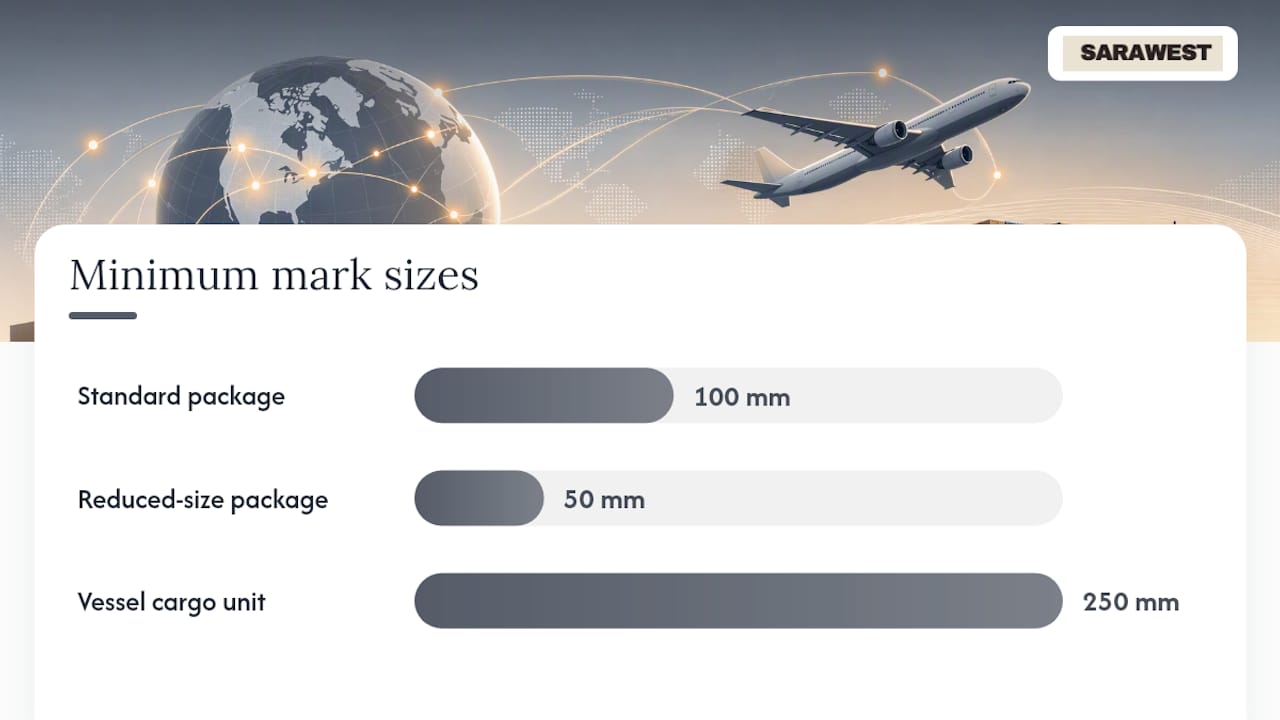
- Standard size: 100 mm per side minimum.
- Reduced size: 50 mm per side minimum, but only when the package is too small to accommodate the full 100 mm mark. PHMSA interpretation 13-0163 is unambiguous: the reduced size is authorized only when package dimensions make the full size impracticable. If the full size fits, you must use it.
- Cargo transport units by vessel require a 250 mm square-on-point mark.
- Border width: the mark border should be proportional to the mark size, with minimum widths specified by regulation.
Placement rules:
- At least one side or one end of the package must display the mark.
- For aircraft transport, the entire mark must appear on a single face of the package.
- For vessel cargo transport units, the mark must appear on two opposite sides.
The limited-quantity mark replaces the need for hazard labels and the proper shipping name/UN number on the outer package. You still must show the shipper's name and address on the package. For vehicle-level transport, the driver must carry emergency response information or have access to an SDS for the materials on board, even when individual package shipping papers are waived.
Pro Tip: PHMSA interpretation 22-0072 permits multiple limited-quantity marks on a single package, but PHMSA advises covering any partially obscured marks with opaque tape rather than leaving them visible. A partially visible mark confuses carriers and can trigger rejection. One clean, fully visible mark on one face is better than three marks where two are partially covered by strapping.
What inner-receptacle, aggregate, and gross-weight limits must you meet?
The numeric thresholds are where most shippers either qualify or fall out. The table below covers the most common hazard classes; always verify against the specific §172.101 table entry for your material.
| Hazard class | Max inner receptacle (liquid) | Max inner receptacle (solid) | Max gross weight per package | Aggregate per vehicle |
|---|---|---|---|---|
| Class 3 (flammable liquid) | 1 L | 500 g | 30 kg | — |
| Class 8 (corrosive) | 1 L | 500 g | 30 kg | Check §173.154 |
| Class 6 (toxic) | 1 L | 500 g | 30 kg | — |
| Class 9 (miscellaneous) | 5 L | 5 kg | 30 kg | — |
| Class 4 (flammable solid) | N/A | 500 g | 30 kg | — |
Non-UN vs. UN-specification packaging. Limited-quantity shipments do not require UN-specification outer packaging. A standard corrugated box with adequate cushioning is permitted. However, "permitted" does not mean "anything goes." UPS guidance under HM-215K states that packaging must meet 49 CFR §173.24 performance expectations and be capable of passing ISTA 3A testing. Carriers can and do reject packages that show evidence of inadequate cushioning, leaking inner receptacles, or crushed outer boxes.
When inner receptacles exceed the class limit, the shipment is no longer a limited quantity. The shipper must reclassify it as a fully regulated hazardous material shipment, apply the correct hazard labels, proper shipping name, UN number, and shipping papers, and meet all applicable packaging requirements. There is no partial credit for being "close" to the limit.
Overpacks require attention too. If you consolidate multiple limited-quantity packages into an overpack, the overpack must be marked "OVERPACK" and the individual package marks must remain visible or be reproduced on the overpack. An overpack that obscures the limited-quantity marks on the inner packages reintroduces labeling and documentation requirements.
What compliance mistakes cause the most rejections and fines?
The most expensive mistake is assuming limited-quantity status transfers across modes. A shipper who qualifies a product for ground, books a multimodal shipment without re-checking air eligibility, and tenders the package at an air freight station will face rejection, potential fines, and delayed delivery. The Compliance Center documents this as the most common cause of cargo rejection for hazardous-material shippers.
The second most common failure is confusing the DOT transit mark with an OSHA workplace label. The square-on-point limited-quantity mark is a transport marking. Once that package arrives at a facility and a worker transfers the contents to a secondary container, OSHA's HazCom standard requires a proper workplace label on that secondary container, including the product identifier, hazard pictograms, signal word, and hazard statements. The transit mark satisfies none of those requirements.
Other high-impact pitfalls:
- Using the 50 mm reduced-size mark when the package is large enough for the full 100 mm mark. PHMSA interpretation 13-0163 makes clear this is a violation, not a minor variance.
- Failing to check carrier geographic restrictions. UPS HM-215K covers the 48 contiguous states; Alaska, Hawaii, and international destinations may require full HMR compliance or carrier-specific approvals.
- Inadequate cushioning around inner receptacles. A corrugated outer box with no inner cushioning fails the §173.24 performance standard even if the inner quantity is within limits.
- Not retaining classification records. PHMSA inspectors ask for the basis of a limited-quantity determination. "We've always done it this way" is not a defensible answer.
Pro Tip: Before a large production run ships, run a simple drop test on a representative sample package: drop it from 1.2 m onto a hard surface on each face, edge, and corner. If any inner receptacle leaks or the outer box fails, upgrade the cushioning or outer packaging before you tender. Photograph the test and keep the record with your compliance file. This 20-minute step has stopped more carrier rejections than any paperwork fix.
Which statutes, PHMSA interpretations, and carrier guides should you bookmark?
Every shipper working with hazardous materials needs a short, reliable reference stack. Here is what each source is best used for:
- 49 CFR §172.315 — the statutory text for marking dimensions, placement, mode distinctions, and the "Y" symbol for air. This is your primary authority for any marking question.
- 49 CFR §172.315 (govinfo PDF) — the official downloadable version of the same section; use this when you need a printed or archived copy for an audit or carrier dispute.
- PHMSA interpretation 13-0163 — answers the specific question of when reduced-size marks are authorized. Read this before using a 50 mm mark.
- FMCSA HMR compliance guide — the federal overview of how to comply with hazardous materials regulations; the right starting point for teams new to HMR or building a compliance program from scratch.
- OSHA secondary container labeling — OSHA's guidance on workplace labeling obligations; essential reading for manufacturers and labs that transfer chemicals from shipping containers to secondary containers.
When a PHMSA interpretation conflicts with a carrier policy, apply the more restrictive rule and document your reasoning. Carrier policies can be more restrictive than federal minimums; they cannot be less restrictive.
Why teams keep getting limited-quantity shipping wrong
Most compliance failures in limited-quantity shipping are not caused by ignorance of the rules. They are caused by organizational structure. The person who classifies the material sits in one department. The person who packs the box sits in another. The person who books the carrier sits in a third. Nobody owns the end-to-end check, so the mode-specific re-qualification step gets skipped, the reduced-size mark gets used because "it fits better," and the OSHA secondary-container label never gets applied because the DOT mark is already on the box.
The fix is not a training seminar. It is a one-page pre-tender signoff form that requires three signatures: the classifier, the packer, and the logistics coordinator. Each signs off on their specific step before the package leaves the dock. That form, combined with a routine packaging spot-check (one package per production run, drop-tested and photographed), closes the gap between what the regulation requires and what actually ships.
The OSHA/DOT confusion is worth calling out separately. Manufacturers who produce and ship their own chemical products often operate under both regulatory systems simultaneously. The DOT limited-quantity mark governs the package in transit. The moment that package arrives at a customer's facility and a worker opens it and pours the contents into a spray bottle, OSHA's HazCom standard takes over. A written transfer-and-label SOP, tied to shift-based immediate-use rules, is the practical fix. Without it, the customer's facility is out of compliance the moment the secondary container is filled.
For manufacturing teams preparing pilot or launch shipments, a pre-tender compliance review with a partner who understands both the formulation and the transport requirements is the fastest way to close both gaps at once.
Packaging validation before your first production run ships
The cost of a carrier rejection on a launch shipment is not just the reshipping fee. It is the delay, the customer call, and the internal scramble to figure out what went wrong. Sarawest USA's contract manufacturing team works with brands and logistics teams to validate packaging configurations and limited-quantity markings before a production run leaves the facility. We review inner-receptacle sizing against the applicable CFR table entry, confirm mark dimensions and placement, and flag mode-specific issues before they become dock-side problems.

Our in-house R&D chemists also formulate with transport compliance in mind from the start. If a formulation change can move a product from a restricted packing group to a less restricted one, we find it before the product is locked into production. That kind of upstream thinking is what separates a manufacturer who ships clean from one who learns compliance the hard way. Review our formulation track record and reach out for a compliance review before your next run ships.
Useful sources for limited-quantity compliance
- 49 CFR 172.315 -- Limited quantities
- PHMSA interpretation 22-0072
- Laboratory safety labeling and transfer of chemicals | OSHA
- How to Comply with Federal Hazardous Materials Regulations
- CFR PDF for 49 CFR 172.315 | govinfo.gov
This article provides general compliance information for educational purposes. Regulations change, and carrier policies vary. Confirm current rules with the applicable CFR text, PHMSA, or a qualified hazardous-materials professional before tendering any shipment.