
The fastest, lowest-risk path to launching an equine private-label line runs through a contract manufacturer that already has in-house formulation chemists, NASC-ready quality systems, and pilot MOQs low enough to test before you commit. Follow a staged process, concept to formula proposal to sample testing to pilot batch to scale, and lock your label claims early so a regulatory flag never turns into a reprint bill.
TL;DR:
- Lock in label claims early to avoid regulatory issues that could require costly reprints or shelf removal, especially regarding structure/function language versus disease claims.
- Ask manufacturers for evidence of NASC membership, microbial and stability testing capabilities, and clear documentation before signing contracts to ensure quality and compliance.
- Prioritize a focused SKU set and unique product formats tailored to your target customer segment to avoid overextending and ensure manufacturability at low MOQs.
- Build in adverse-event reporting and traceability protocols during manufacturing to protect your brand and meet regulatory and retailer expectations upfront.
- Conduct thorough feedback tracking post-launch, especially on reorders, palatability, and adverse events, to refine formulas and prevent costly discontinuations or recalls.
Table of Contents
- What Are the Stages of an Equine Product Line Launch?
- How Do You Evaluate and Choose a Contract Manufacturer?
- What Regulatory Rules Govern Equine Product Claims and Classification?
- Working With an R&D Chemist: Formulation and Prototyping Tips
- What Quality Controls Should You Require Before Scaling Production?
- What Do Costs, Timelines, and MOQs Actually Look Like?
- What Packaging Considerations Matter for Equine Products?
- How Should You Market and Distribute an Equine Product Line?
- How Do You Identify Your Target Customer and Read the Competitive Field?
- How Should You Monitor Feedback After Launch?
- What Safety Testing Protocols Apply to Equine Supplements?
- Publisher Perspective: What Actually Separates a Smooth Launch From a Stalled One
- How Sarawest USA Speeds Up Your Equine Product Line Launch
- Sources
What Are the Stages of an Equine Product Line Launch?
Most equine brands that stumble do it because they skip a stage, not because they picked the wrong ingredient. A disciplined equine product line launch moves through five checkpoints, and each one produces a deliverable you should hold onto for retailer conversations later.
- Define your SKU set. Three to five focused products beat a fifteen-item catalog you can't yet support with data. A joint support chew, an electrolyte powder, and a coat supplement is a tighter, more fundable launch than a sprawling line.
- Choose your format before anything else. Soft chews, chewable tablets, powders, and liquids each demand different equipment, shelf-life testing, and packaging. This decision shapes your entire manufacturing conversation, so make it early.
- Write a one-page technical brief. Cover the function you're targeting, dosing logic, palatability expectations, and which retail channel you're aiming for, since farm-supply stores and specialty tack shops expect different price points and packaging.
- Bring the brief to a manufacturer for a formula proposal. A capable partner returns prototypes, a pilot batch plan, and acceptance criteria you both sign off on before real money moves.
- Require stability testing before you scale. A pilot batch that looks fine on day one can separate, cake, or lose potency by month four. Insist on a defined pilot-to-scale plan, not a verbal promise.
How Do You Evaluate and Choose a Contract Manufacturer?
Picking a manufacturer for horse care products is different from picking one for a general supplement line. Horses are large animals with high feed intake and price-sensitive owners, so your manufacturer needs experience with dosing at scale and cost-efficient sourcing, not just a clean facility.
Ask these questions during your RFQ process and factory calls:
- Are you a current NASC member, and does that membership cover the specific format you'd be producing for us?
- What's your average sample turnaround for a new formula, and can you share examples from equine or other large-animal projects?
- What are your MOQs for pilot runs versus full production, and what's the lead time on each?
- Can you provide cGMP audit evidence, batch manufacturing records, and a sample certificate of analysis before we sign anything?
- Do you have documented experience with microbial challenge testing and stability testing appropriate to our chosen format?
- How do you source raw ingredients, and is there segregation between human-grade, pet, and equine production lines?
- What's your process for adverse-event reporting once a product is in market?
Pro Tip: Ask for a sample certificate of analysis before you sign a letter of intent, not after. A manufacturer that hesitates to share one is telling you something about how they'll handle documentation once you're a paying customer.
Retailers increasingly treat NASC membership as a gating requirement for animal supplement vendors, since the seal requires third-party facility audits and an adverse-event reporting system. Skip this check and you may build a whole line that a major buyer simply won't stock.
What Regulatory Rules Govern Equine Product Claims and Classification?
Get your product classification wrong and everything downstream, packaging, retailer approval, even your manufacturing pathway, gets harder or more expensive to fix. Before you formulate anything, confirm whether your product is a supplement, a treat or feed item, or something that edges into animal-drug territory.
The line that trips up first-time equine brands most often is claims language. Say your product "treats arthritis" and you've made a disease-treatment claim, which invites regulatory scrutiny and can get your label rejected at the printer or, worse, pulled from shelves. Say it "supports joint mobility" and you're in structure/function territory, which is the compliant lane for most horse supplements. Regulatory guidance on supplement labeling draws this distinction explicitly, and it's worth building your entire marketing copy deck around it before you approve a single label proof.
A few checkpoints worth locking down early:
- Confirm classification (supplement vs. treat/feed vs. animal drug) before formulation, since it changes registration requirements entirely.
- If you're touching animal-drug or biologic territory, contact FDA's Center for Veterinary Medicine or USDA APHIS Center for Veterinary Biologics early, not after you've built inventory.
- Ask your manufacturer for evidence of third-party audits and a documented adverse-event reporting process.
FDA's draft guidance on primary batches for new animal drug applications puts real weight on manufacturing consistency and CMC documentation, a signal that regulators expect paper trails, not just good intentions, for anything approaching a drug claim.
Working With an R&D Chemist: Formulation and Prototyping Tips
The brief you hand your chemist determines how many rounds of prototyping you'll need, and every extra round costs weeks. A strong brief states the function you want (joint support, gut health, coat condition), the target species and weight range, your preferred dose form, and your palatability bar, since horses reject bitter or overly dense formulas faster than most owners expect.
- Decide private label versus custom formulation early. Private label from an existing formula library gets you to market faster and cheaper, while custom formulation costs more time and money but gives you real differentiation and defensible IP. Industry analysis of this trade-off consistently favors private label for first launches and custom work for brands with an established retail footprint already asking for something specific.
- Plan palatability testing around your format. A powder that dissolves cleanly in feed behaves nothing like a soft chew that needs to survive barn heat and still taste good.
- Match stability testing to your dose form. Liquids and soft chews face different microbial and degradation risks than tablets or powders, so don't accept a generic testing plan.
- Agree on who pays for specialized testing upfront. Analytical testing, stability pulls, and any equipment needs specific to your formula should be spelled out in the proposal, not discovered on an invoice later.
What Quality Controls Should You Require Before Scaling Production?
A pilot batch that passes your own eyeball test isn't the same as a pilot batch that passes documented acceptance criteria. Set those criteria, appearance, potency, microbial limits, palatability, before the pilot run starts, not after you see the results. That single habit prevents most of the disputes that stall equine brands at the scale-up stage.
Before you approve a commercial run, require:
- Batch manufacturing records for every lot, not just the pilot.
- A certificate of analysis and retention samples held for a defined period after production.
- Full traceability from raw ingredient lot to finished product lot.
- A documented adverse-event reporting and recall process, along with confirmation of insurance or indemnity coverage.
- If your manufacturer splits work across multiple facilities, written documentation of which facility does what, along with each site's relevant licenses.
Skipping documented acceptance criteria at the pilot stage is one of the most common reasons brands end up renegotiating price or timeline mid-scale, since a dispute over "close enough" quality has no paper trail to settle it.
What Do Costs, Timelines, and MOQs Actually Look Like?
Budget generously for the regulatory and stability phases. Formula proposals and prototypes can move in weeks, but stability testing, label compliance review, and packaging lead times routinely add the most unplanned time to an equine product line launch.
MOQs vary sharply by format. Soft chews often carry higher minimums because of the specialized equipment involved, while other equine care formats, from white-label options to liquids and powders, can start at pilot quantities as low as 1,000 units. Expect surcharges tied to special environmental controls, dedicated equipment runs, expedited scheduling, and custom packaging tooling.
- Budget contingency for label rework if a retailer or regulator flags claim language after you've already ordered packaging.
- Ask your manufacturer to itemize pass-through costs for equipment or environmental requirements in the RFQ, not after production starts.
Pro Tip: Request a written breakdown of every potential surcharge before you sign, since "special handling" line items are where launch budgets quietly blow past projections.
What Packaging Considerations Matter for Equine Products?
Equine packaging lives a rougher life than most consumer goods. It sits in barns, gets handled by gloved hands, tolerates temperature swings, and often needs to survive being dropped on concrete more than once. Durability isn't a nice extra here, it's a functional requirement, because a bag that tears in the tack room costs you a customer faster than a weak formula does.
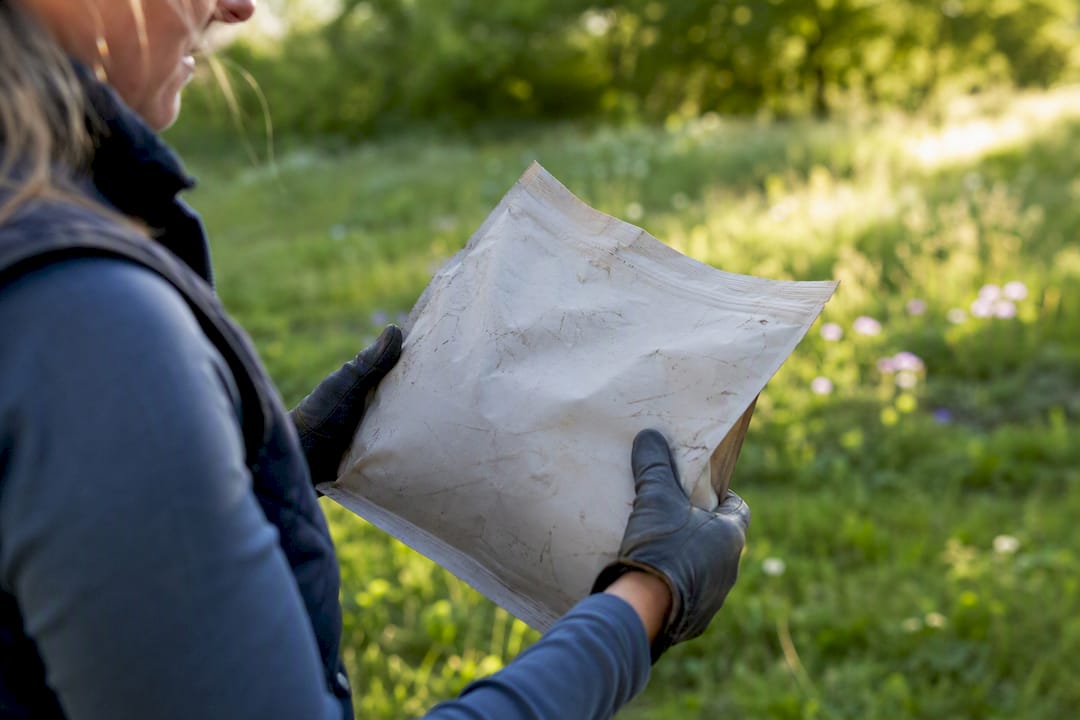
Beyond ruggedness, your packaging carries real regulatory weight. Labels need accurate guaranteed analysis panels, feeding directions calibrated to horse weight ranges (not the smaller dosing common to dog or cat products), and claim language that matches the structure/function standard covered above. A supplement label that overpromises, even in a single line of marketing copy on the back panel, can trigger the same enforcement risk as a mislabeled bottle of pills.
Consider these format-specific packaging realities:
- Powders and pellets need moisture-resistant packaging with resealable closures, since barns are rarely climate-controlled and product exposed to humidity clumps or degrades fast.
- Liquids require tamper-evident closures and UV-resistant containers if they're stored anywhere near barn windows or trailer tack compartments.
- Soft chews need packaging that maintains freshness without added preservative load, which usually means specialized barrier films.
- Bulk sizes matter more in equine than in companion-animal categories, since owners feeding one 1,000-pound animal daily go through product faster and expect larger container options.
Get your packaging vendor and your label compliance review happening in parallel, not sequentially. A die that's already cut before a regulatory flag surfaces is an expensive mistake to unwind.
How Should You Market and Distribute an Equine Product Line?
Horse owners are a tight-knit, trust-driven market, and that changes how you should think about launching. Word travels fast at barns, shows, and boarding facilities, and a credibility gap, real or perceived, spreads through that network just as quickly as a good product does.
Three channels do most of the work for new equine brands:
Feed and tack retailers remain the backbone of equine distribution, and most serious ones will ask about your NASC status before they'll even review your line sheet. Independent tack shops and regional farm-supply chains are often more accessible for a new brand than the largest national chains, and they give you real feedback before you push for wider placement.
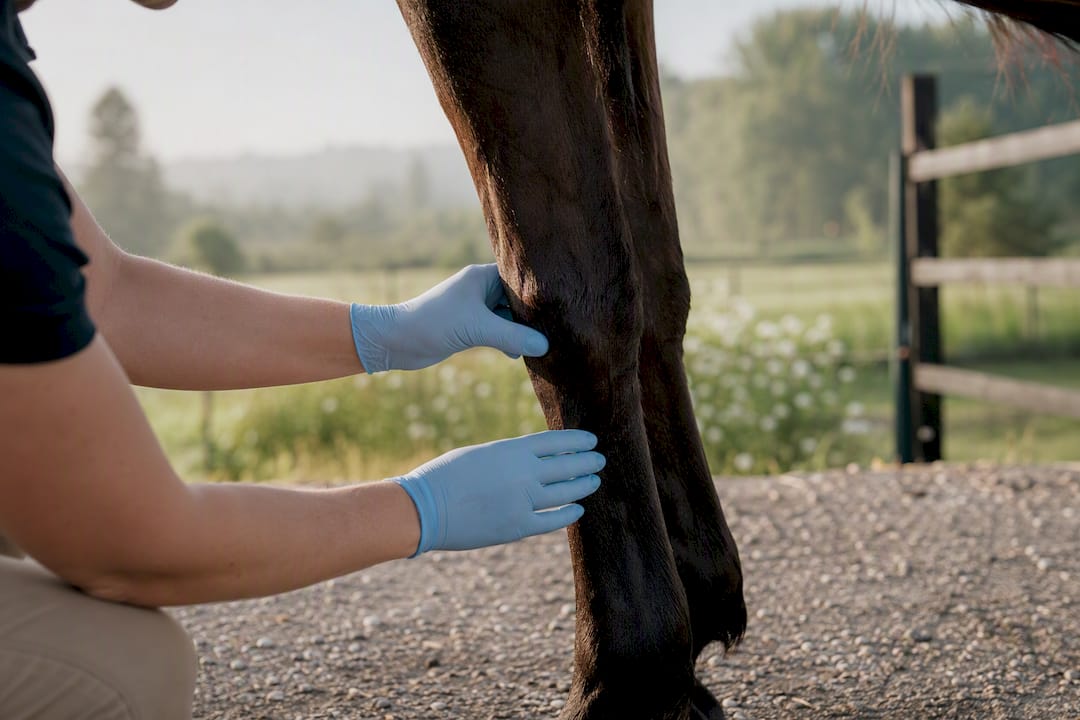
Veterinary and farrier relationships carry outsized influence in this category. A single respected equine vet recommending your joint supplement to their client base does more for credibility than a paid ad campaign, though building those relationships takes time and usually requires product samples and real transparency about your formulation and testing.
Direct-to-owner channels, whether that's a branded site, a presence at regional horse shows, or partnerships with boarding facilities, let you build a customer relationship without a retail markup eating your margin. Many equine brands run a hybrid model: retail for volume and credibility, direct sales for margin and customer data.
Whichever mix you choose, your marketing copy has to stay inside the same structure/function claim boundaries your label does. Consistency between what your website says and what your packaging says isn't optional, it's the same regulatory exposure either way.
How Do You Identify Your Target Customer and Read the Competitive Field?
Equine supplement buyers split into a few distinct groups, and each one has different price sensitivity, purchase frequency, and trust triggers. Competitive sport horse owners spend more per product and care intensely about performance claims backed by real formulation detail. Backyard and pleasure-horse owners are more price-conscious and often buy based on a trusted retailer's recommendation rather than research they've done themselves. Breeding and boarding operations buy in volume and care most about consistency and bulk pricing.
Before you finalize your SKU set, map who you're actually building for. A joint supplement priced for the competitive show market won't move at the volume a backyard-owner price point requires, and vice versa. This isn't a branding exercise, it's a formulation and pricing decision that shapes your manufacturing conversation from day one.
Look at what's already on shelves at your target retailers and note where the claim language, dosing format, and price points cluster. Gaps in that cluster, a format nobody's doing well, a price tier that's underserved, are where a new entrant has room to compete without going head-to-head on price alone. The equine supplement space rewards a founder who can name a specific unmet need better than one who leads with "better ingredients," since every competitor claims that.
How Should You Monitor Feedback After Launch?
Your launch isn't finished when the first pallet ships. The feedback you collect in the first six months tells you more about your formula than any pre-launch testing did, because horses and their owners behave differently across seasons, climates, and feeding routines than a controlled trial can fully predict.
Build a simple feedback loop before launch, not after complaints start coming in:
- Track retailer reorder rates by SKU, since a slow-moving item tells you something a survey never will.
- Collect structured feedback from vets and farriers you've supplied samples to, since their observations tend to be more specific than general consumer reviews.
- Watch for palatability complaints in particular. A horse that won't eat a supplement mixed into feed is a returned product and a lost customer, and it's one of the most common early-launch issues in this category.
- Feed any adverse-event reports straight into your manufacturer's documented reporting system, both because it's required for NASC-aligned brands and because early signal-catching prevents a small formulation issue from becoming a recall.
A tool like a simple CRM or retailer feedback form can help you track this systematically instead of relying on scattered emails and phone calls, especially once you're running more than a handful of SKUs across multiple retail accounts.
What Safety Testing Protocols Apply to Equine Supplements?
Horses metabolize differently than dogs, cats, or humans, and a testing protocol borrowed wholesale from a companion-animal supplement line will miss risks specific to large-animal dosing. Safety testing for equine supplements needs to account for the sheer volume horses consume relative to their body weight and the fact that many are also competing under strict substance regulations.
Three testing categories matter most. Microbial testing confirms your product doesn't harbor contamination that could sicken an animal consuming it daily for months, and this matters more for equine products than for lower-dose companion-animal formats simply because horses eat larger absolute quantities. Stability testing verifies potency and safety hold up across the shelf life you're printing on the label, accounting for barn storage conditions that are rarely climate-controlled. Contaminant screening, particularly for banned substances if your product will reach competition horses, protects both the animal and your brand from a compliance disaster that could end a show career.
Ask your manufacturer directly whether their microbial challenge testing protocols are validated for the specific dose form you're producing, since a protocol built for tablets doesn't automatically transfer to soft chews or liquids. This is a technical detail that separates manufacturers who understand equine formulation from those simply adapting a companion-animal process and hoping it holds.
Publisher Perspective: What Actually Separates a Smooth Launch From a Stalled One
The equine brands that move fastest aren't the ones with the boldest formulas. They're the ones who treat in-house R&D and low pilot MOQs as leverage, not luxury, and who draft compliant label language before a single die is cut. Lock your pilot batch acceptance criteria before production sign-off, and half your launch risk disappears before it ever becomes a real problem.
— Faisal Mansur
How Sarawest USA Speeds Up Your Equine Product Line Launch
Sarawest USA turns the checklist above into an actual production schedule instead of a wish list. Our Horse Care division works from a library of more than 1,200 proprietary formulas, so your formula proposal often starts from a proven base rather than a blank page, and our in-house R&D chemists can turn prototypes around fast, sometimes the same day, without routing your project through a broker who slows every decision down.
Pilot MOQs starting at 1,000 units mean you can test a joint supplement or an electrolyte powder in market before committing to a full truckload, and our quality systems are built around the same NASC-aligned documentation major retailers ask for, batch records, certificates of analysis, and stability data included. Whether you're formulating a soft chew, a powder, or a liquid line, our team maps your technical brief directly to a pilot-to-scale plan with defined acceptance criteria before anything moves to bulk production.
If you're ready to see what a real formula proposal looks like, request product samples or start a contract manufacturing RFQ today, and a real chemist, not a sales script, will respond.
Sources
- NASC — Retailers
- PMC article on supplement claims and regulatory distinctions
- FDA draft guidance: Manufacture of Batches in Support of Original NADAs, ANADAs, and CNADAs
- USDA APHIS — Center for Veterinary Biologics guidance for new applicants
- Find My Manufacturer — How to Launch a Private Label Pet Supplement Brand