
The MOQ you see quoted for a cleaning formula is almost never the number you'll actually have to buy. Your real floor, what the industry calls the "effective MOQ," is set by whichever layer costs the most to unlock: the formula batch, the container, the label run, or the tooling. For most private-label cleaning launches, that lands somewhere between a few hundred and a few thousand units. Before you sign anything, ask the manufacturer to break down each minimum separately.
TL;DR:
- The effective MOQ for cleaning products is determined by the highest minimum across formula, container, label, and tooling layers, often totaling several thousand units.
- Format choice and packaging methods significantly influence MOQs, with custom molds and high-volume label printing raising the minimums, while stock options can lower them.
- Using stock formulas, unprinted packaging, digital labels, and staged reorders are key strategies to reduce initial production costs and MOQ barriers.
- Budgeting should account for samples, testing, customs, and logistics, as most founders underestimate costs by focusing solely on the formula minimum.
- Working with manufacturers that offer pilot batches and in-house R&D can help test formulas without committing to large-scale orders prematurely.
Table of Contents
- What Is MOQ for Cleaning Products, and How Is It Calculated?
- What Are Typical MOQs by Format, and Why Do They Vary?
- How Can You Lower or Manage Your MOQ?
- How Much Should You Budget for a First Production Run?
- How Does a Contract Manufacturer Handle MOQ and Pilot Runs?
- Choosing the Right MOQ Strategy for Your Business Stage
- Start With a Pilot, Not a Guess
- Sources
- FAQ
What Is MOQ for Cleaning Products, and How Is It Calculated?
MOQ, or minimum order quantity, is the smallest batch a manufacturer will produce or sell in one production run. In cleaning chemicals, that single number hides four separate minimums stacked on top of each other, and the highest one wins.
Here's how the layers work:
- Formula/fill MOQ: the smallest batch a chemist can mix and run through filling equipment without wasting product or labor. Stock formulas often start at 100 to 500 units; a custom formulation usually starts higher because it needs its own mixing tank time and stability testing.
- Container MOQ: bottle, pouch, or drum suppliers set their own minimums based on mold runs or case-pack sizes, and these often exceed the formula minimum entirely.
- Label MOQ: print method drives this one, and it can swing the widest of all four layers.
- Tooling MOQ: custom mold charges, cylinder setup for printing, or specialized caps add a one-time cost that only pencils out at volume.
Private Label Supply's breakdown of MOQ math makes the point plainly: the effective MOQ is the maximum across all four layers, not the number printed on the formula sheet. Say a chemist quotes you a 300-unit formula minimum for a glass cleaner. If your chosen spray bottle only comes in cases of 1,000 and your label printer needs 2,500 units to hit its best price break, your real minimum just became 2,500, not 300. Format choice, more than formula complexity, is usually what pushes that number around.
What Are Typical MOQs by Format, and Why Do They Vary?
Format dictates cost structure more than almost anything else in a cleaning product launch. A few patterns show up consistently across the industry:
- Stock bottles with stock caps: often 500 to 1,000 units, since you're only bound by the formula and label minimums.
- Custom-molded bottles: frequently 5,000 to 10,000+ units, because injection mold tooling is a fixed cost that only amortizes at scale.
- Pouches and spouted formats: PakingDuck's guide to spout pouch packaging notes digital printing on stock pouches can bring minimums down to the hundreds, while custom film runs push into the thousands.
- Drums and concentrates: usually driven by the formula minimum alone, often the lowest-friction format for a wholesale buyer already set up to dilute.
The label print method is often the single biggest lever on your number. Digital printing supports short runs because there's no cylinder to engrave, while flexo and gravure printing need much higher volumes to justify the upfront plate cost. Genie's guide for indie beauty founders puts the practical sweet spot at 500 to 1,000 units for many formats, the point where per-unit cost and inventory risk both stay manageable. Go below 250 and you'll usually pay a real premium per bottle. Formulation complexity matters too: a multi-surface disinfectant with EPA registration requirements carries stability and efficacy testing that a simple all-purpose cleaner skips entirely, and that testing timeline often outlasts the production run itself.
How Can You Lower or Manage Your MOQ?
You have more control over your effective MOQ than most first-time founders realize. A few tactics consistently move the number down:
- Start with a stock or semi-custom formula. Relabeling an existing, proven formula skips the tooling and stability-testing minimums that drive custom formulations higher, according to Shopify's private label guide.
- Use stock, unprinted packaging for your first run. Apply your branding through labels instead of custom-molded bottles, and you avoid the mold tooling minimum entirely.
- Print labels digitally instead of via flexo or gravure. You'll pay more per label, but you can order in the hundreds instead of the thousands, which matters far more when cash is tight.
- Stage your reorders. Split a large forecast into smaller, sequential runs, or explore co-packing arrangements that let you share production capacity with other small brands.
- Pre-sell before you commit to inventory. A pre-order campaign can fund your first MOQ run without you fronting the full capital yourself.
Pro Tip: Ask every manufacturer for their "effective MOQ" in writing, broken down by layer, and a staged fulfillment plan that lets you take partial delivery over 60 to 90 days instead of one lump shipment.
How Much Should You Budget for a First Production Run?
Samples cost real money, but skipping them costs more. Expect to pay for formula samples before committing to a full run. That cost buys you the chance to catch scent, viscosity, or packaging fit problems before they're baked into thousands of units.
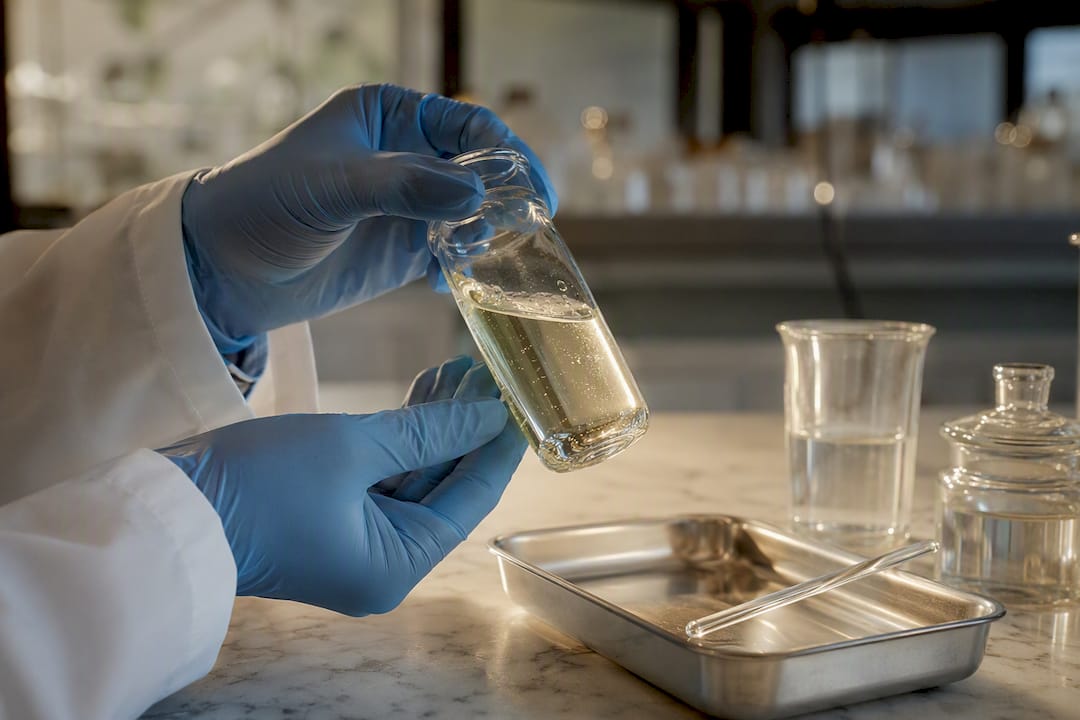
Lead time stacks up from several distinct phases: formula finalization, packaging and label sourcing (often the longest wait if you've chosen custom components), production and fill, quality control, and freight. Sarawest USA's guide to lead time in contract manufacturing walks through how each phase gets scheduled and where delays typically creep in.
Budget for hidden costs beyond the obvious ones:
- Label and packaging proofs before the full print run
- Stability and compliance testing paperwork
- Storage for inventory that arrives faster than you can sell it
- Customs brokerage fees if any component ships internationally
Shopify's launch-cost breakdown confirms what most founders learn the hard way: budget against your effective MOQ, not the formula minimum quoted first. Unit economics improve meaningfully on reorder, once tooling and setup costs are already paid off.
How Does a Contract Manufacturer Handle MOQ and Pilot Runs?
An experienced contract manufacturer treats your first order as a relationship, not a transaction. Sarawest USA works from a library of over 1,200 proprietary formulas across eight industries, including commercial cleaning, which means many launches start from a stock base instead of a from-scratch formulation, cutting straight through the tooling and stability-testing minimums that drive MOQs up.
A practical pilot-to-scale process usually looks like this:
- Request samples from a handful of existing SKUs to test scent, performance, and packaging fit.
- Run a pilot batch sized to your actual channel, not a forecast.
- Scale into split runs or a full truckload once the SKU proves itself.
- Ask directly about in-house R&D capability and whether same-day turnaround applies to your format.
In-house chemists mean no broker sits between your spec sheet and the mixing tank, which is often where effective MOQ quietly balloons.
Choosing the Right MOQ Strategy for Your Business Stage
Match your MOQ commitment to what you can actually absorb. Ask yourself four questions: how much capital can you risk on unsold inventory, does your sales channel already have demand or are you still testing, how much risk can you tolerate if a formula needs a second iteration, and how fast do you need product in hand?
If you're still validating demand, take the smaller, costlier-per-unit route: stock formula, stock packaging, digital labels. If you have a signed retail commitment or proven repeat orders, higher MOQs may offer lower per-unit costs. Test first, then commit.
— Faisal Mansur
Start With a Pilot, Not a Guess
Some contract manufacturers give founders a way to test a cleaning product formula without betting the whole budget on one massive production run, offering pilot-batch capability that scales straight through to full truckloads and formulation flexibility without intermediaries.
If distribution or fleet-service deployment is part of your go-to-market plan, Mobile Detail AI is worth a look for operational and sales-side questions once your product is ready to move. For sourcing itself, the fastest way to see where your effective MOQ actually lands is to request product samples from three SKUs and get a direct pilot quote back, no broker, no guessing at packaging minimums until you're already committed.
Sources
- Shopify — Private label guide
- Spout Pouch Packaging for Cleaning Liquids: MOQ, Price, Fitments, and Best Manufacturers
- Low MOQ Cosmetic Manufacturing: 2025 Guide for Indie Beauty Founders | Genie Blog | Genie
FAQ
What Is a MOQ for a Product?
A minimum order quantity, or MOQ, is the smallest number of units a manufacturer will produce or sell in a single order, set by whichever cost layer (formula, packaging, label, or tooling) is highest.
What Is Wholesale MOQ?
Wholesale MOQ refers to the minimum quantity a distributor or retailer must purchase to access wholesale pricing, which is often separate from and lower than a manufacturer's production MOQ.
What Brand Is Mr. Clean?
Mr. Clean is a cleaning product brand owned by Procter & Gamble, unrelated to private-label or contract manufacturing arrangements.
Where Can You Buy Cleaning Products Online for a Private-Label Launch?
Founders sourcing private-label or bulk cleaning products typically work directly with a contract manufacturer rather than a retail storefront; Sarawest USA offers sample requests and pilot quotes through its commercial cleaning capability page.
How Do You Lower the MOQ on a Cleaning Product Order?
Choose a stock formula instead of a fully custom one, use stock packaging with digital labels for your first run, and ask the manufacturer for a staged fulfillment plan instead of one lump order.