
Outsourcing cleaning formulation gets you lab-ready formulas, pilot batches, and commercial-scale blending without buying plant equipment. Choose it when your team lacks in-house chemists, mixing capacity, or the runway to build a lab from scratch. Done right, it covers formulation development, stability testing, pilot-to-scale production, packaging, and the paperwork that keeps you compliant. Providers with real chemists on staff can move a formula from concept to truckload without a broker in the middle.
TL;DR:
- Contract manufacturers can adapt existing formulas or develop new ones from raw ingredients, including stability testing and documentation for shelf life.
- Outsourcing reduces upfront costs and speeds market entry, but requires careful scheduling and NDA protection to avoid delays and intellectual property risks.
- Achieving full compliance with regulations and sustainability standards may require reformulation and thorough documentation, especially for eco-certifications and hazard claims.
- Production equipment must be properly vetted for batch consistency, cleanliness, and suitability for liquid or powder formulas, with modular setups offering significant flexibility.
- Vetting vendors involves assessing their formula library, in-house chemistry, batch documentation, minimum order quantities, and references to mitigate risks and ensure quality.
Table of Contents
- What Outsourced Cleaning Formulation and Contract Manufacturing Cover
- Why Brands Outsource Formulation Instead of Building In-House
- What Production at Commercial Scale Actually Requires
- Regulatory and Sustainability Checkpoints in Formulation Development
- Packaging, Labeling, and Logistics You Need to Nail Down
- Pricing, Lead Times, and Minimums: What to Actually Expect
- How to Vet a Contract Manufacturer Before You Sign
- SaraWest USA: A Practical Example of the Vendor Model
- When Outsourcing Formulation Actually Makes Strategic Sense
- Getting Started With SaraWest USA
- Sources
- FAQ
What Outsourced Cleaning Formulation and Contract Manufacturing Cover
A contract manufacturer's job starts long before the mixing tank ever runs. Formulation outsourcing typically breaks into two working phases: the chemistry and the production. Both need to happen inside a single, coordinated relationship, or you end up managing two vendors and two sets of excuses.
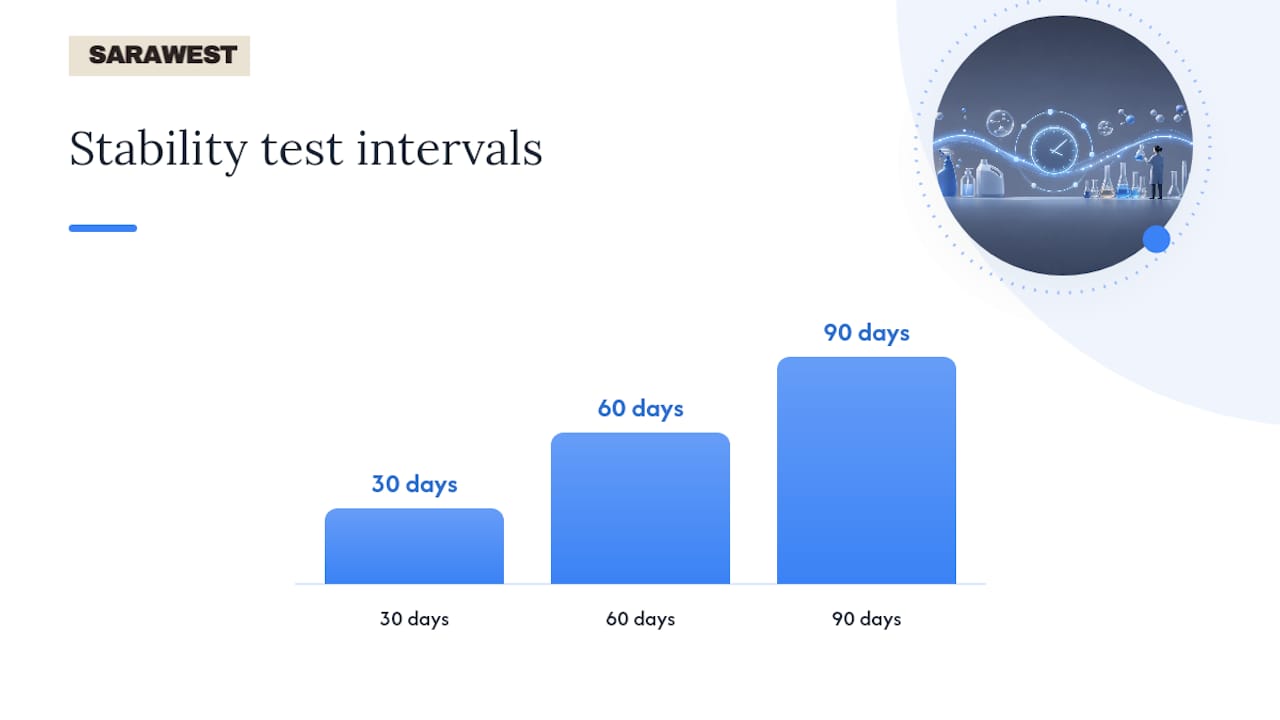
On the chemistry side, a competent partner adapts an existing base formula to your specs, or builds something new from raw ingredients when nothing in the library fits. That work includes sample reporting, so you're not guessing at pH or viscosity, and stability testing to confirm the product still performs after 30, 60, or 90 days on a shelf. Contract manufacturing of this kind lets a brand scale detergent and cleaning production without ever buying its own plant equipment, running everything from small samples to full truckloads under one roof.
On the production side, expect:
- Pilot batches to validate the formula at small volume before committing to a full run
- Scale-up production runs, whether liquid blending or powder processing
- Filling and secondary packaging, from bottles to drums to totes
- Batch records, Certificates of Analysis (COAs), Safety Data Sheets (SDS), and label files for every SKU
Responsibility usually splits along a predictable line. The manufacturer owns formulation accuracy, batch consistency, and QA sign-off on what leaves the facility. You own the ingredient sourcing decisions that touch your brand promise, any marketing claims printed on the label, and final approval before the product ships to retail or distribution. A vendor with a proprietary formula library can shortcut months of R&D by starting from something proven rather than a blank beaker.
Why Brands Outsource Formulation Instead of Building In-House
The math usually comes down to capital versus speed. Building an in-house lab means chemists on payroll, mixing equipment, QA infrastructure, and months before you produce a single sellable unit. Outsourcing swaps that capital outlay for a production contract you can start this quarter.
The benefits show up fast:
- Lower upfront investment since you're not buying tanks, mixers, or fill lines
- Direct access to formulation chemists without hiring a chemistry team
- Faster time to market, since a proven formula base skips months of early R&D
- Flexible order sizes that scale from a pilot run to a full truckload as demand grows
The trade-offs are real and worth naming. You give up some direct control over daily production decisions. Confidentiality matters, so a signed NDA before you share your formula concept isn't optional. You also become dependent on a supplier's schedule, and lead times can stretch during peak seasons if you haven't locked in production slots ahead of time.
Pro Tip: Lock your production window at least one full cycle ahead of your planned launch date. Vendors book pilot and scale-up slots the way freight carriers book capacity, and waiting until you're ready to ship is how launches slip by six weeks.
Keep formulation in-house only when the chemistry itself is your core differentiator, the kind of proprietary edge a competitor genuinely couldn't replicate. For most commercial cleaning brands, that's not the case. The brand, the go-to-market motion, and the customer relationship are the differentiator. The chemistry is infrastructure.
What Production at Commercial Scale Actually Requires
Vetting a manufacturer's capacity means looking past the sales pitch and at the equipment list. High-shear mixers matter for emulsions and anything with suspended particulates, since inconsistent shear produces batch-to-batch variation you'll only catch after the product is already in bottles. Clean-in-place (CIP) systems matter just as much, because a facility that can't fully purge a tank between batches risks cross-contamination between product lines.
Ask what QA/QC testing runs on every batch, not just the first one:
- Viscosity checks to confirm the product pours, sprays, or dispenses the way the label promises
- Microbial testing on any water-based formula, since bacterial growth in an undetested batch is a recall waiting to happen
- Preservative efficacy testing where a product's shelf stability depends on it
- Stability testing across temperature ranges the product will actually face in a warehouse or delivery truck
Liquid and powder production diverge in ways that trip up buyers who assume "manufacturing" means one process. Liquids depend heavily on surfactant behavior, and a formulation chemist needs to understand critical micelle concentration, the surfactant threshold that determines whether your cleaner actually lifts grease or just dilutes it. Powders bring a different set of headaches: dust control, flow agents to prevent clumping, and solubility testing so the product dissolves cleanly instead of caking at the bottom of a mop bucket.
Modular production lines make a real difference in flexibility. Vendors running that kind of setup can economically produce very small pilot batches, then shift the same line to pallet or truckload volume, and unit costs drop sharply once you clear pilot scale. Before signing anything, request a sample COA, a written stability summary, and a manufacturing flow diagram. If a vendor hesitates to hand those over, that hesitation tells you more than the sales call did.
Regulatory and Sustainability Checkpoints in Formulation Development
Formulation choices don't happen in a vacuum. Certain ingredients trigger federal review, certain label claims invite scrutiny, and certain eco-certifications require reformulation before you can print the seal.
Any antimicrobial or disinfectant claim puts your product under FIFRA territory, which means EPA registration before you can legally say "kills 99.9% of bacteria" on a label. Even without a pesticidal claim, every formula needs a compliant Safety Data Sheet and hazard communication labeling under OSHA rules. The American Cleaning Institute maintains ingredient and safety guidance that's worth cross-checking against whatever your vendor hands you.
Sustainability certification adds another layer. UL ECOLOGO certification sets specific criteria around toxicity, biodegradability, and packaging, and most formulas need real reformulation work, not just a marketing refresh, to qualify.
A formula that clears internal QA isn't automatically eligible for an eco-label. Certification bodies test against their own criteria, independent of whatever stability or performance data your manufacturer already ran.
Ask any vendor for documentation before you take a sustainability claim at face value: biodegradability data where it's relevant, preservative efficacy reports, and evidence they understand surfactant chemistry well enough to reformulate for a specific standard rather than guess at it.
Packaging, Labeling, and Logistics You Need to Nail Down
A formula that performs in the lab still has to survive a warehouse, a delivery truck, and a retail shelf without leaking, degrading, or getting flagged by a shipping carrier.
- Confirm packaging compatibility first. Concentrated formulas need chemically resistant containers, and a resin that holds up fine for a diluted RTU spray can fail under a full-strength acid or alkaline concentrate.
- Build tamper-evident and retail-ready features into the spec. If the product is headed to a retail shelf rather than a distributor's warehouse, packaging needs to meet that bar from the first production run, not a later revision.
- Get the label right the first time. Ingredient lists, hazard statements, and directions of use all need to match what's actually in the bottle. Mismatches here are the single most common reason a product gets pulled at a retail buyer review.
- Understand hazmat classification before you ship anything. Many cleaning concentrates fall under DOT shipping rules, and a vendor who doesn't flag this upfront is setting you up for a shipment held at a carrier dock.
- Spell out packaging and logistics responsibility in the contract. Decide upfront who handles warehousing, who coordinates fulfillment, and whether shipments run direct-to-customer or through a cross-dock model.
Pricing, Lead Times, and Minimums: What to Actually Expect
Cost breaks down into a short list of drivers: raw ingredient cost, packaging format, testing requirements, batch complexity, and total lot size. A simple all-purpose cleaner with common surfactants costs far less to formulate than a specialty degreaser with performance additives and extended stability testing.
Order minimums and per-unit pricing move together in a predictable direction:
- Pilot batches cost more per unit but let you validate the product before committing real capital
- Small commercial runs bring the per-unit cost down meaningfully once you clear pilot volume
- Full pallet or truckload orders deliver the lowest per-unit pricing, since fixed production costs spread across far more units
Timelines vary by project complexity, but a rough planning framework looks like this: initial sample development runs a few weeks, pilot runs add another window for production and feedback, stability testing needs its own dedicated period depending on shelf-life claims, and full-scale production scheduling depends on how far ahead you've booked a slot.
The smartest launch sequence phases the order size deliberately. Start with a pilot batch to confirm market acceptance, move to a small commercial run to test real sell-through, then scale toward pallet or truckload volume once demand justifies it. That sequence protects cash flow and gives you an exit ramp if the product doesn't land the way you expected.
How to Vet a Contract Manufacturer Before You Sign
Selection comes down to five things: technical capability, direct lab access, documented QA processes, packaging breadth, and adequate insurance and indemnity coverage on their end, not just yours.
- Ask about their formula library first. A vendor starting from an established base moves faster than one building from zero, and it tells you how many industries they've actually served.
- Ask who does the chemistry. In-house chemists answer questions on the spot. A vendor routing every technical question through a broker adds delay and dilutes accountability.
- Request a sample batch and its COA. A vendor who can't produce clean documentation on a small run won't suddenly produce it at truckload scale.
- Ask about minimum order quantities across a full range, from pilot to full pallet, so you know the vendor can grow with you instead of forcing a re-shop in a year.
- Run a reference check. Ask for a client in a comparable category and actually call them.
Watch for a few red flags: vague answers about equipment, reluctance to share a stability summary, and pricing that seems too good relative to the batch complexity you're asking for. A simple weighted scorecard works well here: score technical capability, documentation quality, pricing transparency, and lead time reliability from 1 to 5 each, and weight technical capability and documentation highest since those are what actually protect you after the ink dries.
Pro Tip: Request the COA for a batch similar to your own product category, not a generic sample. A COA for a fragrance-free surface cleaner tells you little about a vendor's capability with a foaming degreaser.
SaraWest USA: A Practical Example of the Vendor Model
SaraWest USA runs the model this guide describes end to end. The company keeps in-house R&D chemists on staff, so formulation questions get answered directly, without a broker relaying messages back and forth. Its proprietary formula library spans more than 1,200 formulas across eight industries, including commercial cleaning, which means most projects start from a proven base rather than a blank page.
A typical engagement moves through a clear sequence: an NDA to protect your formula concept, a project brief outlining what you need, R&D prototyping against that brief, a pilot run to validate performance, QA sign-off on the batch, then scale-up production and packaging coordination once you're ready to commit to volume. That structure supports everything from a 1,000-unit pilot to a full truckload without switching vendors mid-project.
Before engaging any manufacturer, including SaraWest, request the same documentation: sample COAs, SDS sheets, pilot batch records, and client references in your product category. A vendor confident in its process hands these over without friction.
When Outsourcing Formulation Actually Makes Strategic Sense
The conventional advice treats outsourcing as a fallback, something you settle for until you can afford your own lab. That framing gets it backward. Speed and flexible scale are the strategic advantage, not the compromise. A brand that can pilot a new SKU in weeks and scale it to truckload volume within a quarter is beating competitors who spent that same window building mixing capacity they'll use twice a year.
The real risk in outsourcing isn't the vendor relationship itself. It's skipping the vetting that makes that relationship work: no NDA before sharing a formula concept, no sample COA before committing to volume, no reference check before signing. Rigorous vetting and a clear contract eliminate most of what people worry about when they hear "outsourced manufacturing."
My advice for anyone weighing this decision: run a small pilot batch first, and hold the vendor to strict QA milestones before you scale. That combination protects your cash and your reputation at the same time, and it's the difference between a smart launch and an expensive lesson.
— Faisal Mansur
Getting Started With SaraWest USA
Some companies offer an alternative to building an in-house lab from scratch, providing direct access to in-house R&D chemists and a proprietary formula library covering a large number of formulas, ready to adapt to your specifications.
The relevant services line up with exactly what this guide covers: contract chemical manufacturing for full formulation-to-production projects, private label cleaning products if you want finished goods under your own brand, and white label manufacturing if you'd rather start from an existing formula in the library. Orders scale from pilot batches to full truckloads under one roof, without a broker adding delay between you and the chemists doing the work.
Starting is straightforward: sign an NDA to protect your concept, submit a project brief outlining what you need, and request a quote. A real person reviews every submission, and the team can walk through realistic timelines and minimums for your specific product before you commit to anything.
Sources
Vendor claims are only as good as the documentation behind them. Cross-check sustainability claims against UL ECOLOGO certification criteria, verify ingredient and safety practices against American Cleaning Institute guidance, and request any ASTM standards a vendor cites for testing procedures. A manufacturer confident in its process will point you to these sources without hesitation.
- UL ECOLOGO certification — cleaning products
- American Cleaning Institute — industry resources
- Critical micelle concentration — Wikipedia
- Contract manufacturing for chemical products – DMG Chemie
FAQ
What Two Chemicals Should Never Be Mixed?
Bleach and ammonia should never be combined, since the reaction produces toxic chloramine gas. Bleach and acidic cleaners, like vinegar or many toilet bowl cleaners, are equally dangerous together and release chlorine gas. Any formulation vendor worth hiring builds compatibility warnings directly into the SDS and label.
What Does R1 Through R5 Mean in Housekeeping Chemicals?
R1 through R5 refer to a common chemical classification system used in commercial cleaning: R1 is typically a glass cleaner, R2 a general-purpose cleaner, R3 a bathroom disinfectant cleaner, R4 a glass and stainless polish, and R5 a heavy-duty degreaser. Facilities use this color-coded system, often paired with matching dilution ratios, to reduce mixing errors and standardize training.
What Are Common Formulations Used in Household Cleaning Products?
Most household cleaners build around a surfactant base, often anionic or nonionic surfactants that lift grease and dirt, combined with builders, solvents, and sometimes disinfectant actives depending on the claim. Surfactant behavior depends heavily on properties like critical micelle concentration, which determines how effectively a formula cleans at a given concentration. A vendor with an established formula library can adapt one of these base formulas rather than starting the chemistry from zero.
What Are the Seven Stages of Cleaning?
The seven stages generally cover: pre-clean (removing loose debris), main clean (applying the cleaning agent), rinse, disinfection where required, a second rinse, drying, and final inspection. Commercial and industrial cleaning protocols follow this sequence to ensure a surface is both visibly clean and safe, matching the standards professional cleaning providers like JAN-PRO apply with EPA-approved products.
How Much Does It Cost to Outsource Cleaning Formulation?
Cost depends on ingredient complexity, packaging format, testing requirements, and total order volume, so there's no single flat rate across the industry. SaraWest USA doesn't publish fixed pricing, since projects range from a small pilot batch to a full truckload, but current pricing details are available by requesting a quote directly through the contract manufacturing page.