
For a brand team, a plastic-safe degreaser is a commercial cleaning formulation engineered to strip oils and grease without crazing, softening, or clouding plastic substrates. Getting there means hiring a manufacturing partner with in-house R&D chemists, real pilot-batch capacity, and a documented technology transfer process. Some manufacturers fit that profile directly. Before signing anything, ask for pilot batches and material-compatibility test results on your actual plastics, not a generic data sheet.
TL;DR:
- A plastic-safe degreaser relies on mild surfactants, a neutral to mildly alkaline pH, and carefully dosed co-solvents to prevent crazing and softening of plastics.
- Validation involves immersion tests on actual plastics, standardized soil load cleaning, and strict batch-level quality control with documented tolerances for pH and active ingredients.
- Choosing between toll, contract, or custom manufacturing depends on ownership, speed, and confidentiality needs, with clear agreements on IP, sourcing, and liability essential.
- Structured technology transfer with pilot batches, validation, and full-scale production ensures consistency and reduces scale-up risks for such formulations.
- Requesting detailed test data, QC documentation, and proof of in-house R&D capability helps prevent costly errors and ensures formulation reliability before large-scale production.
Table of Contents
- What Makes a Degreaser Formulation Plastic-Safe?
- How Do You Validate a "Plastic-Safe" Claim?
- Toll, Contract, or Custom Manufacturing: Which Model Fits?
- What Does the Technology Transfer Process Look Like?
- What Documents and Certifications Should You Require?
- How Do You Vet a Contract Manufacturer for This Job?
- Why Documented Tech Transfer and In-House R&D Change the Risk Math
- How Sarawest USA Handles Formulation, Piloting, and Scale-Up
- Sources
- FAQ
What Makes a Degreaser Formulation Plastic-Safe?
Plastic failure rarely shows up as melting. It shows up as crazing, those fine surface cracks that appear when aggressive solvents attack stressed polycarbonate or ABS. Polystyrene softens and clouds when exposed to strong ketones. Certain acrylics and polycarbonates develop stress cracking when exposed to high concentrations of aromatic solvents or high-pH builders left in contact too long.
That's why formulation choices matter more than a marketing label. A workable plastic-safe degreaser typically leans on:
- Surfactant-based cleaning power instead of harsh solvent blends, using milder nonionic or amphoteric surfactants over aggressive glycol ethers.
- A moderate pH range, generally neutral to mildly alkaline, since strongly caustic or strongly acidic formulas attack plastic finishes and metal components alike.
- Co-solvents selected and dosed carefully. Some are fine at low percentages but damaging at higher loads.
- Corrosion inhibitors when the formula also touches metal fasteners or fittings on plastic-bodied equipment.
Dilution ratio and contact time are your two biggest levers for balancing cleaning strength against plastic safety. A formula that's aggressive at full strength can be entirely safe at a 1:20 dilution with a defined rinse step.
Any quote you request should specify pH range, solvent percentage by weight, recommended dilution, and residue limits after drying. If a supplier can't produce those four numbers, they haven't formulated the product yet. They're guessing.
Pro Tip: Ask for the formula's pH at both concentrate and use-dilution, not just one. A concentrate can test neutral and still swing alkaline once diluted with hard water.
How Do You Validate a "Plastic-Safe" Claim?
Marketing copy is cheap. Test data is not. Before you accept "plastic-safe" as a fact rather than a hope, run the formulation through a defined validation sequence:
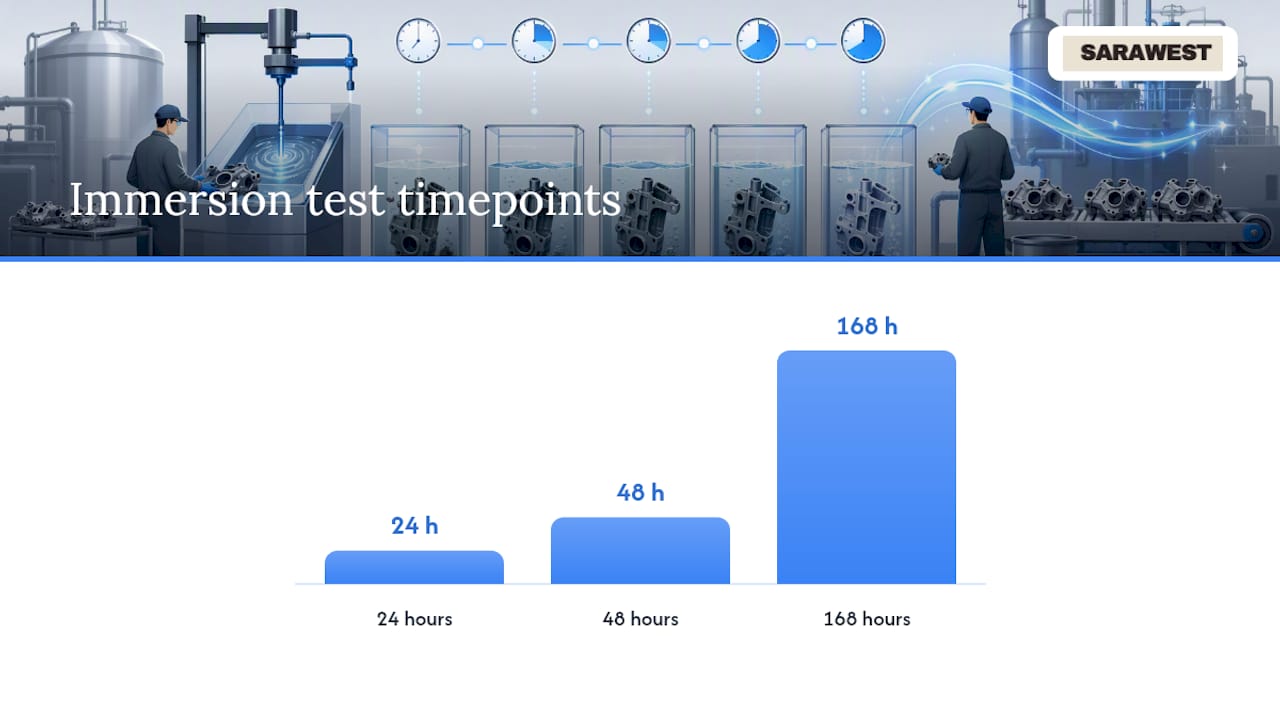
- Immersion and swab compatibility testing. Submerge or repeatedly wipe coupons of your actual plastic substrates (ABS, polycarbonate, PVC, acrylic) and inspect for crazing, gloss loss, hardness change, and dimensional shift after 24, 48, and 168 hours.
- Cleaning efficacy against a defined soil load. Use a repeatable, standardized grease or oil challenge so results compare cleanly across batches, not an ad hoc wipe test.
- Batch-level quality control. Every lot should ship with a certificate of analysis, a retained physical sample, and documented lot-to-lot variability limits for pH, viscosity, and active content.
A typical industry practice is to allow a small pH variance from the target specification and minor active ingredient variance from lot to lot, with suppliers asked to state their own tolerance bands in writing rather than accept vague answers. Ask your supplier to state their own tolerance bands in writing rather than accepting "within spec" as an answer.
Sampling frequency should scale with volume. A supplier running truckload orders should be pulling QC samples from multiple points in a batch, not one grab sample at the end of the run.
Toll, Contract, or Custom Manufacturing: Which Model Fits?
The three engagement models handle intellectual property and sourcing very differently, and picking the wrong one creates friction later.
- Toll manufacturing means you supply the raw materials and the manufacturer runs the process. You retain formulation ownership tightly, which suits brands protecting a proprietary chemistry.
- Contract manufacturing is more turnkey. The manufacturer sources raw materials, formulates or adapts a formula, and often handles packaging, giving you speed and convenience at the cost of somewhat less direct material control.
- Custom formulation starts from scratch or from an existing formula library, built around your specific plastic substrates, soil types, and brand positioning.
If confidentiality is the priority, toll manufacturing or a tightly worded custom formulation agreement with strict IP assignment clauses is the safer route. If speed to shelf matters more than exclusive material sourcing, contract manufacturing gets you there faster. Whichever model you choose, confirm IP assignment, raw material sourcing responsibility, and liability for off-spec batches in writing before production starts.
What Does the Technology Transfer Process Look Like?
Technology transfer is where good chemistry either survives scale-up or falls apart on the plant floor. A structured transfer documents the formulation, tolerances, and test plan needed to convert lab chemistry into a repeatable manufacturing process, and it typically runs through four stages:
- Prototype. Bench-scale formula, tested for basic performance and plastic compatibility on your target substrates.
- Pilot batch. A small production run, often a few hundred to a few thousand units, that reveals scale-up issues, packaging interactions, and short-term stability problems the bench scale never surfaces.
- Validation. Confirmed reproducibility against defined tolerances for pH, solvent content, viscosity, and residue, with a formal acceptance test plan.
- Serial production. Full-scale runs under a locked batch record template and release criteria.
Required documents at this stage include a complete formula sheet, critical tolerance ranges, an acceptance test plan, and a batch record template your operators will actually use. Reproducibility across pilot runs matters more than any single "great batch." A manufacturer with in-house chemists and their own pilot lines shortens this whole sequence, since formula adjustments happen the same week instead of routed through a broker and a second facility.
Pro Tip: Request the pilot batch report before you approve full production, not after. If the manufacturer can't produce one, you're funding their first attempt at your formula.
What Documents and Certifications Should You Require?
A comparable quote needs a paper trail behind it, not just a price. At minimum, request the technical data sheet, safety data sheet, certificate of analysis, compatibility test reports, batch records, and a short-term stability summary.
- Ask which quality systems the facility operates under, since ISO-aligned quality management and GMP-style controls (where applicable to the chemistry) signal traceable, repeatable production rather than one good batch.
- Confirm IP assignment and confidentiality terms before sharing your formula or brand specs.
- Nail down acceptance testing criteria and a change-control clause covering what happens if raw material substitutions are proposed later.
| Cost driver | What it covers |
|---|---|
| R&D and formulation time | Bench work, iteration, compatibility testing on your plastics |
| Raw materials | Surfactants, solvents, inhibitors, packaging components |
| Pilot batch production | Small-run manufacturing, scale-up troubleshooting |
| Quality control | COA testing, batch sampling, stability monitoring |
| Batch documentation | Formula sheets, tolerance records, release paperwork |
Quotes structured around these five line items are the only ones you can actually compare side by side.
How Do You Vet a Contract Manufacturer for This Job?
Ask direct questions before you send a formula brief:
- Who's on the R&D team, and are they in-house chemists or subcontracted? In-house teams adapt formulas within days; outsourced ones add a broker and a delay.
- Can they show a pilot batch example on a plastic-heavy application, even anonymized?
- What testing capability exists on-site for compatibility, efficacy, and QC, versus what gets shipped to a third-party lab?
- What's the realistic turnaround from signed brief to pilot batch delivery?
Request pilot reports, batch records, and reference project summaries as evidence, not just a capabilities brochure. Red flags include vague answers on testing methods, no willingness to run a limited pilot, or reluctance to sign an NDA. A small pilot run under NDA with defined acceptance tests is the cheapest way to find out whether a manufacturer can actually execute before you commit to a full production order.
Why Documented Tech Transfer and In-House R&D Change the Risk Math
Most brand teams treat technology transfer as paperwork overhead. It isn't. It's the mechanism that catches a scale-up problem in a 500-unit pilot instead of a 50,000-unit production run, and it's the record you point to when a batch comes back out of spec six months later.
In-house chemists change the iteration math too. When formula feedback goes to the person who wrote the formula instead of through a broker relaying notes to a lab three states away, a pH adjustment that would take two weeks takes two days. Speed without documentation is just risk wearing a faster label. The fast turnarounds worth paying for are the ones still backed by pilot reports, batch records, and defined acceptance criteria, not the ones that skip them.
— Faisal Mansur
How Sarawest USA Handles Formulation, Piloting, and Scale-Up
A manufacturer with in-house R&D chemists and a large formula library across multiple industries, including commercial cleaning, can adapt an existing plastic-safe degreaser or build one from your spec sheet without routing through a broker.
That structure matters most at the pilot stage, where problems actually surface. Sarawest USA's pilot-to-scale manufacturing capabilities run from small trial batches up through full truckload orders, with turnarounds fast enough that some prototype work ships the same day it's requested.
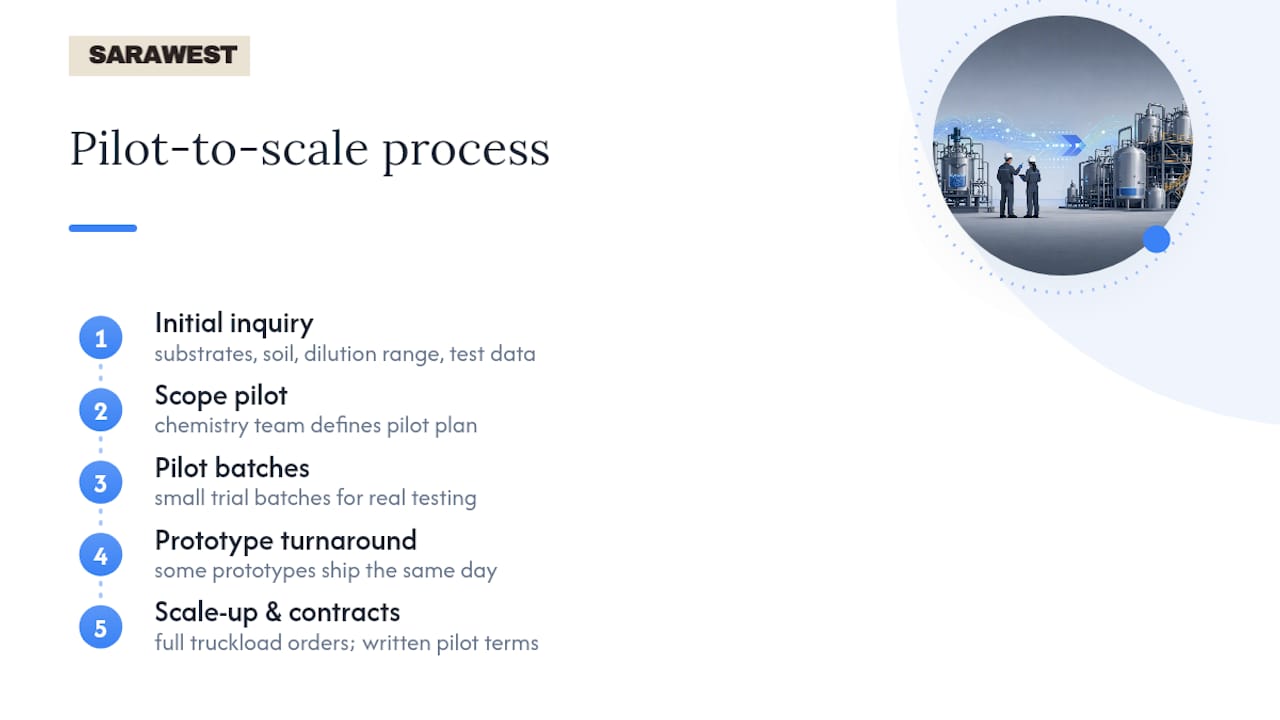
To get a usable quote back quickly, send your first inquiry with the plastic substrates you're cleaning, target soil type, preferred dilution range, and any existing test data you already have. That lets the chemistry team scope a pilot instead of a guess. Review formulation case studies for examples of past scale-up work, or start directly with a contract manufacturing request to get pilot terms and lead times in writing.
Sources
For background on transfer protocols and acceptance criteria, the contract manufacturing process overview breaks down validation and in-process controls in more depth. On engagement models, the toll versus contract manufacturing comparison covers IP and sourcing distinctions worth reading before you sign.
For formulation and lab-testing detail, Sarawest USA's guides on water quality specifications for cleaners and pilot-batch formulation testing are useful companions. On the inspection side, this chemical resistance guide for borescopes offers a useful frame for material-compatibility checks.
- Contract Manufacturing: Processes & Practice
- Toll Manufacturing vs Contract Manufacturing | 3V Sigma USA
FAQ
What Ingredients Should a Plastic-Safe Degreaser Avoid?
Avoid high concentrations of aromatic solvents and strong ketones, which cause crazing in polycarbonate and ABS and clouding in polystyrene, along with strongly caustic or acidic pH extremes.
What's the Difference Between Toll and Contract Manufacturing?
Toll manufacturing has the brand supply raw materials while retaining tight formulation ownership; contract manufacturing is more turnkey, with the manufacturer sourcing materials and often handling packaging.
How Long Does It Take to Develop and Scale a Custom Degreaser?
Timelines vary by complexity, but the sequence from prototype to pilot batch to validated serial production typically runs several weeks to a few months, faster with a manufacturer that has in-house R&D and its own pilot lines.
What Tests Prove a Formula Is Actually Plastic-Safe?
Immersion and swab compatibility testing on your specific plastic substrates, checked for crazing, gloss loss, and hardness change over 24 to 168 hours, is the core evidence, backed by lot-to-lot QC data.
Can Sarawest USA Formulate a Custom Plastic-Safe Degreaser?
Certain contract manufacturers have in-house chemists who can adapt an existing formula from their proprietary library or build a new one tailored to your plastic-substrate and soil-load specifications, including pilot-batch validation before scale-up.