
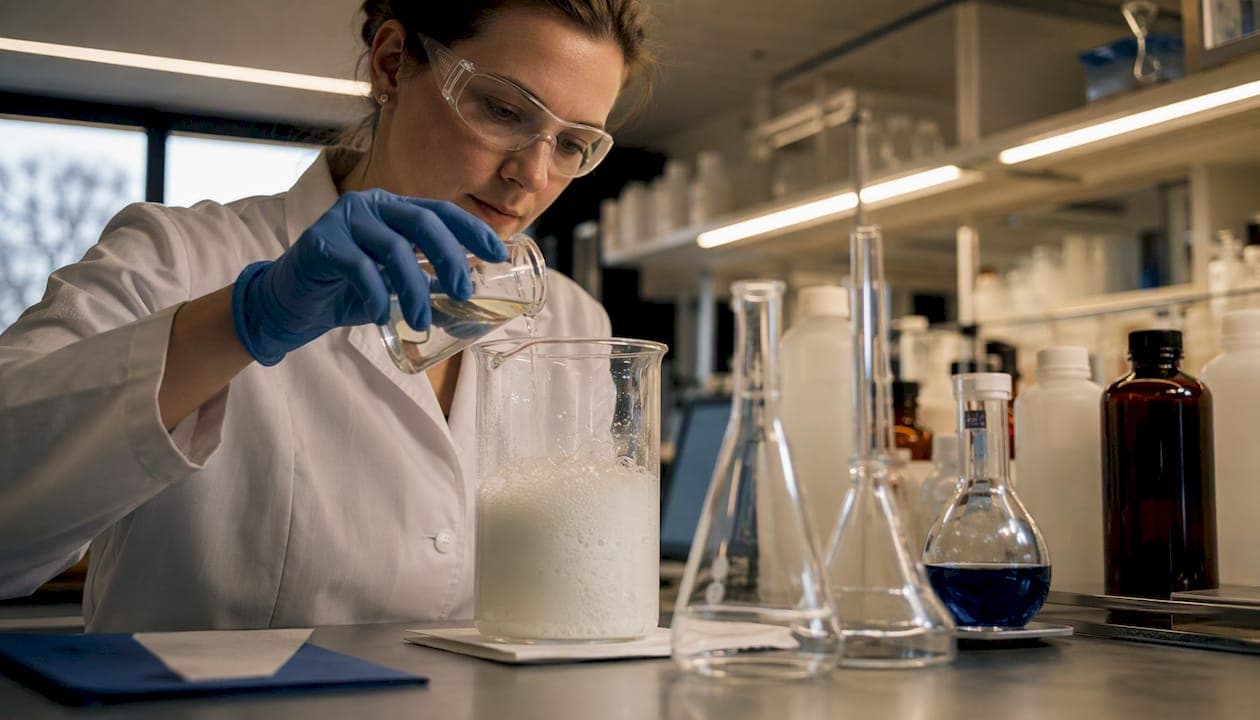
For everyday bathroom soils, an alkaline surfactant-based formula at moderately alkaline pH is your starting point. For limescale and mineral deposits, shift to a citric or sulfamic acid system at pH 2–4. Mold and mildew call for a sodium hypochlorite gel at pH 12–13, and glass or mirror surfaces need an alcohol-based cleaner at pH 6–8. Each of these bathroom cleaner formulation families targets a different soil chemistry, and choosing the wrong one doesn't just underperform — it can damage the substrate.
Here's a bench-ready starting snippet for the most common job, an alkaline all-purpose tub and tile cleaner:
- Sodium laureth sulfate (SLES, 28% active): 12.0% w/w
- Cocamidopropyl betaine (CAPB, 30% active): 4.0% w/w
- Nonionic surfactant (e.g., C9–11 alcohol ethoxylate, 7 EO): small percentage by weight
- Sodium carbonate: small percentage by weight
- EDTA tetrasodium (typical solution concentration): low percentage by weight
- Preservative (e.g., MIT/CMIT blend): very low percentage by weight
- Fragrance: low percentage by weight
- Water (deionized): q.s. to 100%
- Target pH: 10.0–11.0
Critical safety note before you touch the bench: Never combine sodium hypochlorite with acids or ammonia. The first reaction generates chlorine gas; the second produces chloramines. Both are acutely toxic. OSHA's hazard communication standard requires SDS documentation for any formulation containing these actives, and any formula claiming public-health disinfection must be registered with the EPA.
Pro Tip: Supplier formularies from Stepan and Azelis are among the most reliable free starting points in the industry. They publish full ingredient lists, pH targets, and process notes that translate directly to bench work, cutting early-stage risk considerably.
Key Takeaways
A well-designed bathroom cleaner formulation starts with the right chemistry family for the target soil, validates pH and substrate compatibility before scaling, and documents every QC parameter before engaging a contract manufacturer.
| Point | Details |
|---|---|
| Match formula family to soil type | Alkaline surfactant for soap scum; acid citrate for limescale; hypochlorite gel for mold; alcohol for glass. |
| Control pH for both performance and safety | Hypochlorite requires pH >11 for stability; natural stone tolerates only pH 7–10; document target ±0.2 units. |
| Never mix bleach with acids or ammonia | Chlorine gas and chloramine generation are acute hazards; keep incompatible actives in separate vessels and storage. |
| Run QC before scaling | Validate pH, viscosity, stain removal (≥80% vs. control), and preservative efficacy at bench scale before pilot. |
| Sarawest USA for pilot-to-production | In-house R&D chemists run pilot batches from 1,000 units with NDA protection and no broker intermediaries. |
Table of Contents
- Which formulation family fits your bathroom cleaner job?
- What do key ingredients actually do in a bathroom cleaner?
- Lab-ready example formulations with mixing order and safety notes
- What pH ranges protect common bathroom substrates?
- How do you keep a bathroom cleaner stable on the shelf?
- Safety, hazard interactions, and U.S. regulatory requirements
- How do you test and release a bathroom cleaner batch?
- Common formulation problems and how to fix them
- When is it time to bring in a contract manufacturer?
- A formulator's honest priorities
- Sarawest USA supports your formulation from bench to full production
- Sources
Which formulation family fits your bathroom cleaner job?
Choosing the right family before selecting individual ingredients saves significant reformulation time. The six primary families cover nearly every bathroom soil and substrate combination a commercial product will encounter.
Alkaline surfactant all-purpose cleaners (pH 9–12) remove soap scum, body oils, and light organic soils through saponification and surfactant emulsification. They work on glazed ceramic tile, enamel, acrylic, and chrome. Natural stone is a caution — high-pH formulas can etch calcitic surfaces like marble.
Acid descalers (pH 1–4) dissolve calcium carbonate scale, rust, and hard-water deposits through acid chelation and proton-driven dissolution. Citric acid is the gentlest and most biodegradable option; sulfamic acid offers stronger descaling with lower corrosivity than hydrochloric acid; phosphoric acid provides excellent rust removal but carries environmental and regulatory scrutiny. Avoid all acid systems on natural stone, grout with calcium-based binders, and chrome with surface damage.
Oxidizing bleach systems (pH 11–13 for hypochlorite; pH 3–5 for peracetic acid) disinfect and bleach mold, mildew stains, and organic discoloration. U.S. Patent US6838421B2 documents hypochlorite-based bathroom cleaning compositions effective against mold, mildew, and soap scum — useful prior art for any hypochlorite gel development. Sodium hypochlorite degrades rapidly below pH 11, so maintaining alkalinity is a process control requirement, not a preference.
Solvent/alcohol glass cleaners (pH 6–8) cut fingerprints, water spots, and light grease from glass and mirrors using isopropyl alcohol (IPA) or glycol ethers with minimal surfactant. Streak-free performance depends on fast evaporation and low surfactant residue.
Enzymatic cleaners (pH 6–9) target organic soils — urine, fecal matter, protein deposits — through enzymatic hydrolysis. Protease and urease enzymes are the most relevant actives for toilet and drain applications. These are not disinfectants unless a registered antimicrobial active is co-formulated.
Abrasive scouring powders and pastes combine mild abrasives (calcium carbonate, silica) with surfactants and sometimes bleach to physically remove staining and scale from enamel and ceramic surfaces. They are not appropriate for acrylic, soft plastics, or polished stone.
| Soil or Problem | Recommended Family | pH Range | Primary Substrate Caution |
|---|---|---|---|
| Soap scum, body oils | Alkaline surfactant | 9–12 | Avoid on marble, limestone |
| Limescale, hard-water deposits | Acid descaler | 1–4 | Avoid on stone, damaged chrome |
| Rust stains | Phosphoric or oxalic acid | 1–3 | Avoid on chrome, grout |
| Mold and mildew | Oxidizing bleach gel | 11–13 | Avoid on colored grout, metals |
| Glass and mirrors | Alcohol/solvent | 6–8 | Low risk; avoid excess on rubber seals |
| Grout cleaning | Alkaline or mild acid | 9–11 or 2–4 | Test first; grout porosity varies |
| Organic soils (urine, protein) | Enzymatic | 6–9 | Generally safe on most surfaces |
When a surface carries both limescale and mold, a two-step approach is more effective than a single formula: apply the acid descaler first, rinse thoroughly, then apply the hypochlorite gel. Combining these chemistries in one product is technically possible but creates serious stability and safety challenges that require careful formulation and testing.
What do key ingredients actually do in a bathroom cleaner?
Ingredient selection drives performance, stability, and regulatory status. Here's the functional breakdown formulators need at the bench.
Surfactants
Surfactants carry the cleaning load in most bathroom formulas. Anionic surfactants — SLES, LAS, sodium lauryl sulfate — deliver high foam and strong detergency against oily soils. Stepan's Green Foaming Alkaline Bathroom Cleaner at pH 10–11 demonstrates a nonionic/amphoteric blend that achieves both performance and Safer Choice compatibility — a useful benchmark for alkaline all-purpose development.
Acids and alkalis
Oxidizing bleaches
Stability is pH-dependent: below pH 11, chlorine loss accelerates rapidly.
Chelants and sequesterants
Hard water is the enemy of cleaning performance. US Patent 12545858 demonstrates that combining phosphonates with aminopolycarboxylates at alkaline pH improves both cleaning performance and metal compatibility — a useful strategy when formulating for mixed-metal bathroom fixtures. IDS (iminodisuccinic acid) is a biodegradable alternative to EDTA gaining traction in clean-label and eco-positioned formulas. The Azelis RTU bathroom cleaner uses Trilon BS (EDTA) with ammonium hydroxide to form diammonium EDTA, demonstrating a neutral, solvent-free chelant strategy for daily shower cleaners.
Builders, solvents, and thickeners
IPA is commonly used as a solvent in glass cleaners at moderate volume percentages, contributing fast evaporation and streak-free finish.
Preservatives and fragrances
Preservatives are required in any water-based formula not protected by extreme pH or high oxidizer content. Bronopol is useful at pH 4–8. For formulas containing botanical or sugar-derived ingredients, broad-spectrum preservation is critical because these substrates support rapid microbial growth.
Pro Tip: When your formula includes botanical extracts, plant-derived surfactants, or sugar-based ingredients like alkyl polyglucosides, run a preservative efficacy test (USP 51 or ISO 11930) before finalizing the preservative system. These substrates can overwhelm a preservative system that performs fine in a synthetic-only formula.
| Ingredient Class | Function | Typical Active Range (% w/w) | Key Notes |
|---|---|---|---|
| Anionic surfactant (SLES) | Detergency, foam | 1–3% active | High foam; sensitive to hard water without chelant |
| Amphoteric surfactant (CAPB) | Mildness, foam stability | 1–2% active | Boosts compatibility with cationics |
| Nonionic surfactant (alcohol ethoxylate) | Wetting, low foam | 1–3% active | Preferred for Safer Choice; good rinseability |
| Citric acid | Descaling, pH adjustment | 2–8% | Biodegradable; mild on metals |
| Sodium hypochlorite | Disinfection, bleaching | 1–5% available Cl | Requires pH >11 for stability |
| EDTA tetrasodium | Chelation, water softening | 0.1–small percentage by weight% | Restricted in some EU markets; IDS as alternative |
| Phosphonate (HEDP) | Scale inhibition, corrosion protection | 0.05–0.2% | Synergistic with aminopolycarboxylates |
| Carbopol (carbomer) | Thickening, cling | small percentage by weight | Use bleach-stable grade in hypochlorite systems |
| IPA | Solvent, fast evaporation | 5–15% v/v | VOC-regulated in some states |
| MIT/CMIT | Preservation | very low percentage by weight | Broad pH range; allergen disclosure required in EU |
| Fragrance | Sensory profile | 0.1–small percentage by weight% | Allergen disclosure required above threshold |
Lab-ready example formulations with mixing order and safety notes
Each formula below is structured for bench-scale reproduction. Percentages are % w/w unless noted. Always prepare a small safety data sheet summary before handling any of these actives.
Formula 1: Citric acid tile and limescale cleaner
Target pH: 2.0–3.0 | Substrate: Glazed ceramic tile, chrome, enamel (not natural stone, not grout with calcium binder)
Mixing order:
- Charge 70% of the water to the mixing vessel.
- Add citric acid with moderate agitation until fully dissolved.
- Add sulfamic acid; confirm dissolution before proceeding.
- Add HEDP solution; mix 5 minutes.
- Add SLES slowly to minimize foam; mix until homogeneous.
- Add nonionic surfactant.
- Add fragrance; mix 5 minutes.
- Adjust pH with citric acid or dilute NaOH if needed; target 2.0–3.0.
- Top up with remaining water; final mix 10 minutes.
Safety: Wear acid-resistant gloves, safety glasses, and a lab coat. Ventilate the workspace. Do not add alkali to this formula without thorough rinsing of equipment first.
Formula 2: Sodium hypochlorite mold and mildew remover gel
Target pH: 12.0–13.0 | Substrate: Glazed tile, grout (test colored grout first), enamel (not chrome, not acrylic, not natural stone)
This formula draws on the Southern Chemical HC0004 approach, which uses Carbopol for cling and requires pH control above 12.5 during neutralization steps.
Mixing order:
- Charge 60% of the water to the vessel.
- Disperse Carbopol slowly into water with high-shear mixing; avoid aeration.
- Add sodium hydroxide solution carefully to neutralize Carbopol and build viscosity; maintain pH >12.5 throughout.
- Add sodium hypochlorite slowly with gentle agitation; do not allow pH to drop below 11.
- Add bleach-compatible surfactant; mix gently.
- Top up with remaining water; check pH and available chlorine.
Safety: Full face shield, chemical-resistant gloves, and apron required. Never add acid to this vessel. Chlorine gas generation is the primary hazard if pH drops or if acid contamination occurs. Work in a ventilated fume hood or outdoors.
Formula 3: Alkaline high-foam all-purpose bathroom cleaner
Target pH: 10.0–11.0 | Substrate: Glazed tile, enamel, acrylic, chrome (not natural stone)
Stepan's Green Foaming Alkaline Bathroom Cleaner (Formulation 1127) validates this pH range and nonionic/amphoteric surfactant approach.
| Ingredient | % w/w |
|---|---|
| SLES (28% active) | 12.0 |
| CAPB (30% active) | 4.0 |
| C9–11 alcohol ethoxylate (7 EO) | 2.0 |
| Sodium carbonate | small percentage by weight |
| EDTA tetrasodium (40% solution) | small percentage by weight |
| Preservative (MIT/CMIT blend) | 0.05 |
| Fragrance | small percentage by weight |
| Deionized water | q.s. to 100 |
Mixing order:
- Charge 70% of the water; heat to 40°C to aid dissolution.
- Add sodium carbonate; stir until dissolved.
- Add EDTA solution; mix 5 minutes.
- Cool to below 35°C. Add SLES slowly to control foam.
- Add CAPB; mix until homogeneous.
- Add nonionic surfactant.
- Add preservative; mix 5 minutes.
- Add fragrance; mix 5 minutes.
- Adjust pH to 10.0–11.0 with sodium carbonate (up) or citric acid (down).
- Top up with remaining water; final mix 10 minutes.
Formula 4: Alcohol-based glass and mirror cleaner
Target pH: 6.5–7.5 | Substrate: Glass, mirrors, chrome (not rubber seals or painted surfaces)
| Ingredient | % v/v |
|---|---|
| Isopropyl alcohol | small percentage by weight |
| Propylene glycol n-butyl ether | 2.0 |
| Nonionic surfactant (low-foam) | small percentage by weight |
| Ammonium hydroxide (28%) | small percentage by weight |
| Deionized water | q.s. to 100 |
Mixing order:
- Charge water to vessel.
- Add ammonium hydroxide; mix briefly.
- Add IPA; mix until homogeneous.
- Add glycol ether; mix 5 minutes.
- Add nonionic surfactant last to minimize foam.
- Check pH; adjust to 6.5–7.5 if needed.
Safety: IPA is flammable. No open flames or ignition sources. Ventilate the workspace. Ammonium hydroxide releases ammonia vapor; work in a fume hood.
Formula 5: Enzymatic toilet and organic soil cleaner
Target pH: 7.0–8.5 | Substrate: Porcelain, ceramic, plastic toilet components
Enzyme-based formulas targeting organic soils benefit from the phosphonate/aminopolycarboxylate chelant strategy documented in US Patent 12545858, which demonstrates improved cleaning and metal compatibility at alkaline pH.
| Ingredient | % w/w |
|---|---|
| Protease enzyme blend (liquid, 5% active) | 2.0 |
| Urease enzyme (liquid, 5% active) | small percentage by weight |
| SLES (28% active) | 4.0 |
| CAPB (30% active) | 2.0 |
| HEDP (60% solution) | 0.2 |
| IDS (iminodisuccinic acid, 40% solution) | small percentage by weight |
| Preservative (Bronopol) | 0.05 |
| Fragrance | 0.2 |
| Deionized water | q.s. to 100 |
Mixing order:
- Charge 70% of the water at room temperature (enzymes denature above 45°C).
- Add HEDP and IDS solutions; mix 5 minutes.
- Add SLES slowly; mix until homogeneous.
- Add CAPB; mix 5 minutes.
- Add preservative; mix 5 minutes.
- Add enzyme blends last; mix gently to avoid shear denaturation.
- Add fragrance; mix 5 minutes.
- Adjust pH to 7.0–8.5 with citric acid or dilute NaOH.
- Top up with remaining water; final gentle mix.
Safety: Enzymes are respiratory sensitizers. Wear an N95 or P100 respirator when handling enzyme powders or concentrated liquids. Avoid aerosol generation.
What pH ranges protect common bathroom substrates?
pH is the single most consequential formulation variable for substrate safety. Getting it wrong doesn't just reduce cleaning — it causes permanent surface damage that ends up as a warranty or liability issue.
Glazed ceramic tile tolerates a wide pH range (2–13) and is compatible with all formulation families. The glaze itself is chemically inert to most cleaning actives, though prolonged contact with strong acids can dull the finish over time.
Polished natural stone (marble, travertine, limestone) is calcitic and dissolves in acid. Even dilute citric acid at pH 3–4 will etch the surface. Consumer guides like This Old House note this caution for DIY vinegar-based cleaners, and it applies equally to commercial formulas. The safe pH window for natural stone is 7–10. Avoid both strong acids and strong alkalis above pH 11.
Chrome and stainless steel are generally compatible with pH 4–12 but are sensitive to chloride ions at low pH, which can cause pitting corrosion. Avoid prolonged contact with hydrochloric acid-based formulas on chrome fixtures.
Stick to pH 7–11 and limit glycol ether content.
Enamel (cast iron or steel with vitreous enamel coating) is durable across pH 2–12 but can chip under abrasive contact. Avoid scouring powders on enamel surfaces with existing chips or cracks.
Grout compatibility depends on the binder. Cement-based grout dissolves in acid (pH below 4 with prolonged contact); epoxy grout is acid-resistant. Test any acid formula on an inconspicuous area before full application.
| Substrate | Safe pH Range | Avoid |
|---|---|---|
| Glazed ceramic tile | 2–13 | Prolonged strong acid contact |
| Natural stone (marble, travertine) | 7–10 | Any acid; strong alkali above pH 11 |
| Chrome | 4–12 | HCl-based formulas; chloride at low pH |
| Stainless steel | 4–12 | Chloride at low pH; strong oxidizers |
| Acrylic / fiberglass | 7–11 | Solvents above 3%; strong alkali |
| Enamel | 2–12 | Abrasives on chipped surfaces |
| Cement-based grout | 6–12 | Acid below pH 4 with prolonged contact |
| Epoxy grout | 2–13 | Generally resistant; test strong oxidizers |
Pro Tip: When a product will be used on mixed surfaces (e.g., a shower with both ceramic tile and a marble threshold), formulate to the most sensitive substrate. A pH 9–10 alkaline formula with no acid actives is the safest compromise. Post-treatment rinse with deionized or softened water removes residual actives and prevents secondary etching from concentrated residues drying on the surface.
How do you keep a bathroom cleaner stable on the shelf?
Stability is where many promising bench formulas fall apart before they reach production. The primary drivers of instability are pH drift, oxidizer decomposition, microbial contamination, and phase separation.
pH drift is the most common failure mode. Carbonate-buffered alkaline formulas tend to absorb CO₂ from headspace and drift acidic over time. Phosphate or borate buffers provide more stable pH maintenance. In hypochlorite systems, pH drop accelerates chlorine loss — a 1-unit drop in pH can halve available chlorine within weeks.
Oxidizer stability in hypochlorite formulas depends on metal ion contamination (iron and copper catalyze decomposition), UV exposure, and temperature. Store hypochlorite formulas in opaque HDPE containers, away from heat.
Microbial contamination is a risk in any water-based formula with pH below 10 and no oxidizer. Run a preservative efficacy test (USP Chapter 51 or ISO 11930) when the formula targets a neutral to mildly alkaline pH. Formulas with high oxidizer content (hypochlorite, peracetic acid) are self-preserving, but enzyme formulas at neutral pH are particularly vulnerable.
Phase separation in gel formulas typically signals a polymer-surfactant incompatibility or electrolyte imbalance. Check the Carbopol grade against the surfactant system; some grades are sensitive to high electrolyte concentrations.
For microbial challenge testing protocols and preservative efficacy criteria, the USP 51 standard is the U.S. benchmark for non-sterile products.
Packaging choices:
- HDPE bottles: preferred for alkaline and hypochlorite formulas; resistant to most cleaning actives.
- PET bottles: suitable for acid and neutral formulas; avoid strong oxidizers and high-pH formulas above pH 12.
- Glass: appropriate for solvent-heavy formulas (IPA-based glass cleaners) and premium positioning; heavier and more fragile.
- Trigger sprayers: require VOC-compatible seals for solvent formulas; test nozzle compatibility with high-viscosity gels.
- Headspace management: oxidizer formulas need vented caps or controlled headspace to manage pressure buildup from oxygen evolution.
Safety, hazard interactions, and U.S. regulatory requirements
Every formulator working on bathroom cleaners needs a clear picture of the regulatory and safety landscape before a formula leaves the bench.
Never-mix list:
- Bleach (NaOCl) + any acid: Generates chlorine gas (Cl₂), a severe respiratory hazard. This includes citric acid, sulfamic acid, vinegar, and toilet bowl cleaners.
- Bleach + ammonia or ammonium compounds: Produces chloramines (NH₂Cl, NHCl₂), which are toxic at low concentrations and can be lethal in confined spaces.
- Bleach + hydrogen peroxide: Rapid oxygen evolution; can cause container pressurization and violent splashing.
- Peracetic acid + incompatible organics: Risk of exothermic reaction; always check compatibility before combining with surfactants or solvents.
- Concentrated acids + concentrated alkalis: Violent exothermic neutralization; always add acid to water, never the reverse.
OSHA and GHS requirements: Any formula with hazardous components requires a Safety Data Sheet (SDS) in GHS format, with the 16-section structure mandated under OSHA's Hazard Communication Standard (HCS 2012, 29 CFR 1910.1200). GHS pictograms must appear on the product label when the formula meets classification thresholds for corrosivity, oxidizing agents, flammability, or acute toxicity.
EPA disinfectant registration: A formula claiming to kill or inhibit bacteria, viruses, or fungi on hard surfaces is a pesticide under FIFRA (Federal Insecticide, Fungicide, and Rodenticide Act) and requires EPA registration before it can be marketed with those claims. This applies even to products that contain hypochlorite or quaternary ammonium compounds if the label makes a public-health disinfection claim. For a detailed breakdown of when registration is triggered, Sarawest USA's EPA disinfectant registration guide covers the key thresholds.
VOC limits: IPA, glycol ethers, and some fragrances are regulated as volatile organic compounds under EPA and state air quality rules. California's CARB regulations and the OTC Phase II rules set product-category VOC limits for cleaning products. Formulators targeting national distribution must check both federal and California limits, as California's are typically more restrictive.
Fragrance allergen disclosure: The U.S. does not currently mandate the EU-style allergen-by-name disclosure, but IFRA guidelines and retailer requirements (particularly for products sold through major national chains) are pushing toward greater transparency. Formulating with IFRA-compliant fragrance blends and maintaining a fragrance ingredient list is good practice.
Bench-scale safety checklist:
- SDS reviewed and accessible for all raw materials before work begins
- PPE assigned based on hazard profile (acid-resistant gloves, face shield, lab coat, respirator where needed)
- Incompatible actives stored separately; no shared vessels without full decontamination
- Ventilation confirmed before handling volatile solvents or ammonia
- Spill kit and eyewash station within reach
- Waste disposal plan in place for each active class (hypochlorite, acid, solvent)
How do you test and release a bathroom cleaner batch?
Performance testing is where formulation claims get validated or exposed. A structured QC protocol protects both the product and the brand.
Core QC tests and acceptance criteria:
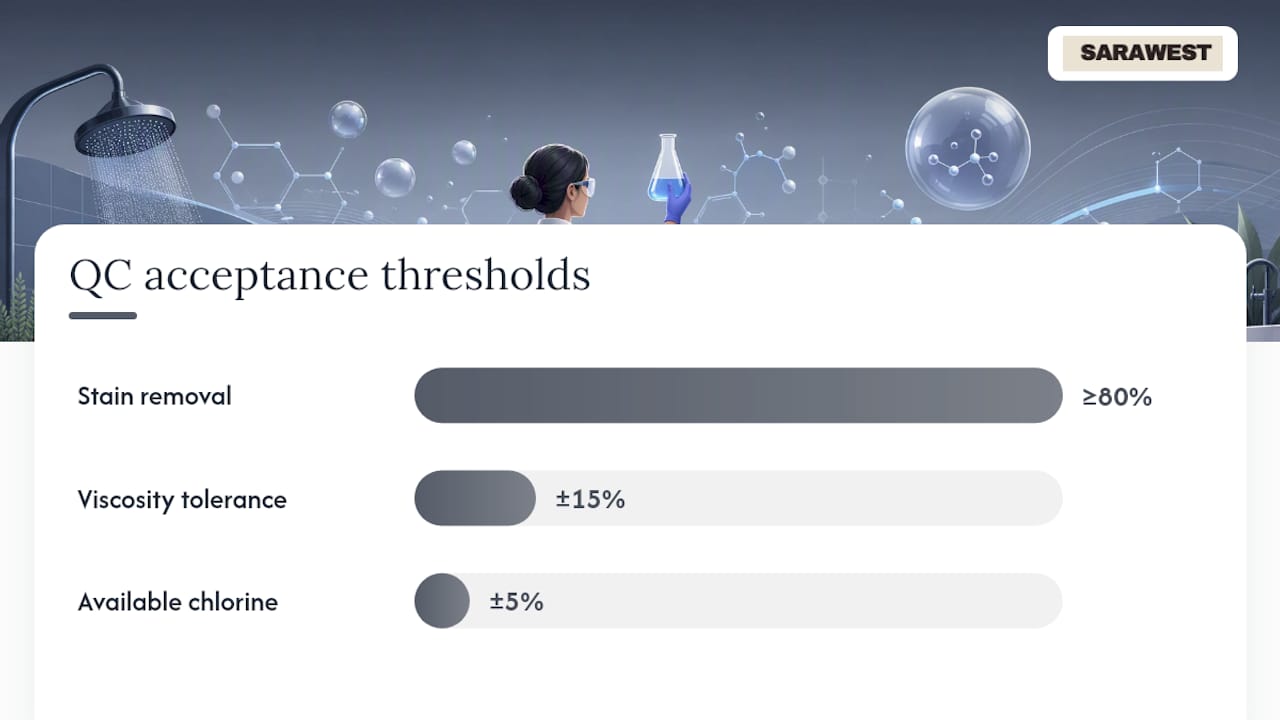
- pH: Measure with a calibrated pH meter (two-point calibration minimum). Acceptance: target pH ±0.2 units.
- Viscosity: Measure with a Brookfield or equivalent rotational viscometer at 25°C. Acceptance: within ±15% of target viscosity for gel and cling formulas; water-thin sprays typically 1–10 cP.
- Appearance: Visual check for clarity, color, and phase separation. Acceptance: clear or uniformly opaque per specification; no visible separation.
- Active content (hypochlorite): Iodometric titration for available chlorine. Acceptance: within ±5% of label claim.
- Foam height: Ross-Miles or cylinder shake test. Acceptance: meets minimum foam height for the product category.
- Cleaning performance: Standardized soil panel test (ASTM D4488 or equivalent). Apply formula to soiled tile coupons, allow contact time, wipe, and measure stain removal by photometric reflectance or visual scale. Acceptance: minimum 80% stain removal vs. control.
- Scale removal: Apply to calcium carbonate-coated coupons; measure weight loss or reflectance change. Acceptance: defined by product specification.
- Preservative efficacy: USP Chapter 51 or ISO 11930. Run when formula pH is 4–10 and no oxidizer is present. Acceptance: Category 2 (cosmetic/topical) or Category A (pharmaceutical) per USP 51 criteria, depending on product positioning.
- Microbial challenge (disinfectant claim): AOAC Use-Dilution Method or EPA-approved test method. Required before any EPA registration submission.
| QC Parameter | Test Method | Acceptance Criterion |
|---|---|---|
| pH | Calibrated pH meter | Target ±0.2 units |
| Viscosity | Brookfield at 25°C | Target ±15% |
| Available chlorine | Iodometric titration | Target ±5% |
| Stain removal | ASTM D4488 photometric | ≥80% vs. control |
| Preservative efficacy | USP 51 / ISO 11930 | Category 2 minimum |
| Appearance | Visual | Clear or uniform; no separation |
| Foam height | Ross-Miles | Per product spec |
Batch release QC checklist:
- Confirm raw material lot numbers and C of A documents are on file.
- Verify mixing order was followed per the batch record.
- Measure and record pH within 30 minutes of batch completion.
- Measure and record viscosity at 25°C.
- Perform visual appearance check; photograph and file.
- Run active content test for oxidizer formulas.
- Pull retain sample (minimum 100 mL) and store at ambient temperature.
- Sign off batch record; no release without all parameters within specification.
For certificate of analysis documentation requirements at commercial scale, the C of A must reflect the same parameters tested at bench scale to maintain continuity through pilot and production runs.
Common formulation problems and how to fix them
Most bench failures fall into a handful of categories. Diagnosing the root cause before reformulating saves weeks.
Separation or syneresis in a gel:
- Check electrolyte concentration; high salt content destabilizes Carbopol gels.
- Verify the Carbopol grade is appropriate for the surfactant system.
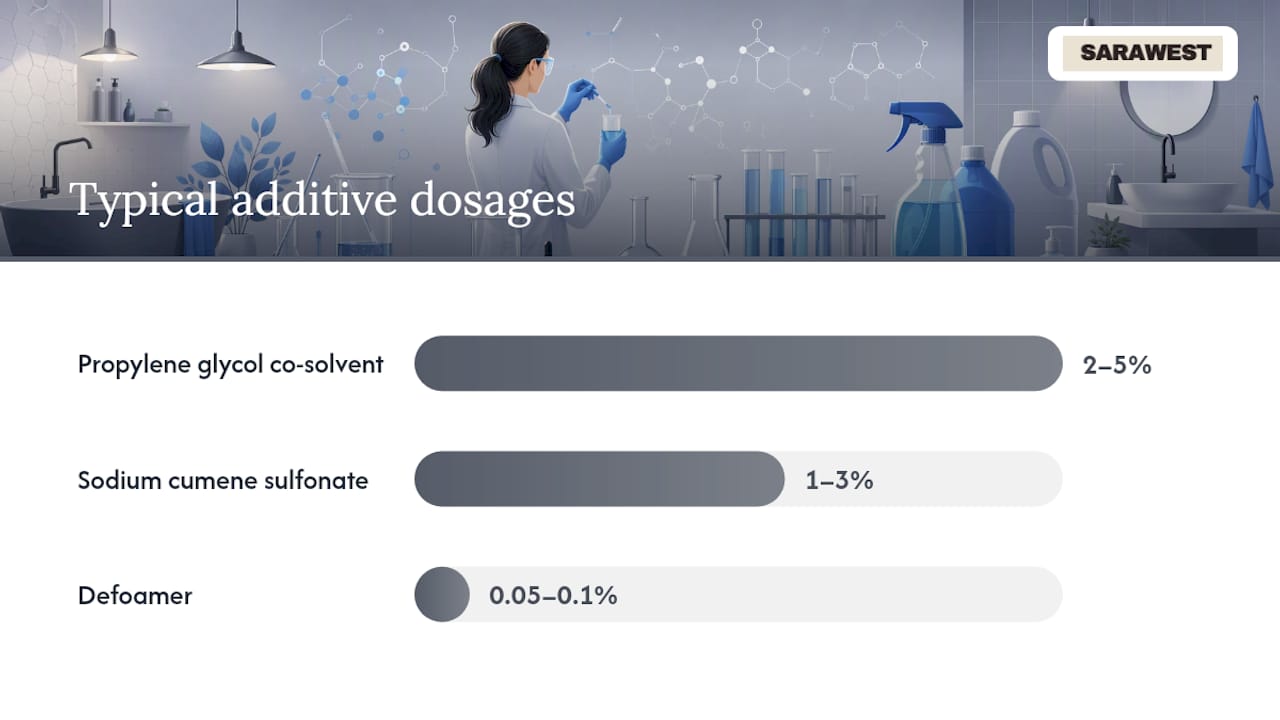
- Add a co-solvent (propylene glycol at 2–5%) to improve polymer-water compatibility.
- If the issue persists, switch to an associative thickener (HEUR or HASE) which tolerates higher electrolyte loads.
Haze or cloudiness in a clear spray:
- Check preservative salt form; some preservative salts precipitate at low temperature or high electrolyte.
- Verify nonionic surfactant cloud point is above storage temperature.
- Reduce electrolyte (sodium chloride, sodium sulfate) content if present.
- Add a hydrotrope (sodium cumene sulfonate at 1–3%) to improve clarity.
Poor cleaning performance:
- For oily soils: raise anionic surfactant concentration or add a glycol ether co-solvent.
- For mineral scale: lower pH or increase acid concentration; add a chelant if not already present.
- For organic stains: increase oxidizer concentration or switch to an enzymatic active.
- Check water hardness in the test protocol; hard water suppresses surfactant performance without adequate chelation.
pH drift on storage:
- Add a buffer system appropriate to the target pH range (phosphate for pH 6–8; carbonate/bicarbonate for pH 9–11).
- Check headspace CO₂ absorption for alkaline formulas; nitrogen blanketing during filling can help.
- Verify raw material quality; impurities in surfactant grades can introduce acids or alkalis.
Excessive foam in a spray:
- Reduce anionic surfactant and increase nonionic content.
- Add a silicone or hydrocarbon defoamer at 0.05–0.1%.
- Switch to a lower-foam anionic (e.g., SLES with higher EO count).
Nozzle clogging:
- Check for polymer precipitation at the nozzle tip; reduce Carbopol or switch thickener.
- Verify fragrance compatibility; some fragrance components can crystallize at the nozzle.
- Reduce total dissolved solids if salt precipitation is the cause.
Pro Tip: When optimizing a surfactant blend for both cleaning and rinseability, change one variable at a time and run a side-by-side bench test against the previous version. The most common mistake is adjusting both the anionic and nonionic levels simultaneously, which makes it impossible to attribute the performance change to either. Document every trial with date, batch number, and test results — that record becomes your formulation history and is exactly what a contract manufacturer needs when you hand off the recipe.
When is it time to bring in a contract manufacturer?
There's a clear set of signals that tell you a formula is ready to leave the bench and move to a production partner. Recognizing them early saves money and avoids the costly mistake of scaling an unstable or non-compliant formula.
Signals that you're ready to engage a contract manufacturer:
- Bench formula is stable across at least three replicate batches with consistent pH, viscosity, and appearance.
- QC acceptance criteria are documented and validated at bench scale.
- Target MOQ and packaging format are defined.
- Regulatory claims (especially disinfectant) are either confirmed not to require EPA registration or the registration process has been initiated.
- Raw material suppliers and lot-to-lot variability have been assessed.
Scale-up checklist:
- GMP documentation: batch records, raw material specifications, and in-process controls are written and reviewed.
- Pilot batch sizing: plan for a minimum pilot run (typically 1,000 units or equivalent volume) to validate mixing equipment, fill speeds, and packaging compatibility.
- Packaging compatibility tests: confirm that the formula does not interact with the chosen container, closure, and dispensing system over the expected shelf life.
- C of A requirements: define which parameters appear on the commercial C of A and confirm the contract manufacturer's testing capabilities match.
- Microbial challenge results: if claiming preservation or disinfection, have results in hand before the pilot run.
For a detailed scale-up manufacturing playbook, the process from bench to pilot to full production involves more documentation than most formulators anticipate — and that documentation is what protects both parties in a contract manufacturing relationship.
Sarawest USA's in-house R&D chemists work with formulators at exactly this stage: reviewing bench data, identifying scale-up risks, and running pilot batches from 1,000 units before committing to full production. With a library of over 1,200 proprietary formulas across commercial cleaning and seven other industries, the team can adapt an existing formula or build from scratch. Rapid prototyping is a core capability — not a promise made through a broker. Explore Sarawest USA's commercial cleaning manufacturing services to see what a production partnership looks like in practice.
A formulator's honest priorities
The most common mistake in bathroom cleaner development isn't a chemistry error. It's sequencing. Formulators who chase sensory profile or cost targets before validating safety and compatibility end up reformulating twice — once to fix the substrate damage complaint, and again to fix the stability failure that shows up six months into shelf life.
The right order is: safety and chemical compatibility first, cleaning efficacy second, stability and preservation third, and cost and sensory profile last. That sequence isn't arbitrary. Safety failures can injure people and trigger regulatory action. Compatibility failures damage surfaces and generate returns. Stability failures erode brand trust. Cost and fragrance are real concerns, but they're optimization problems, not foundation problems.
The clean-label trend adds a layer of tension that's worth naming directly. Replacing EDTA with IDS or switching from MIT to a botanical preservative system is achievable, but it usually comes with a performance or stability tradeoff that needs to be quantified, not assumed away. Test the claim before you put it on the label.
Sarawest USA supports your formulation from bench to full production
Formulators who've done the bench work and validated their QC criteria face a specific problem: finding a manufacturing partner who won't slow them down or hand them off to a broker. Sarawest USA is built for exactly that moment.
The commercial cleaning manufacturing team at Sarawest USA handles custom formulation, pilot batch production from 1,000 units, clean-label manufacturing, private label, and white label options — all with in-house R&D chemists who read every inquiry directly. No intermediaries. Typical engagement starts with a formulation brief or an existing bench recipe; the team reviews it, identifies scale-up risks, and proposes a pilot run timeline. IP and formula confidentiality are protected under a mutual NDA before any technical exchange. Ready to move from bench to pilot? Submit an RFQ at Sarawestusa — a real chemist responds, not a sales queue.
Sources
The following sources were used in drafting this article and are worth bookmarking for ongoing formulation work.