
Safer Choice certification is the U.S. EPA's voluntary label confirming that every intentionally added ingredient in a product meets strict human health and environmental safety criteria. It's not a marketing claim a brand slaps on its own bottle. Every formula carrying the label has passed a chemical-by-chemical review by the federal government, which is why consumers, hospitals, schools, and procurement officers treat it as a shortcut to trust. Manufacturers benefit too, since certification opens doors that private ecolabels rarely can.
TL;DR:
- Manufacturers can streamline certification by integrating Safer Choice criteria early in product development, avoiding costly reformulation delays later.
- EPA's review process assesses every ingredient against federal toxicity data, making the standard more rigorous than private ecolabels based on self-evaluation.
- The SCIL list simplifies ingredient selection by providing pre-screened chemicals, reducing review time for products built with approved substances.
- Recertification involves ongoing audits every three years, requiring consistent ingredient disclosure and adherence to evolving standards.
- Achieving Safer Choice status opens opportunities in government procurement, LEED points, and trust among health-conscious consumers and institutional buyers.
Table of Contents
- What Safer Choice Certification Actually Covers
- Real Advantages for Consumers, Buyers, and Manufacturers
- How Safer Choice Certification Works, Step by Step
- Inside the Safer Choice Standard: Criteria, SCIL, and Product Rules
- Where to Find Safer Choice-Certified Products
- Preparing Your Formula: A Manufacturer's Practical Checklist
- How Safer Choice Certification Affects Real Health and Environmental Outcomes
- How the Safer Choice Program Has Evolved
- Why This Certification Matters More Than Manufacturers Realize
- How Sarawest USA Helps You Prepare for Safer Choice Certification
- Sources
What Safer Choice Certification Actually Covers
The Safer Choice program exists to push manufacturers toward chemistry that performs well without the toxicological baggage of legacy formulas. EPA scientists built it as a voluntary partnership. Companies opt in, not because a regulation forces them, but because the label carries weight regulations alone don't.
The label shows up in a few forms depending on the product:
- Standard Safer Choice label for products meeting the full ingredient and performance criteria.
- Fragrance-Free variant for formulas that skip fragrance additives entirely rather than merely disclosing them.
- Design for the Environment (DfE) mark, used on some antimicrobial products reviewed under a related EPA pathway.
Here's what separates this from a private seal a trade association invented: EPA's review team evaluates chemicals against government toxicology data, not industry-funded studies. A private ecolabel can set its own bar and grade its own homework. Safer Choice can't, because the reviewer is the federal agency responsible for chemical safety nationwide.
Real Advantages for Consumers, Buyers, and Manufacturers
Every ingredient disclosure requirement under Safer Choice exists so a parent standing in a store aisle or a facilities director filling out a purchase order doesn't have to guess. That transparency is the whole point.
For institutional buyers, the payoff is concrete. Safer Choice certification carries eligibility for points under the U.S. Green Building Council's LEED v4 EBOM standard, which matters enormously to facilities managers chasing green building credentials. Federal purchasing programs also flag Safer Choice products, giving certified manufacturers a visibility advantage in government contracts that uncertified competitors simply don't get.
For manufacturers, certification tends to reshape R&D priorities for the better:
- Formulators start comparing surfactants and solvents against safer functional alternatives instead of defaulting to legacy chemistry.
- Sales teams gain a credential that opens conversations with hospital systems, school districts, and green-building contractors.
- Procurement teams inside larger companies increasingly require Safer Choice status as a supplier qualification, not a bonus.
Pro Tip: If your product already performs well, don't assume it will pass automatically. EPA evaluates every intentionally added ingredient, including the ones your formulators consider afterthoughts, like colorants and preservatives.
How Safer Choice Certification Works, Step by Step
Getting the label is a documentation-heavy process, and manufacturers who treat it as a paperwork afterthought usually stall out. Here's the sequence that actually works.
- Read the Standard and product-class criteria first. The Safer Choice Standard spells out Master Criteria and functional-class rules specific to your product category before you touch a formula.
- Hire an authorized third-party profiler. EPA doesn't review raw supplier data directly. Firms like Gradient Corporation, NSF International, and ToxServices compile ingredient hazard profiles and handle confidential supplier communication on your behalf.
- Submit full ingredient disclosure to both EPA and the profiler. Every ingredient, intentional or incidental, goes on the table, which means your profiler needs supplier cooperation, not just your own formula sheet.
- EPA reviews the profile and negotiates a partnership agreement. This step confirms functional-class compliance and finalizes label terms.
- Plan for audits and renewal from day one. Partnerships run on a three-year cycle, and EPA conducts both desk and on-site audits during that window.
Pro Tip: Loop your third-party profiler in before you finalize packaging or fragrance decisions. Reformulating after a profiler flags a problem costs far more time than designing around known criteria upfront.
Inside the Safer Choice Standard: Criteria, SCIL, and Product Rules
The Standard works on two levels. Master Criteria apply across every product category, screening out known carcinogens, reproductive toxins, and persistent environmental hazards regardless of what the product does. Functional-class criteria layer on top, judging ingredients against safer alternatives that serve the same job.
That functional-class approach is the part formulators find counterintuitive at first. EPA evaluates surfactants against other surfactants, solvents against other solvents, and fragrances against other fragrances, rather than judging a whole formula in isolation. A chelant that's perfectly safe in isolation might still fail if a safer chelant exists that does the same job.
The Safer Chemical Ingredients List, or SCIL, is where this becomes practical. It's a running roster of hundreds of chemicals EPA has already screened and cleared for use in Safer Choice products. Formulators building a product from scratch can pull candidate ingredients straight from SCIL and skip a chunk of the review timeline.
Beyond ingredient selection, the Standard sets product-level thresholds too:
- pH ranges appropriate to the product's use case and skin or surface contact
- VOC limits tied to indoor air quality goals
- Packaging expectations, including a preference for recycled content where feasible
- Supplemental rules for specific claims, like the fragrance-free designation, which requires omitting fragrance ingredients entirely rather than just disclosing them
Where to Find Safer Choice-Certified Products
EPA maintains a searchable list of Safer Choice certified products covering cleaners, laundry detergents, and other chemical-based goods. It's the fastest way to confirm a product's status without relying on shelf packaging alone.
A few habits make the label more useful:
- Check the product page or an accessible company website for the full ingredient list, since Safer Choice requires disclosure even for fragrances and dyes.
- Look for the specific label variant. Fragrance-Free and standard Safer Choice aren't interchangeable claims.
- Institutional buyers should write Safer Choice certification directly into procurement specifications rather than treating it as a nice-to-have, and cite it explicitly in LEED documentation packages.
Preparing Your Formula: A Manufacturer's Practical Checklist
Manufacturers who plan for Safer Choice criteria before formulation starts avoid the expensive back-and-forth of reformulating a finished product. Retrofitting compliance onto a product already in production usually costs more time than building toward the Standard from the first batch.
- Build pH and VOC targets into your formulation brief, not into a post-launch fix list.
- Select an authorized third-party profiler early and give them room to work directly with your suppliers. This keeps proprietary formula details confidential while still satisfying EPA's review requirements.
- Document every non-functional ingredient, meaning dyes, fragrances, and preservatives, since these get evaluated with the same scrutiny as your primary actives.
- Prepare your quality documentation now for the audit cycle ahead, including supplier certificates and batch records.
Pro Tip: Treat your certificate of analysis process as part of your Safer Choice prep, not a separate compliance task. Auditors will ask for the same batch-level traceability either way.
This is where Sarawest USA's in-house R&D chemists earn their keep. Because we adapt formulas from a library of more than 1,200 proprietary chemistries rather than building from zero, clients preparing for Safer Choice can move from concept to pilot batch fast, often without the multi-month wait a broker-based supply chain adds.
How Safer Choice Certification Affects Real Health and Environmental Outcomes
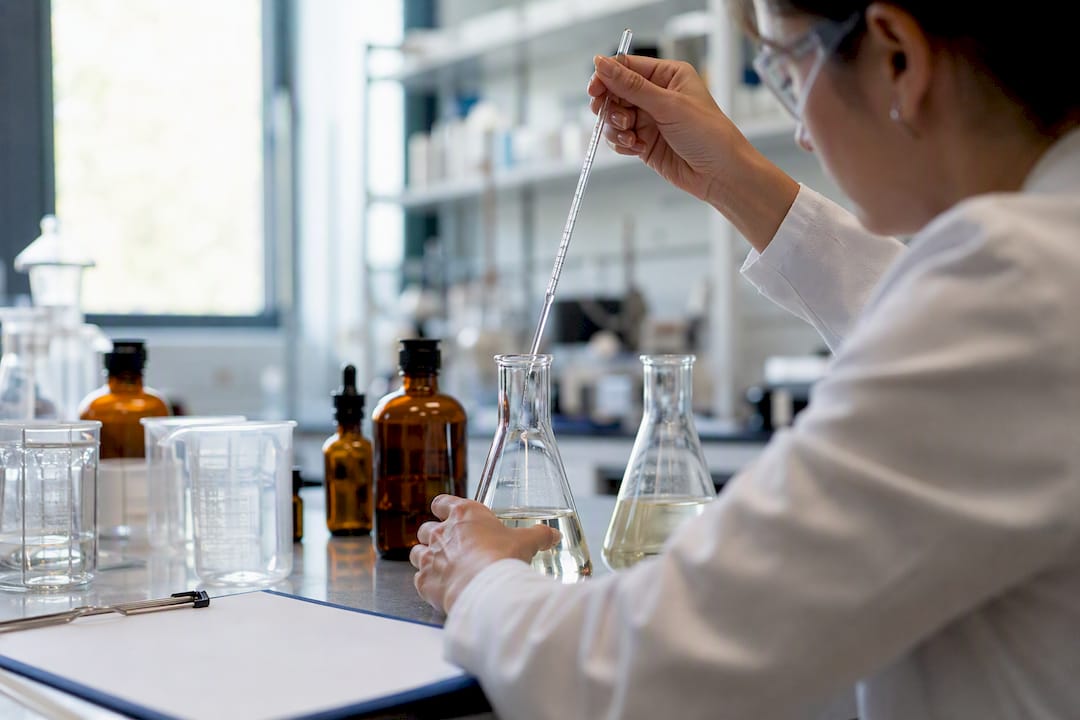
The screening criteria behind Safer Choice exist because certain chemicals commonly used in cleaning products are known carcinogens, reproductive toxins, or persistent environmental contaminants, and removing them from everyday products reduces exposure at scale. That matters most for people who handle cleaning products constantly: janitorial staff, healthcare workers, and parents cleaning surfaces around small children.

Household cleaning chemistry doesn't stay contained to the bottle. VOCs off-gas into indoor air, and many conventional cleaners have been linked to indoor air quality concerns in schools and offices. Safer Choice's VOC thresholds directly target that exposure pathway, which is part of why institutional buyers with health-sensitive populations, hospitals, daycare centers, senior living facilities, gravitate toward the label.
The environmental side runs downstream, literally. Surfactants and solvents that don't break down easily end up in wastewater systems and eventually in waterways. Functional-class evaluation pushes formulators toward biodegradable alternatives that do the same cleaning job with a shorter environmental half-life. A biodegradable surfactant swapped in during formulation isn't a marketing decision. It's a direct response to the criteria EPA applies during profiler review.
None of this means every Safer Choice product is risk-free in an absolute sense. Chemistry always involves tradeoffs. What the certification demonstrates is that the tradeoffs were evaluated against documented federal criteria instead of left to a marketing department's discretion.
How the Safer Choice Program Has Evolved
Safer Choice grew out of EPA's earlier Design for the Environment initiative, and the agency has steadily tightened and expanded its criteria since the rebrand. The functional-class approach itself reflects an evolution in thinking. Early green chemistry efforts often judged single ingredients in isolation; the current Standard forces comparison against safer alternatives serving the identical function, which raises the bar every time a genuinely safer surfactant or solvent enters the market.
The Safer Chemical Ingredients List keeps expanding too, as EPA reviews new chemistries and adds cleared options. That's a moving target for formulators, in a good way. A solvent that wasn't on SCIL two years ago might be today, opening new formulation paths that didn't exist when a product was first certified.
Audit and renewal requirements have also become more structured. The three-year partnership cycle, combined with desk and on-site audits, gives EPA a mechanism to catch formula drift, cases where a certified product quietly changes ingredients after launch without updating its certification status. Manufacturers who treat certification as a one-time event rather than an ongoing partnership tend to run into trouble at renewal.
Expect the program to keep tightening rather than loosening. EPA's general direction has been toward more functional-class categories and more granular product-class criteria, not fewer. Manufacturers building new products today should assume tomorrow's Standard will be stricter, not more permissive.
Why This Certification Matters More Than Manufacturers Realize
Safer Choice isn't just a label to chase for shelf appeal. It's a forcing function that pushes formulation practices toward safer functional-class alternatives long before a regulator requires it, and that shift tends to open institutional buying channels, hospital systems, school districts, government contracts, that never open for uncertified products.
The manufacturers who struggle with certification are almost always the ones who treat it as a final compliance check instead of a design constraint from day one. Building toward the Standard during formulation, not after, saves months of rework. That's not a theory. It's the pattern I've seen play out across contract manufacturing conversations for years: early planning wins, retrofitting loses.
— Faisal Mansur
How Sarawest USA Helps You Prepare for Safer Choice Certification
Most manufacturers hit the same wall with Safer Choice: their formula works, but nobody in-house has time to rebuild it around functional-class criteria while also hitting a launch deadline. Sarawest USA closes that gap directly, our in-house R&D chemists adapt existing chemistry from a library of more than 1,200 proprietary formulas or build new ones from your specifications, so you're not starting the reformulation process from a blank page.
We support clients through the parts of certification prep that eat the most time: pH and VOC adjustments during formulation, coordination with your chosen third-party profiler, documentation for dyes and fragrance components, and pilot batches sized for testing before a full production run. Whether you need a car wash soap reformulated around SCIL-approved surfactants or a full clean-label cleaning line built from scratch, our contract manufacturing team can move from concept to pilot batch fast, sometimes the same day. Tell us what you're trying to certify, and request a quote to see how quickly we can get your formula audit-ready.
Sources
- Safer Choice | US EPA
- Steps to Get the Safer Choice Label on Your Product | US EPA
- Safer Choice Standard and Criteria | US EPA