
USDA biobased certification is a third-party verified label that confirms a product's percent biobased content and lets eligible manufacturers display the USDA Certified Biobased Product label. The verification runs through the BioPreferred Program, and it means a lab, not your marketing team, has confirmed how much of your product's carbon comes from renewable sources.
If you're weighing whether to pursue it, here's where to start:
- Check the BioPreferred Program Catalog to find your product category and its minimum biobased content requirement.
- Create an eAuth account and order ASTM D6866 testing for your formulation before you touch the application itself.
Sarawest USA works with brands at exactly this stage, turning formulations into test-ready samples without the back-and-forth of a broker in between.
Key Takeaways
USDA biobased certification requires ASTM D6866 lab verification, category-specific minimum content thresholds, and a completed Company Tools application before the label can legally appear on a product.
| Point | Details |
|---|---|
| Confirm your category first | Check the BioPreferred catalog before testing to confirm your category's minimum and rule out statutory exclusions. |
| ASTM D6866 is mandatory | Every application requires third-party radiocarbon testing at roughly $400 per sample plus shipping. |
| Budget around 90 days | Applications move fastest when you respond promptly to USDA's review questions without delay. |
| Certification lasts five years | Renewal notifications are due 90 days before expiration, and formulation changes need reporting within 30 days. |
| Sarawest USA supports readiness | Pilot batches, COA assembly, and sample shipping to accredited labs help manufacturers reach a submission-ready application. |
Table of Contents
- What Does USDA Biobased Certification Actually Mean?
- Does Your Product Qualify, and What's the Minimum Content?
- How Do You Apply for USDA Biobased Certification?
- What Does ASTM D6866 Testing Actually Measure?
- How Long Does Certification Take, and What Does It Cost?
- What Do You Get for Pursuing the Label, and How Should You Use It?
- How Can a Contract Manufacturer Support the Certification Process?
- Why Certification Timing Matters for U.S. Brands Right Now
- How Sarawest USA Supports Your Certification Push
- Frequently Asked Questions
- Sources
What Does USDA Biobased Certification Actually Mean?
USDA runs two separate tracks, and mixing them up trips up a lot of applicants. A "Qualified Biobased Product" sits in one of USDA's designated procurement categories, which makes it eligible for preference in federal purchasing. That status is mandatory for agencies and their contractors buying within those categories, but it doesn't grant you a label to put on a bottle.
The USDA Certified Biobased Product label is different. It's a voluntary labeling initiative that requires third-party lab testing before you can display the mark. The label documents one specific, verified fact: your percent biobased carbon content. It is not a general environmental claim, a safety endorsement, or proof your product is "green" in any broader sense.
What label use permits:
- Displaying the verified percent biobased content alongside the USDA mark
- Using the certification in procurement bids and retail marketing materials
- Renewing and maintaining the claim as long as your formulation stays consistent
What it does not permit:
- Implying the product is biodegradable, non-toxic, or environmentally superior
- Using the label before receiving USDA's notice of certification
- Applying the certified percentage to a reformulated product without retesting
Pro Tip: Don't conflate biobased content with "plant-based" marketing language. A product can be 60% biobased carbon and still contain petrochemical additives that matter to a buyer's other sustainability criteria. Say exactly what the label verifies, nothing more.
Does Your Product Qualify, and What's the Minimum Content?
Start with the BioPreferred catalog, which now covers numerous defined product categories, each with its own minimum biobased content threshold set by USDA rulemaking. A cleaning product, for instance, might carry a different minimum than a lubricant or a landscaping product. If your product doesn't fit an existing category, it can still qualify for certification under the default 25% biobased content threshold that applies to non-category products.
Statutory exclusions matter just as much as the minimums. USDA's rules exclude several categories outright, regardless of biobased content:
- Motor vehicle fuels and heating oil
- Electricity
- Food, feed, and other ingestible products
- Certain pharmaceuticals and nutraceuticals
Run through this sequence before you spend money on testing: look up your category, confirm the applicable minimum (category-specific or the 25% default), check the exclusion list, then inventory what documentation you'll need to submit. Skipping the exclusion check is a common way applicants waste testing budget on a product that was never eligible.
How Do You Apply for USDA Biobased Certification?
The application runs entirely through USDA's online system, and the order of operations matters more than most applicants expect.
- Create an eAuth account and register in the BioPreferred "Company Tools" application, which is where you'll manage every step of the submission.
- Collect your documentation before you start data entry: full product formulation details, a third-party ASTM D6866 test report, a component-by-component mass breakdown if your product is a complex assembly, and current product photos with labeling artwork.
- Enter your product data into Company Tools, upload the verified test report, and complete every required application field. Incomplete fields are the single biggest cause of review delays.
- Wait for USDA's review and, if approved, its notice of certification.
Pro Tip: Speed up review by including the testing lab's accreditation credentials, a traceable certificate of analysis, and a clearly labeled component mass breakdown. Reviewers flag vague or unlabeled test data first, and that's what triggers a request for more information.
Once USDA issues the notice of certification, you're authorized to use the USDA Certified Biobased Product label. Not before. Using the mark ahead of that notice is a violation of program rules, even if your test results already came back clean.
What Does ASTM D6866 Testing Actually Measure?
ASTM D6866 is the radiocarbon method USDA requires for every biobased certification application. It measures the ratio of biobased carbon to total organic carbon in your product, distinguishing modern, renewable carbon from fossil carbon based on carbon-14 content. That percentage is the number that gets compared against your category's minimum, so a sloppy sample prep can cost you a passing result on a formulation that would otherwise qualify.
When you're choosing a lab, run through this checklist:
- Confirm ASTM and ISO 17025 compliance, not just a general chemistry lab license
- Ask about chain-of-custody procedures for your sample
- Get clear sample prep guidance in writing before you ship anything
- Confirm turnaround time upfront, since retesting a failed sample adds weeks
- Ask whether the lab has prior USDA BioPreferred program experience
D6866 isn't optional or one of several accepted methods. It's the program-mandated verification standard USDA requires for every certified product, regardless of category.
How Long Does Certification Take, and What Does It Cost?
USDA's own guidance points to roughly 90 days for a complete application when the applicant responds promptly to review questions. That timeline stretches indefinitely when a company doesn't answer USDA's follow-up requests, since the clock effectively pauses until you do.
Cost drivers break down into a few buckets: ASTM D6866 testing runs approximately $400 per sample plus shipping, and multi-component products often need testing on each component, which multiplies that figure fast. Add internal time for documentation assembly, occasional retesting when a sample prep issue forces a redo, and periodic retesting tied to your five-year renewal cycle.
Common pitfalls worth avoiding:
- Submitting incomplete test reports missing lab accreditation details
- Using the wrong sample preparation method for your product matrix
- Failing to notify USDA of formulation changes within 30 days, which can trigger compliance action
- Assuming a catalog listing means you already have label authorization
The gap between "listed in the catalog" and "authorized to use the label" trips up more applicants than the testing itself does.
What Do You Get for Pursuing the Label, and How Should You Use It?
Federal agencies and their contractors represent a real procurement incentive: they're directed to give preference to biobased products in designated categories, which opens a purchasing channel that competitors without certification simply can't access. That's the procurement side of the equation.
The marketing side matters just as much for consumer-facing brands. Third-party verification cuts through the noise of self-declared "eco-friendly" claims, and shoppers increasingly distrust unverified sustainability language on packaging.
Use the label correctly:
- Display your verified percent biobased content, not a rounded or estimated figure
- Follow USDA's label artwork specifications exactly once you receive your notice of certification
- Keep the claim scoped to biobased carbon content, nothing broader
Pro Tip: Resist the urge to pair the USDA mark with language like "eco-friendly" or "green" on the same label panel. USDA's own guidance is explicit that the certification verifies biobased carbon percentage only, and stacking unverified claims next to a verified one invites scrutiny on both.
How Can a Contract Manufacturer Support the Certification Process?
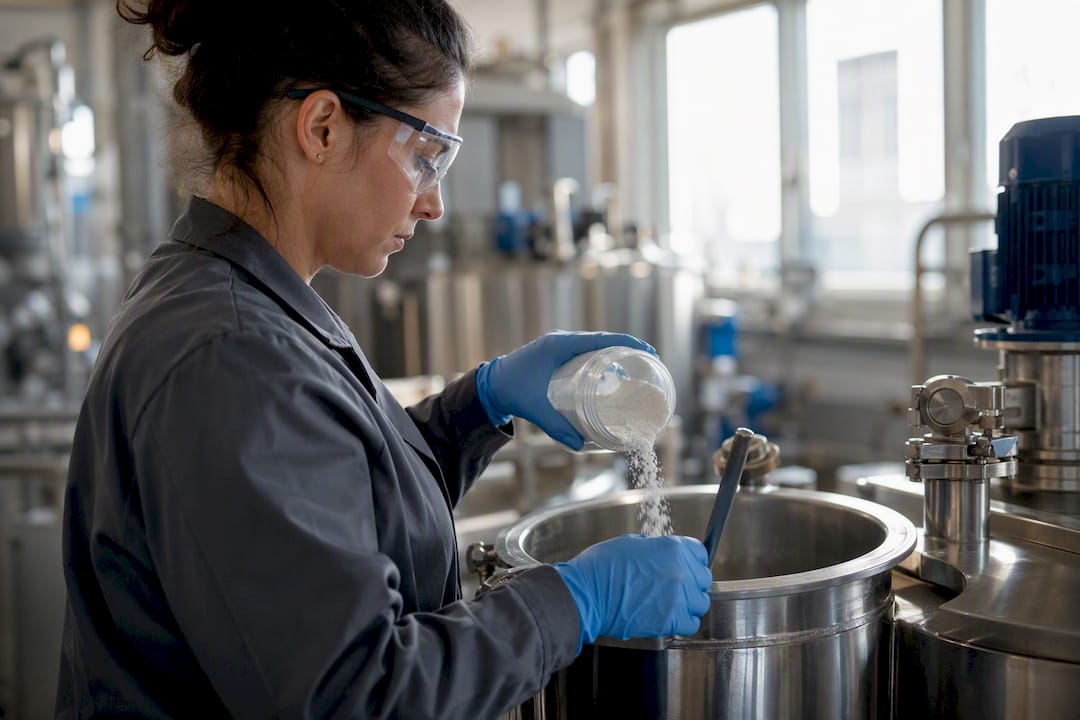
Most manufacturers underestimate how much groundwork sits between "we want this certified" and "we submitted the application." A contract manufacturer that's done this before typically handles formulation review, sample preparation and shipping to an accredited D6866 lab, certificate of analysis assembly, label artwork coordination, and pilot-scale runs to validate packaging before a full production commitment.
Capabilities worth checking for in a manufacturing partner:
- In-house R&D chemists who can adjust a formulation to clear a category minimum without starting from scratch
- Pilot-scale production runs sized for test batches, not just full truckloads
- Established COA and quality assurance workflows that match what USDA reviewers expect to see
- Packaging and label support so your artwork is ready the day certification comes through
Pro Tip: Run a pilot batch first, confirm your D6866 results clear the threshold, then submit the full application. Testing a full production run before you've validated the formulation is the single most expensive mistake in this process, since a failed result on a large batch means paying for both the testing and the wasted material.
Why Certification Timing Matters for U.S. Brands Right Now
Federal procurement preference for biobased products isn't shrinking, and consumer skepticism toward unverified sustainability claims keeps growing. Together, those pressures make third-party verification less of a nice-to-have and more of a market-access requirement for brands selling into government channels or retail shelves crowded with green marketing noise. USDA's program updates around transition deadlines for previously qualified products also mean portfolios need periodic review, not a one-time check.
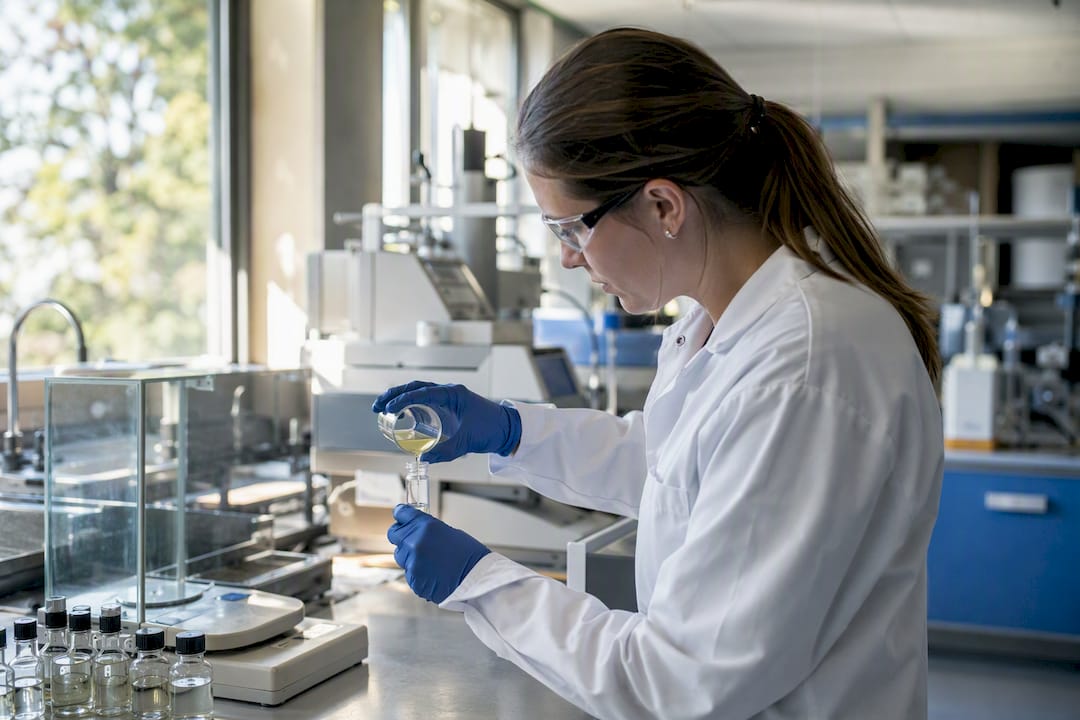
If you manufacture in a covered category, audit your existing SKUs against the category minimums now, and prioritize certification for the ones with real federal or retail upside first.
How Sarawest USA Supports Your Certification Push
Sarawest USA gives manufacturers a faster path to test-ready product than working through a broker or building an in-house R&D team from scratch. We run pilot batches, coordinate sample shipping to accredited D6866 labs, and assemble the certificates of analysis USDA reviewers expect to see, all without a middleman slowing down your timeline.
Our in-house chemists can adjust an existing formulation from our library of over 1,200 proprietary formulas to help clear a category minimum, or build something new around your specifications from the ground up. Whether you're formulating a commercial cleaning product or scaling a private-label cleaning line toward certification, we handle pilot runs through full production without asking you to juggle multiple vendors.
Tell us what stage your product is at. If you need a pilot batch or full-scale run, request a quote today and we'll walk you through how our documentation process lines up with your certification timeline.
Frequently Asked Questions
Is USDA biobased certification the same as being listed in the BioPreferred catalog? No. Catalog listing can reflect either "Qualified" status for federal procurement or full "Certified" status after third-party testing. Only certified products may display the USDA Certified Biobased Product label.
What's the minimum biobased content required for certification? It depends on your product category. USDA sets category-specific minimums for its 143 defined categories, and products outside those categories can qualify under a default minimum biobased content threshold.
How much does ASTM D6866 testing cost? Testing runs approximately $400 per sample plus shipping, though multi-component products often require testing multiple components, which raises the total cost.
How long is a USDA biobased certification valid? Certifications generally remain in effect for five years, with a 90-day renewal notification period before expiration.
Can I use the USDA label before receiving official certification? No. You may only display the USDA Certified Biobased Product label after USDA issues its formal notice of certification, not while your application is under review.
Sources
For up-to-date forms, tutorials, and the Company Tools login, go directly to USDA's own pages rather than a third-party summary:
- PART 4270—USDA Biobased markets program: federal procurement and voluntary labeling