
pH drift in cleaners usually traces to one of two places: a fouled or blocked electrode, or an actual chemistry shift in the bath. Before you touch the formula, run a visual check on the probe and a two-point calibration. If the slope holds within range, the solution itself is drifting and you're chasing carbonation, buffer exhaustion, or contamination instead.
TL;DR:
- Ensure a two-point calibration with fresh buffers and check that the electrode's slope remains above 85 percent before blaming the chemistry.
- Regularly inspect, clean, and replace electrodes, especially if the response time exceeds 60 seconds or the slope falls below 85 percent after cleaning.
- Control operational factors like worn spray nozzles and exposure to combustion byproducts that accelerate CO2 absorption and pH drift.
- Formulate systems with appropriate buffers, considering water quality and target pH, to prevent drift caused by buffer exhaustion or carbonation.
- Prioritize measuring and troubleshooting electrode integrity and solution chemistry before reformulating to address persistent pH instability.
Table of Contents
- What Is Actually Drifting: The Electrode or the Cleaning Solution?
- Common Causes of pH Drift: A Technical Checklist
- Technician Troubleshooting Workflow: Inspect, Calibrate, Calculate, Clean, Verify
- Cleaning and Maintaining the pH Electrode and Junction
- How Formulation Choices Prevent Solution pH Drift
- Process and Environmental Factors That Shift Cleaner pH in Use
- Measurement, Monitoring, and Verification Best Practices
- Manufacturer Perspective: Lab Checklist for Formulation Stability
- Quick Troubleshooting Checklist: Prioritized Fixes
- Author Perspective: A Pragmatic Measurement-First Approach
- How Sarawest USA Helps You Stop Chronic pH Drift for Good
- Sources
What Is Actually Drifting: The Electrode or the Cleaning Solution?
A glass pH electrode measures voltage across a thin glass membrane, and a reference junction completes the circuit through a porous plug that lets ions pass while keeping the internal fill solution separate from the bath. When that junction clogs with soil, oil, or precipitated silver salts, the electrode reads slow or wanders even though the actual solution pH hasn't moved. That's sensor drift, not solution drift, and it's the more common of the two in busy cleaning operations.
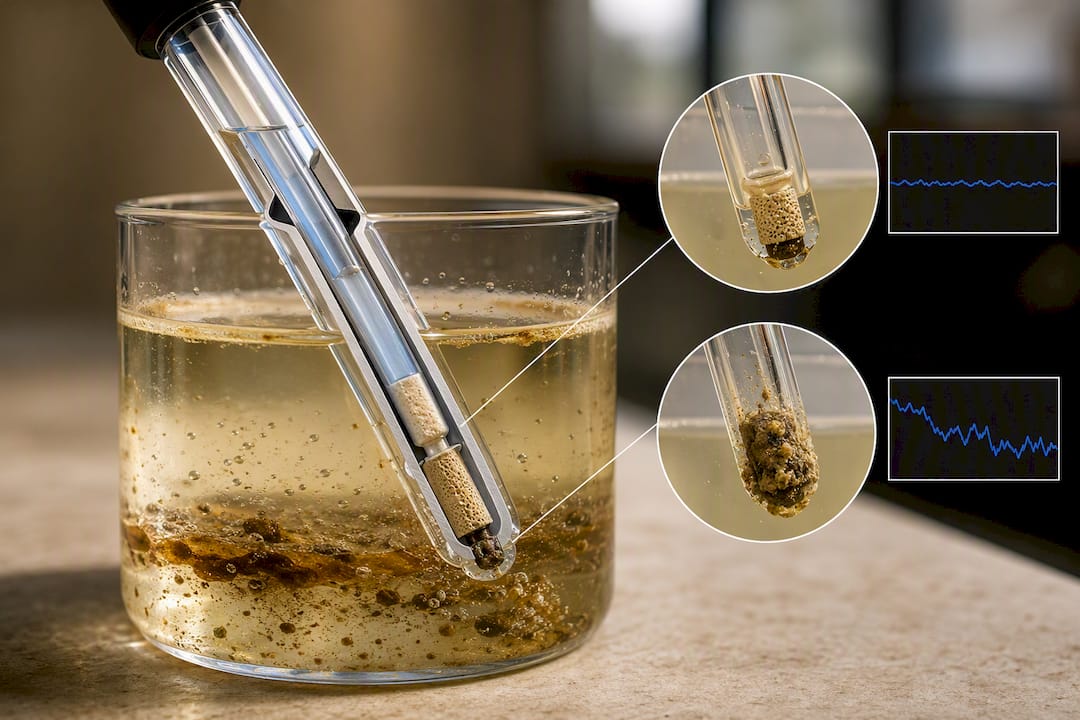
Solution-driven drift is different. It happens when the chemistry of the bath itself changes: atmospheric CO2 dissolving into an alkaline tank, acidic soil load neutralizing your caustic, or a buffer system running out of capacity after repeated dosing cycles.
Distinguishing the two comes down to objective criteria, not guesswork:
- A healthy electrode stabilizes within 30 to 60 seconds in a fresh buffer.
- Drift of 0.01 to 0.1 pH units during that stabilization window points to electrode instability or fouling, not the bath.
- A probe that calibrates clean, but the bath still trends downward over hours or shifts tells you the chemistry, not the sensor, is moving.
If the probe passes calibration and still shows a slow downward creep across a shift, stop suspecting the electrode. Look at what's happening inside the tank.
Common Causes of pH Drift: A Technical Checklist
Most drift complaints break into three buckets: the electrode, the solution, and the operation running around both. Working through them in order saves you from replacing a $150 probe when the real problem is a leaking exhaust hood.
Electrode-side causes, in order of frequency:
- Junction fouling from oils, surfactants, or biofilm blocking ion flow.
- Reference fill solution depletion, common in probes that haven't been topped off or replaced on schedule.
- Silver chloride or silver sulfide precipitate forming inside the junction, especially in sulfur-containing cleaning chemistries.
- Cracked or scratched glass membrane from mechanical contact with parts or agitators.
- Cable or connector corrosion causing noisy, erratic readings that look like drift but aren't.
Solution-side causes:
- CO2 absorption from the air, which pulls alkaline baths downward toward neutral, and does it faster in agitated or sprayed systems than in still tanks.
- Neutralization from acidic soil load, oils, or metal salts dragged in on parts.
- Buffer exhaustion after the conjugate acid or base pair gets consumed by repeated dosing.
- Accidental cross-contamination from a rinse tank, additive, or shared piping.
Operational drivers that accelerate both: evaporation concentrating the bath, drag-out diluting it, worn spray nozzles increasing surface area exposed to air, and nearby burner exhaust adding combustion byproducts to the atmosphere above open tanks.
Alkaline cleaning baths carbonate faster in spray systems than in immersion tanks simply because atomized droplets expose far more surface area to CO2 per gallon. That single operational detail explains a large share of the "my spray washer pH keeps dropping" complaints we hear from plant chemists.
Technician Troubleshooting Workflow: Inspect, Calibrate, Calculate, Clean, Verify
This is the sequence that separates a five-minute fix from a wasted afternoon. Follow it in order. Skipping straight to reformulation before you've ruled out the probe is the single most common mistake we see in the field.
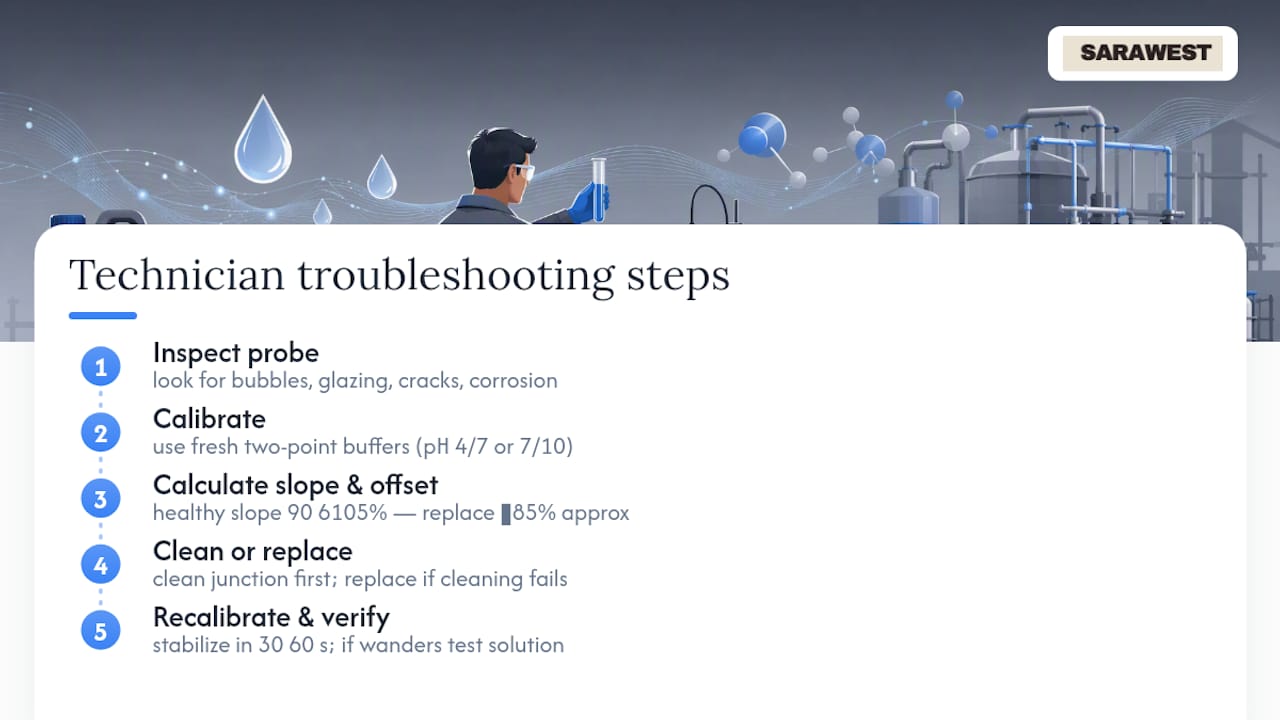
Step 1: Visual inspection. Pull the probe and look for trapped air bubbles inside the glass bulb, a chalky or discolored junction, cracked cable insulation, or corrosion at the connector. A junction that looks glazed or has visible crystal buildup is almost certainly the source of slow response.
Step 2: Run a calibration. Use fresh, unexpired buffers, ideally two points that bracket your working range (commonly pH 4 and 7, or 7 and 10, depending on whether your bath runs acidic or alkaline). A three-point calibration adds resolution across a wider range and is worth the extra two minutes if your process swings between cleaning and rinse-neutral stages. Confirm your meter's temperature compensation is active. A meter reading pH without automatic temperature compensation will show apparent drift that's really just a warm tank versus a cool buffer.
Step 3: Calculate slope and offset. Slope tells you how much the electrode's voltage output changes per pH unit, compared to the theoretical ideal (about 59.16 mV per pH unit at 25°C). A healthy electrode typically reads 90 to 105 percent of that theoretical slope. Offset is the millivolt reading at pH 7, and it should sit close to zero on a well-maintained probe. Slope below approximately 85 percent, or an offset that deviates noticeably from previous logs, means the electrode is aging out.
Step 4: Clean or replace. If slope and offset are out of range, clean the junction before you condemn the probe. If cleaning doesn't restore performance, replace it. Most process electrodes in daily cleaning-bath service last 6 to 12 months before membrane aging or junction fouling makes recalibration unreliable.
Step 5: Recalibrate and verify stability. After cleaning or swapping the probe, recalibrate and watch the reading settle. A reading that stabilizes within the 30 to 60 second window and holds steady confirms the fix. If it still wanders after a clean probe and a passing calibration, the drift is in the solution, and it's time to test for carbonation, buffer depletion, or contamination instead of chasing the sensor further.
Pro Tip: Log slope and offset at every calibration, not just when something seems wrong. Plotting those two numbers over weeks shows you a slowly degrading electrode long before it fails a spot check, and it separates a gradual sensor decline from a sudden solution chemistry event.
Cleaning and Maintaining the pH Electrode and Junction
Most fouling responds to mild, targeted cleaning rather than anything aggressive; using a pH neutral car shampoo for ceramic-coated cars ensures delicate surfaces are protected during cleaning. The junction is a delicate porous structure, and treating it like a dirty wrench will shorten probe life fast.
- For general organic fouling (oils, biofilm, surfactant residue), soak the tip in warm dilute detergent solution for 10 to 15 minutes, then rinse thoroughly with deionized water.
- For silver sulfide or silver chloride buildup common in sulfur-bearing cleaning chemistries, a brief soak in dilute thiourea-based electrode cleaning solution dissolves the precipitate without attacking the glass.
- For mineral scale from hard water contact, a short soak in dilute hydrochloric acid (follow the manufacturer's concentration guidance) clears carbonate deposits.
- Avoid strong organic solvents, bleach, and abrasive scrubbing on the junction. All three degrade the porous plug or scratch the glass membrane, both of which cause permanent slope loss.
Expect a well-maintained probe in daily cleaning-bath service to hold acceptable performance for 6 to 12 months. Signs it's time to retire it: slope that won't recover above 85 percent even after cleaning, response time that stays sluggish past 60 seconds, or a junction that fouls again within days of cleaning, which usually means internal fill depletion rather than surface dirt.
How Formulation Choices Prevent Solution pH Drift
Reformulate the workflow before you reformulate the product: adjust pH to target first with an acid or base, and only then add a buffer to hold that setpoint. Buffers aren't pH adjusters. They're stabilizers that resist change once you've already landed where you want to be, and treating them as the adjustment tool itself is the most common formulation mistake that produces chronic downward drift in finished cleaners.
Buffer selection depends on your target pH and what the product touches:
- Phosphate buffers work well near neutral to mildly alkaline ranges and are common in general-purpose cleaners.
- Citrate and lactate buffers suit lower pH, acidic formulations like descalers and bathroom cleaners.
- Borate buffers hold well in moderately alkaline ranges but require compatibility checks against aluminum and some painted or anodized surfaces.
Adjuster choice matters just as much as buffer choice. Sodium hydroxide (NaOH) and potassium hydroxide (KOH) both raise pH, but they carbonate differently once exposed to air: KOH systems tend to equilibrate around a lower carbonate pH than NaOH systems under the same CO2 exposure, which changes how fast a spray bath drifts downward over a shift. Tertiary amines like triethanolamine (TEA) offer a gentler alkalinity curve and are common where a harsh caustic bite isn't wanted, though they carry their own odor and compatibility considerations.
Water quality is the quiet variable most technicians underweight. Starting with deionized water gives you a clean baseline, but DI water's low ionic strength means it absorbs CO2 from the air rapidly once exposed, so freshly adjusted DI-based solutions can show fast apparent drift before a buffer is even added. Hard water, by contrast, brings its own alkalinity and mineral load that resists your adjustment and eats into buffer capacity before the product even ships. Our water quality spec guide breaks down how hardness and alkalinity interact with formulation targets in more detail.
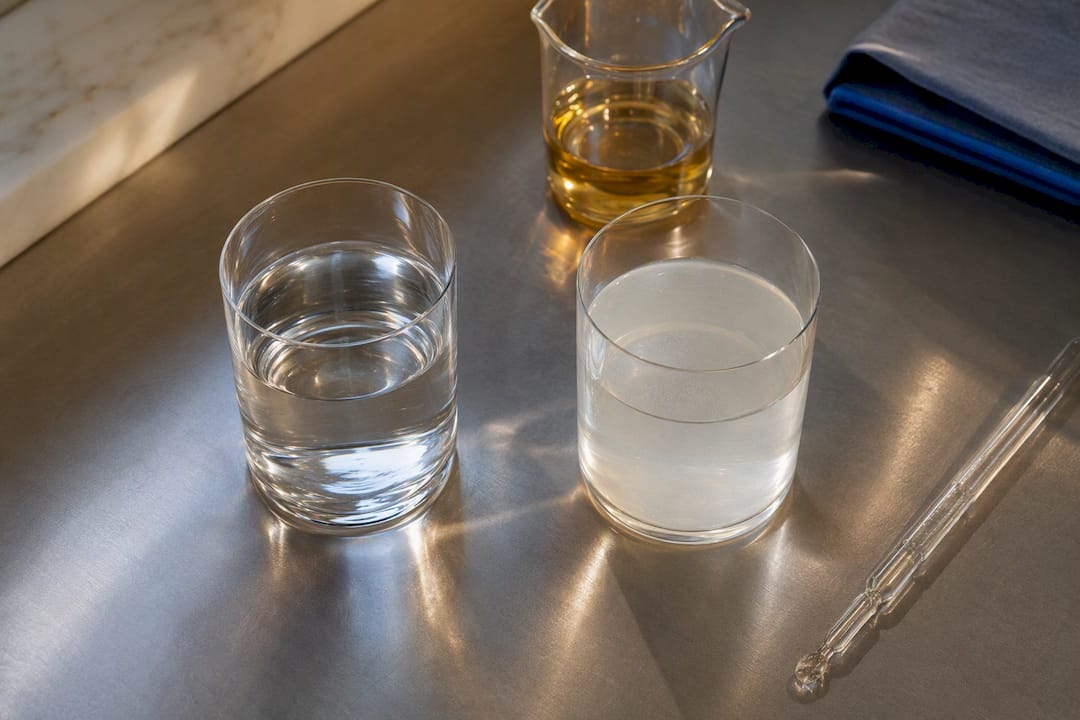
Pro Tip: Run your buffer selection test in the hardest water your customer base actually uses, not in lab-grade DI. A buffer that holds perfectly in a beaker of DI water can fail within days in a plant running well water with high carbonate alkalinity.
Process and Environmental Factors That Shift Cleaner pH in Use
The formula can be flawless and still drift once it hits the floor, because the process itself is a chemistry variable. Spray systems atomize the bath into fine droplets, which multiplies the surface area exposed to air and speeds CO2 absorption compared to a still immersion tank holding the same volume. Worn nozzles make it worse by producing a finer, more dispersed mist than the system was designed for.
Drag-out and makeup water changes concentration in ways that shift effective pH even when nothing about the chemistry itself changed. Parts leaving the tank carry bath solution out with them, and the fresh water or concentrate added to replace it rarely matches the original mix exactly.
A short list of operational controls that meaningfully slow drift:
- Inspect and replace worn spray nozzles on a set schedule rather than waiting for a visible pattern change.
- Check counterflow rinse setups for cross-contamination between rinse and cleaning stages.
- Reduce unnecessary air exposure on open tanks where practical, including lid use during idle periods.
- Inspect nearby exhaust and burner sources; combustion byproducts venting near an open alkaline tank accelerate carbonation.
Measurement, Monitoring, and Verification Best Practices
A stable reading settles within 30 to 60 seconds and holds. Anything drifting more than roughly 0.05 pH units after that window, without an obvious process change to explain it, warrants investigation rather than a shrug.
- Calibrate daily in high-throughput operations, weekly at minimum in lower-volume settings, and immediately after any cleaning or probe swap.
- Automate dosing with continuous monitoring where the bath sees frequent swings; manual corrections invite overshoot and the "yo-yo" pH pattern that's harder to stabilize than a steady small drift.
- Log slope, offset, buffer lot number, last cleaning date, bath temperature, and calibration buffer lot at every check. That record is what lets you spot a slowly aging electrode months before it fails outright.
Total alkalinity, not just pH, governs how much acid or base a dosing correction actually needs, since a highly buffered or carbonate-rich bath resists correction far more than a poorly buffered one at the same starting pH.
Manufacturer Perspective: Lab Checklist for Formulation Stability
In our lab, the sequence never changes: start with deionized water, adjust pH with the acid or base, then add the buffer, and pilot test in real hard water before scaling. Skipping the hard-water pilot is how a formula that tests perfectly in the lab starts drifting on the plant floor within a week.
On the manufacturing side, water QC on every batch, proper tank venting to limit CO2 buildup over headspace, and dry, sealed storage for concentrates all prevent the slow carbonation and contamination that show up as customer complaints months later. If your team is chasing drift that formulation controls alone won't fix, a working session with our chemists is a faster path than another round of trial batches.
Quick Troubleshooting Checklist: Prioritized Fixes
Work this list top to bottom before touching the formula:
- Immediate: visual inspection plus a two-point calibration.
- Next: clean the electrode junction and recalculate slope and offset.
- Follow-up: test the bath for carbonation and check remaining buffer capacity.
- Escalate: replace the probe if slope stays below 85 percent after cleaning, or bring in engineering if a clean, calibrated probe still shows solution drift.
| Symptom | Likely Cause | First Action |
|---|---|---|
| Slow to stabilize past 60 seconds | Fouled junction | Clean and recalibrate |
| Slope below 85% after cleaning | Aging electrode | Replace probe |
| Gradual downward drift over a shift, probe passes calibration | CO2 carbonation | Check buffer capacity, inspect nozzles |
| Sudden pH jump | Contamination | Check adjacent tanks and piping |
Author Perspective: A Pragmatic Measurement-First Approach
The instinct to reformulate first is almost always backwards. Measure before you mix anything new. A two-point calibration takes less time than a single batch adjustment, and it tells you whether you're solving a sensor problem or a chemistry problem before you waste either. Pair sensor maintenance with formulation controls like a proper adjust-then-buffer sequence, and most chronic drift complaints resolve without a single new ingredient.
— Faisal Mansur
How Sarawest USA Helps You Stop Chronic pH Drift for Good
You can obtain a stable formula faster than trial-and-error reformulation by using buffer tuning and hard-water pilot testing services instead of doing them batch by batch on your own line. Some providers offer a large library of proprietary formulas across multiple industries and provide chemical adaptation services tailored to target pH, water conditions, and surface compatibility requirements.

Pilot batches can validate a buffer system in real hard water before committing to a full production run, and turnaround times may be fast enough to deliver a corrected formula within days. If chronic drift is costing you rework or customer complaints, request a technical consultation or an RFQ through our commercial cleaning manufacturing page, or browse our formulation track record to see how we've solved similar stability problems for other brands.
Sources
- Everything you need to know about pH sensor calibration
- What's causing increased usage of alkaline spray cleaner
- Dear Valerie: Downward pH drift — Happi