
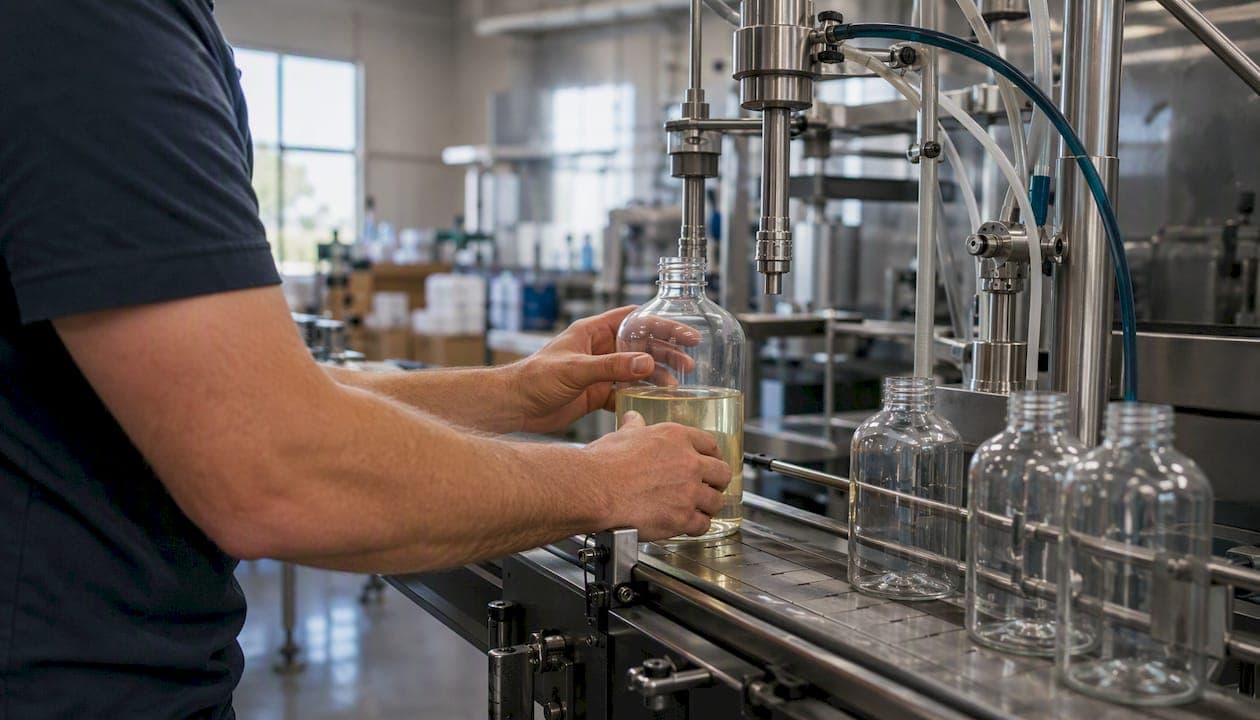
Private-label chemical manufacturing in the U.S. typically runs at a low to mid single-digit dollar range per unit for liquid formulations at production volumes, with ready-to-use (RTU) products toward the higher end and concentrates often lower. Minimum order quantities (MOQs) for white-label library picks start around 500–1,000 units; custom formulation MOQs commonly begin at 5,000–10,000 units. On top of per-unit cost, budget for setup fees, third-party testing, and packaging minimums, which can materially change your first-order economics. The fastest path to a firm number: send a complete RFQ to two or three U.S. contract manufacturers with your SKU description, target volume, packaging specs, and required certifications.
Quick budget benchmark: Private-label startup outlays typically run several thousands of dollars at low MOQs. Full custom formulation startup costs can reach into the tens of thousands once premium packaging and testing are included.
Table of Contents
- What drives private label pricing? The cost components that matter
- What do typical per-unit prices and MOQs look like by product type?
- How does volume change your per-unit cost?
- What do samples and pilot batches cost, and how long do they take?
- What are realistic lead times for U.S. private-label manufacturing?
- How do you negotiate price and spot red flags in quotes?
- Real-world examples: how costs and MOQs work in practice
- Key Takeaways
- The case for pricing transparency in contract manufacturing
- Sarawest USA brings real manufacturing capacity to your next product
- Useful sources and further reading
What drives private label pricing? The cost components that matter
Understanding where your per-unit cost comes from is the fastest way to find savings before you negotiate. For liquid chemical products, the cost structure breaks down roughly as follows, based on liquid manufacturing procurement benchmarks:
- Freight and duties: Domestic shipping is straightforward; offshore manufacturing adds duties, 3PL, and customs compliance that can erase FOB savings.
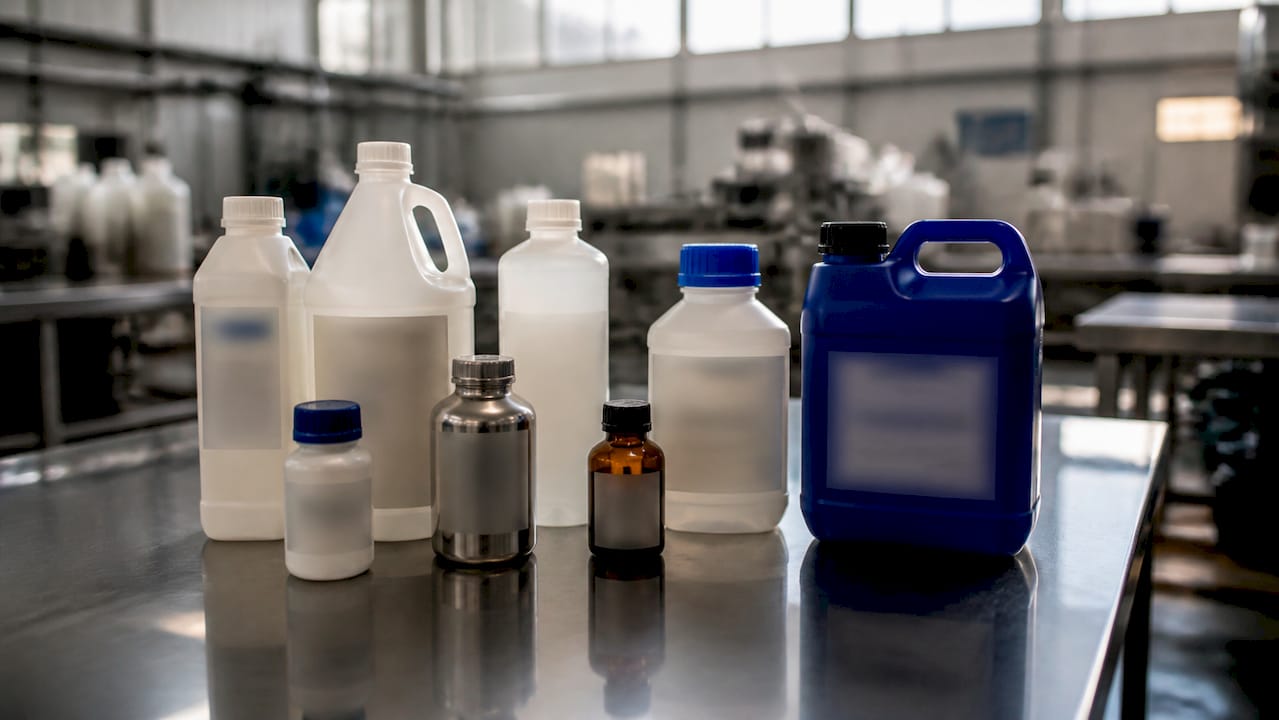
Packaging deserves special attention. A manufacturer may accept a formula MOQ in the low thousands while a packaging supplier may demand a significantly higher MOQ for custom-molded closures or printed components. That mismatch can stall a launch entirely. Confirm both MOQs before committing to a packaging design.
For U.S. chemical products, regulatory line items include SDS authoring, GHS-compliant label review, and any state-specific VOC compliance documentation. These are real costs, not formalities.
Pro Tip: The two fastest levers for per-unit savings are volume and packaging standardization. Moving from a custom-molded bottle to a manufacturer's stock container can cut packaging cost by 20–40% and eliminate a separate packaging MOQ entirely.
What do typical per-unit prices and MOQs look like by product type?
The table below reflects U.S. contract manufacturing ranges for common chemical product categories. These are realistic planning figures, not quotes.
| Product Category | Typical Per-Unit Range | Typical MOQ (Private Label) | Typical MOQ (Custom) |
|---|---|---|---|
| Concentrated cleaner (1 gal) | several dollars | 500–1,000 units | 5,000–10,000 units |
| Ready-to-use cleaner | low to mid single-digit dollars | 500–1,000 units | 5,000–10,000 units |
| Consumer care product | low to mid single-digit dollars | 1,000 units | 5,000–10,000 units |
| Active-heavy formulation | several dollars | 1,000–5,000 units | 10,000+ units |
Per-unit costs vary from under $1 to over $5 depending on formulation complexity and volume. A practical illustration: the same product might cost roughly $8 per unit at 500 units and around $4 per unit at 5,000 units because fixed setup costs amortize across the larger run. Smaller contract manufacturers often accept minimum order quantities in the low thousands for liquids; larger automated facilities require higher minimums in the tens of thousands.
How does volume change your per-unit cost?
Fixed production costs, including line cleaning, changeover, and calibration, do not scale with volume. They are the same whether you run 500 units or 5,000. That creates a step-function in per-unit pricing with predictable breakpoints.
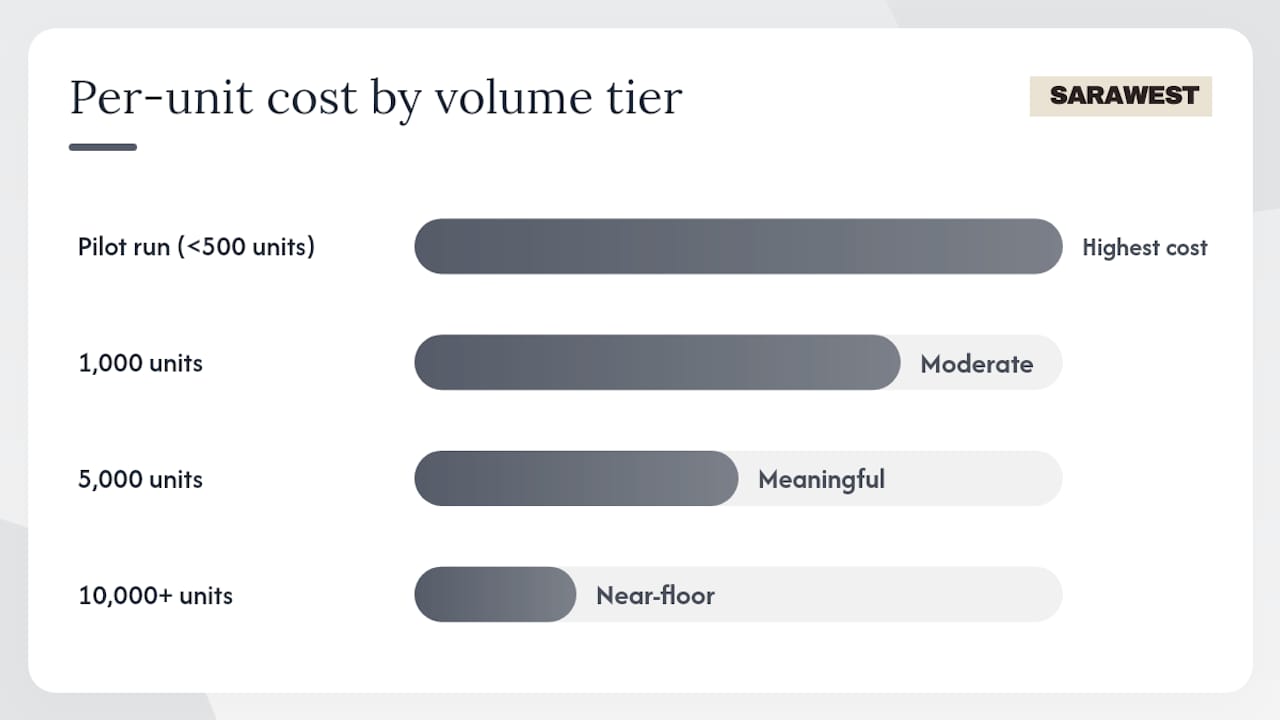
| Volume Tier | Typical Per-Unit Effect | Notes |
|---|---|---|
| Pilot run (under 500 units) | Highest per-unit cost | Setup costs fully loaded onto small batch |
| 1,000 units | Moderate reduction | Setup amortized; still above production economics |
| 5,000 units | Meaningful drop | Approaches production-run pricing |
| 10,000+ units | Near-floor per-unit cost | Truckload and pallet economics kick in |
Truckload economics add another layer. Once an order fills a full pallet or truckload, freight cost per unit drops significantly, and some manufacturers offer volume pricing tied to full-pallet commitments. A blanket purchase order across multiple SKUs can spread fixed setup costs and unlock volume pricing without requiring a single massive order.
What do samples and pilot batches cost, and how long do they take?
| Stage | Typical Cost | Typical Timeline |
|---|---|---|
| Product sample (existing formula) | Nominal sample fee often charged | 1–2 weeks |
| R&D sample (semi-custom) | $500–$3,000 range (often credited) | 2–4 weeks |
| Pilot batch (under 500 units) | Relatively high per-unit cost | 3–6 weeks |
| Stability testing (third-party) | Stability testing requires a moderate to high fee and multi-week timeline | 8–12 weeks |
| Microbial challenge testing | Microbial testing requires a notable fee and several-week timeframe | 4–8 weeks |
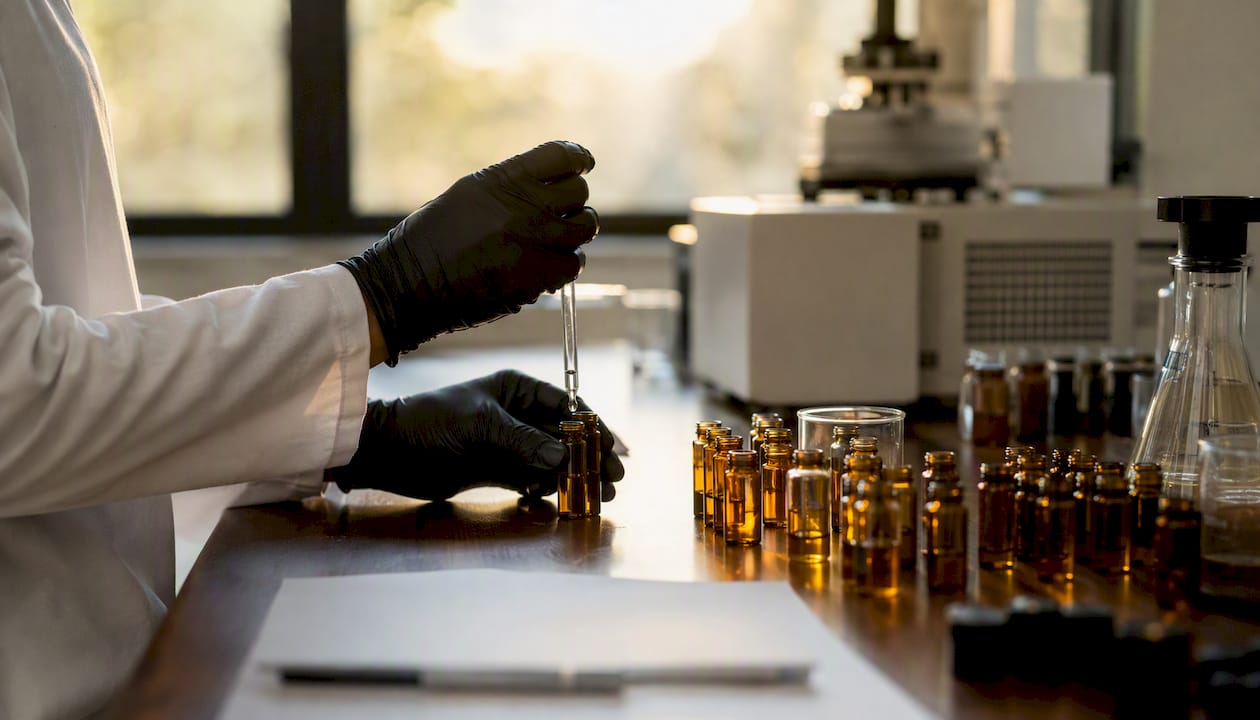
Some manufacturers charge a nominal sample fee, such as $50 for a standard sample, with R&D or design fees for custom work refundable against an initial purchase. Pilot batch per-unit costs run significantly higher than production runs because setup costs are spread across far fewer units. Stability testing is the least compressible milestone: accelerated stability protocols take weeks regardless of how fast everything else moves. Plan for it early.
Some contract manufacturers accept minimum batch sizes as small as 10 kg with full cGMP documentation, which matters when you need regulatory-ready records from the pilot stage.
What are realistic lead times for U.S. private-label manufacturing?
| Path | Sample | Pilot Run | Full Production | Total Estimate |
|---|---|---|---|---|
| Off-the-shelf private label | 1–2 weeks | 2–3 weeks | 3–4 weeks | 6–9 weeks |
| Semi-custom adaptation | 2–4 weeks | 3–5 weeks | 4–6 weeks | 9–15 weeks |
| Full custom formulation | 4–8 weeks | 6–10 weeks | 8–12 weeks | 18–30 weeks |
A standard private-label order with no formula changes or custom packaging typically takes 3–4 weeks. Formula adjustments or custom packaging needs extend lead times appreciably. Rush surcharges of 15–30% are common for compressed production schedules, but stability testing cannot be rushed regardless of premium paid.
How do you negotiate price and spot red flags in quotes?
Negotiation in contract chemical manufacturing is less about haggling and more about structuring the deal to reduce the manufacturer's risk, which reduces your cost.
Effective levers:
- Bundle multiple SKUs into one production run to spread setup costs.
- Commit to a blanket PO with scheduled releases to unlock volume pricing without carrying excess inventory.
- Standardize packaging to the manufacturer's stock components, eliminating custom tooling and separate packaging MOQs.
- Request a cost-break table tied to volume thresholds (1,000 / 5,000 / 10,000 units) so you can model the ramp.
Watch for these red flags in any quote: Testing costs listed as "TBD" or excluded entirely. Packaging MOQs that exceed the formula MOQ with no explanation. Lead times stated as "approximately" with no milestone breakdown. Missing SDS or CoA documentation. Unusually low per-unit pricing with no line-item detail — that gap usually surfaces as add-ons after you've committed.
On payment terms: most U.S. contract manufacturers require a 30–50% deposit at order confirmation, with the balance due before shipment. Net-30 terms are sometimes available for established accounts. For large custom development projects, milestone-based payments tied to sample approval and pilot completion are reasonable to request.
Real-world examples: how costs and MOQs work in practice
Example A: Private-label cleaning concentrate, pilot to scale
A cleaning brand chose a concentrated floor cleaner from a manufacturer's existing formula library. Pilot run: 1,000 units at approximately $4.50 per unit, with a $300 sample fee credited to the order. After the pilot confirmed performance, they scaled to 10,000 units, bringing per-unit cost to approximately $2.20. The lever: they standardized to a stock HDPE bottle and stock closure, eliminating a separate packaging MOQ and reducing packaging cost by roughly 30%.
Example B: Semi-custom consumer care SKU
A personal care brand requested a fragrance and viscosity adjustment to an existing base formula. R&D fee: $1,200, fully credited against the first order. Packaging required a custom-printed tube with a separate supplier MOQ of 5,000 units, which set the effective production floor. Per-unit cost at 5,000 units came in at $3.80, versus an estimated $6.50 at 1,000 units. The negotiated lever: a blanket PO for three releases across 12 months, which secured the 5,000-unit pricing on each release without a single large upfront inventory commitment.
The pattern across both examples: the brands that got the best per-unit outcomes came in with complete specs, asked for line-item pricing, and structured their orders to reduce manufacturer risk. Neither negotiated on price directly. They negotiated on structure.
Sarawest USA's in-house R&D team and proprietary library of 1,200+ formulas accelerate both paths. The formula library reduces pilot friction for brands choosing a library base; the in-house chemists handle semi-custom adaptations without outsourcing the development round. See real project outcomes for anonymized pricing context.
| Example | MOQ | Per-Unit (Pilot) | Per-Unit (Scale) | Key Lever |
|---|---|---|---|---|
| Cleaning concentrate | 1,000 → 10,000 | $4.50 | $2.20 | Stock packaging, volume ramp |
| Consumer care SKU | 5,000 (packaging-driven) | $6.50 est. | $3.80 | Blanket PO, credited R&D fee |
Key Takeaways
Private-label chemical manufacturing costs typically fall within a few dollars per unit at production volumes, but first-order costs also depend significantly on setup fees, packaging minimum order quantities, and testing expenses, which should be considered in addition to per-unit price.
| Point | Details |
|---|---|
| Budget beyond per-unit cost | Add setup fees, third-party testing ($500–$3,000+), and packaging MOQs to your first-order budget. |
| Volume drives unit economics | The same product can cost roughly $8/unit at 500 units and $4/unit at 5,000 units as fixed costs amortize. |
| Packaging MOQ can set the floor | A packaging supplier may require 5,000 units even when the formula MOQ is 1,000 — confirm both before committing. |
| Ask for line-item quotes | Separate per-unit, setup, testing, and packaging costs to compare quotes accurately across manufacturers. |
| Sarawest USA as next step | Sarawest USA's 1,200+ formula library and in-house R&D reduce pilot costs and compress time-to-market for U.S. brands. |
The case for pricing transparency in contract manufacturing
Most brands get burned on private-label costs not because the manufacturer was dishonest, but because the quote was incomplete and nobody asked the right questions. A per-unit price without line items for testing, packaging, and setup is not a quote. It is an opening position.
What we've seen, working with brands across cleaning, sports care, and equine products, is that the brands who move fastest and spend least are the ones who come in prepared. They know their packaging specs. They've decided between a library formula and custom development before the first call. They ask for a cost-break table at three volume tiers. That preparation doesn't just get them a better price. It signals to the manufacturer that they are a serious, low-friction client, and manufacturers price risk into quotes. Reduce the risk, reduce the cost.
The other thing worth saying plainly: stability testing timelines are fixed. No premium changes the chemistry. Build 8–12 weeks for stability into your launch plan from day one, and the rest of the timeline becomes manageable. Brands that discover this constraint after committing to a launch date are the ones who pay rush surcharges on everything else trying to compensate.
Transparent, line-item pricing is not a favor a manufacturer does for you. It is the minimum standard for a professional working relationship. If a manufacturer won't break out testing and packaging costs separately, that tells you something about how the rest of the project will go.
Sarawest USA brings real manufacturing capacity to your next product
Skip the broker. Sarawest USA gives brands direct access to contract chemical manufacturing with in-house R&D chemists, a proprietary library of 1,200+ formulas, and production capacity from 1,000-unit pilots to full truckloads, all from our facility in Pampa, Texas.
The formula library means you can launch a proven, market-ready product in weeks rather than months. The in-house R&D team means semi-custom adaptations happen without outsourcing the development round or waiting on a third-party lab. Every RFQ gets a real response from a real person, with line-item pricing that breaks out per-unit cost, setup, testing, and packaging separately.
Ready to see what your product costs at real volumes? Request samples or submit an RFQ directly at sarawestusa.com. Tell us what you want made. We'll handle the rest.
Useful sources and further reading
- Private Label vs Custom Formulation: Stop R&D Capital Waste
- Custom Manufacturing — ChemRich USA LLC · New Jersey
- Liquid Supplement Manufacturing Costs: A Procurement Guide
- FAQS - White Label Oral Pouches & Contract Manufacturing | Daily Manufacturing
- How to Manufacture Private Label Products
- Contract chemical manufacturing with in-house R&D · SaraWest
- Formulation Track Record - SaraWest | Proven Chemistry